
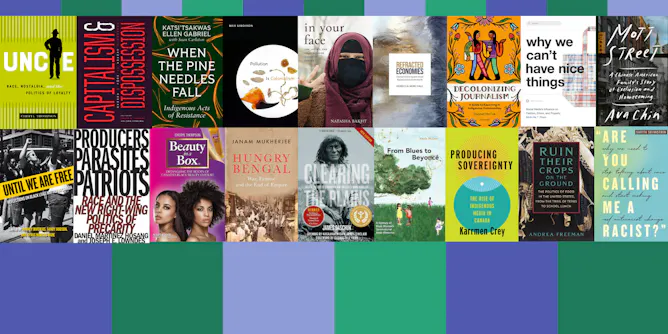
Thought-provoking reads for the critical thinker on your gift list. Each book connects with a past Don’t Call Me Resilient episode. Listen alongside reading to bring the scholar & their ideas to life.
Articles on Black hair
Displaying all articles
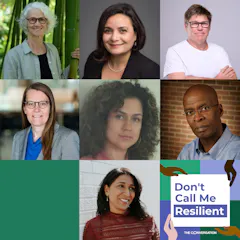
In this bonus episode, you’ll meet some of the producers who help make this podcast to revisit some of our favourite episodes from past seasons.
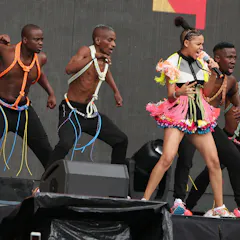
Costume, hair and dance allow her to modernise Tsonga culture – and help shape youth identity.

Despite calls to boycott the game by trans activists, the game has proved wildly popular – particularly among Black gamers.

Dicey cultural situations and power struggles await Latina teachers in America’s schools.

In the absence of explicit national legislation against hair-based discrimination, young people are demanding fairer rules - and a culture shift.
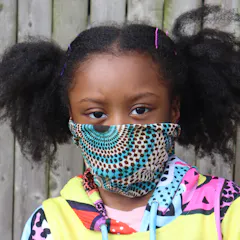
Social work education, policy and practice is lacking when it comes to understanding and caring for black children’s skin and hair.
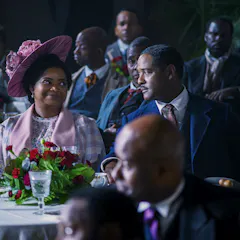
The founder of a black hair-care empire supported the NAACP and the Tuskegee Institute, helped preserve Frederick Douglass’s home. She also tried to used her prominence to stop lynching.

Nigerian men who wear their hair in knots are not a new phenomenon, but the hairstyle’s spiritual heritage sparks fear in the hearts of many.

With the number of multiracial Americans growing, there’s a fierce debate in the black community over who’s black – and who isn’t.
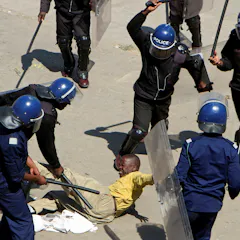
From poetry to factual narratives and personal memoirs, these books are worth reading.

Natural hair has become a political rallying point for women across the African diaspora. For these women, wearing natural hair is way to resist Eurocentric norms and “post-racial” political thought.
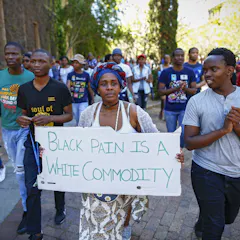
States do not record the structural violence of racism as part of crime statistics. But this invisible violence has driven some people to self-harm. It has also masked forms of suicide.

Hair has long been modified for aesthetic and other ends. But skewed power structures have meant that women, particularly women of colour, have borne the brunt of stereotyping and prejudice.
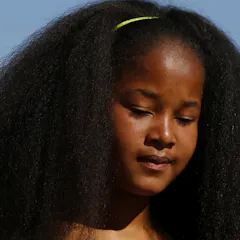
Schools need to adapt and evolve in changing circumstances and conditions as their students’ demographic composition shifts.

When it comes to black hair, “common sense” is the least reliable tool for decision making since even black people are constantly changing their minds about what they want to do with their hair.
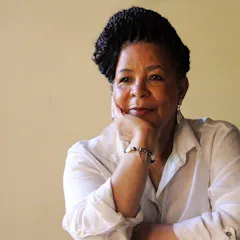
Qunta advocates a reparations fund to accelerate corrective policies, that schools be freed from colonial indoctrination and that African culture should be mainstreamed, especially African languages.
Top contributors
-

Political Scientist, University of the Western Cape
-
Associate Professor at the Wits Institute for Social & Economic Research, University of the Witwatersrand
-
South African Research Chair in Teacher Education; Director of Centre for International Teacher Education (CITE) & Professor of International Education and Development Policy (University of Sussex, UK), Cape Peninsula University of Technology
-
PhD Candidate in Sociology, USC Dornsife College of Letters, Arts and Sciences
-
Professor of Social Work, Michigan State University
-
Independent conflict and social justice practitioner/researcher. Currently Senior Staff Associate in the Faculty of Law, University of Cape Town
-
Associate Professor of Education, Indiana University
-
Postdoctoral Research Fellow in Sociology, American University
-
Associate Professor in Performing Arts, Tshwane University of Technology
-
Lecturer in Costume Theory and theatre costumer, Tshwane University of Technology
-
Associate Professor of Philanthropic Studies, Indiana University
-
Lecturer in Social Work, University of Bradford
-
Professor, Department of Anthropology, Texas State University
-
SARCHI Ocean Cultures and Heritage, Nelson Mandela University
-
Presidential Fellow in Ethnicity and Inequalities, University of Manchester