

An elite athlete’s metabolism mostly looks different from a patient with COVID-19 − but their occasional similarities can reveal important insights into health and disease.
Articles on Blood donors
Displaying all articles
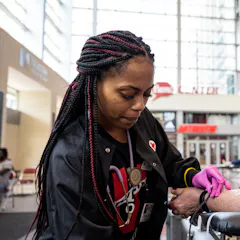
Because not everyone who is eligible to give blood donates at least once a year, there are periodic shortages, like the one the American Red Cross declared on Sept. 11, 2023.

There’s pretty much no one left in the US who hasn’t been exposed to the coronavirus, whether by vaccination, infection or both.
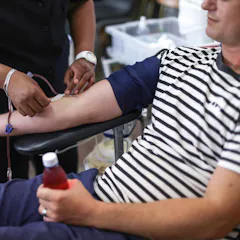
In 1983, during the early days of the AIDS epidemic, the US Food and Drug Administration made the decision to ban gay men from donating blood. Now, 40 years later, it is dropping that rule.

There has been a monumental policy shift in paying blood plasma donors in Canada.
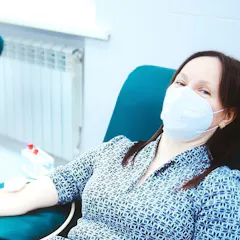
We calculated there was a one in 1.4 billion chance of someone contracting vCJD from a blood transfusion. And that risk will get even smaller with time.

Your blood can hold a record of past illnesses. That information can reveal how many people have had a certain infection – like 58% of Americans having had COVID-19 by the end of February 2022.

Life-saving blood is needed for everything from treating cancers and chronic conditions to helping trauma victims. But blood donations have dropped to crisis levels during the pandemic.
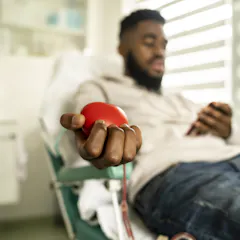
The reasons for the hesitancy to donate blood are complex and include a fear of needles and lack of awareness. Awareness and education drives to dispel the fear of donating are important.
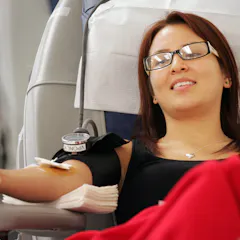
Because most people want to be perceived as generous, sometimes monetary incentives for doing a good deed are counterproductive.
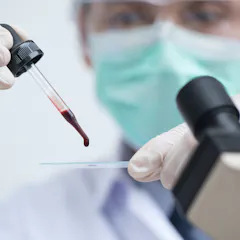
Every person’s blood is identified by type. Why does this matter?
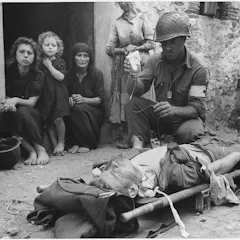
Until 1950 the Red Cross segregated blood. It was thousands of African-Americans during World War II who forced the Red Cross to include them as donors and helped pave the way for activism of the 1960s.
Top contributors
-

Associate Professor of American Studies, George Washington University
-
Susman Professor in Sustainability and Professor of Marketing, Penn State
-
Associate Professor of Physics, University of Richmond
-
Adjunct Professor of Public Policy and Social Welfare, University of California, Los Angeles
-
Assistant Research Professor of Biochemistry and Molecular Genetics, University of Colorado Anschutz
-
Eugene M. Isenberg Chair in Integrative Studies, UMass Amherst
-
Associate Professor, Community Health Sciences, Rady Faculty of Health Sciences, University of Manitoba
-
Associate Professor, Cape Peninsula University of Technology
-
Professor of Psychology, Carnegie Mellon University
-
Adjunct lecturer in allograft transmissible infections, medical school (surgery), The University of Western Australia
-
Professor and Program Head, Biostatistics and Databases Program, Kirby Institute, UNSW
-
Assistant Professor of Biostatistics, University of Florida
-
Professor of Digital Marketing, University of Groningen
-
Biostatistician, Kirby Institute, UNSW
-
Postdoctoral Scholar in Medicine, University of California, San Francisco