
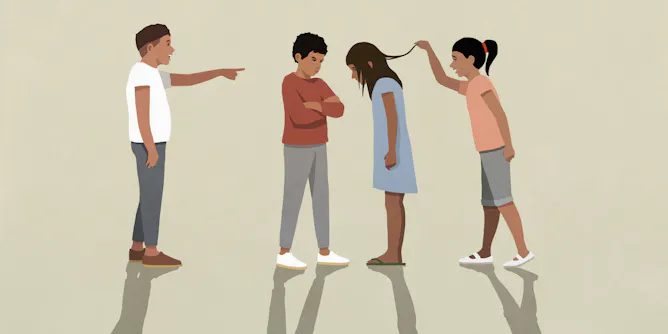
New research suggests that bullying prevention work should address the broader classroom environment, not just students’ individual characteristics and behaviors.
Articles on Classroom Management
Displaying all articles
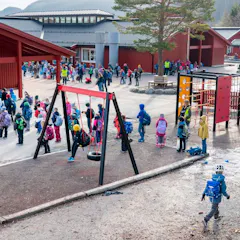
All Norwegian school children are assessed twice a year on their sense of ‘personal order and social behaviour’.
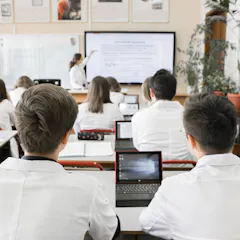
Some students in higher-ability classes said they felt more confident and motivated, but students in lower streams reported conforming to teachers’ low expectations for achievement.

There are a number of evidence based practices that have shown to dramatically reduce challenging student behaviour at school. Here are five of them.

All students interviewed for a study on relationships with teachers said the ones they loved most were kind, caring or funny. They said the ones they disliked often treated them unfairly.
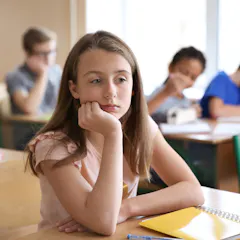
Collective punishments take some of the heavy lifting from the teacher and place it on the peers to impose social sanctions. But it’s likely to make students disengaged, and misbehave more.

Teachers should seriously reconsider using technology to monitor behaviour because of the negative impact it could have on students.

Reports that Australian classrooms are some of the most disruptive in the world are based on the experiences of 15-year-old students alone, and focus on science classes.

Leaving teachers to deal with challenging behaviour on their own can be unproductive and stressful.
Top contributors
-

Professor and Director, Centre for Research in Educational and Social Inclusion, Adelaide University
-
Lecturer in Behaviour Management, University of Tasmania
-
Research associate, Adelaide University
-
Associate Professor, School of Educational Psychology and Inclusion, Monash University
-
Professor and Director of the Centre for Inclusive Education, Queensland University of Technology
-
Professor of Inclusive Education, Adelaide University
-
Professor and Academic Head, Special Education and Educational Psychology, Monash University
-
Lecturer, School of Education, Edith Cowan University
-
Lecturer, Monash University
-
Professor in Psychology, Macquarie University
-
Professor of Educational Psychology, University of Wollongong
-
Associate Professor, Faculty of Education, Monash University
-
Senior Lecturer in Education, CQUniversity Australia
-
Vice Rector in Gjøvik, CQUniversity Australia
-
Senior Lecturer in Education Studies, Australian Catholic University