

Singing does something measurable to your body and brain, whether you are alone, harmonising in a choir, or singing with your friends at a karaoke bar.
Articles on Cortisol
Displaying 1 - 20 of 47 articles

Understanding how female baboons benefit from social bonds helps humans understand their own origins.

Personal time can be an important resource that helps parents manage stress, regulate emotions and maintain their health while meeting the demands of family life.

Cortisol spikes are not something you need to fear. In fact, cortisol rhythms – which involve some ups and some downs – are essential to staying well.

Your sleep habits are reflected in your skin’s health and appearance.

This concoction is being touted on social media – here’s what the evidence says.

If you’re often stressed, your water bottle might be part of the solution. New research shows why hydration matters.

Lie-ins aren’t bad for you, they’re overdue.
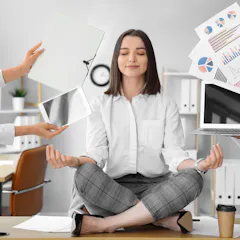
Stress isn’t inherently bad – it’s a survival tool. But when it becomes chronic, it can have lasting effects on our physical and mental health.

‘Cortisol belly’ isn’t a diagnosis — it’s a rebrand of diet culture.
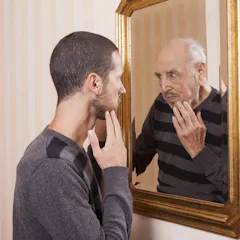
‘Cortisol belly’ and ‘cortisol face’ are catchy terms but they oversimplify complex biological processes into insecurities.

A ‘complex’ job and an active social life can protect you from dementia – if you don’t less stress undo it all.

We can’t avoid stress altogether. But there are healthy ways to deal with it and move on.
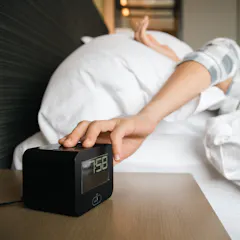
If you struggle to get up, “snoozing” could help you perform better when you finally do.

Climate change is causing higher levels of stress in fish, and the resulting hormonal imbalances are fundamentally altering entire populations.

Chronic stress from living with systemic racism and gun violence can lead to increased symptoms of PTSD and depression as well as elevated cortisol levels.

Some of what is being blamed on cortisol are symptoms of chronic stress or depression – which makes sense, since they’re linked.
You can train your brain to get excited about the start of the week – or at least cope with it.
Americans are divided on their preference for daylight saving time versus standard time. But research shows that our bodies fare better when aligned with the natural light of standard time.

Feeling tired and groggy in the morning may well lead you to crave a coffee boost. But is it a gift or just a loan in terms of energy?
Top contributors
-

Associate Professor of Medical Sciences, University of Wollongong
-
Associate professor in Mental Health and Behavioural Science, University of Wollongong
-
Clinical Lecturer, University of Cambridge
-
Professor of Psychiatry, Monash University
-
Senior Lecturer in Psychology, Psychophysiology, Stress, Well-being, University of Westminster
-
Assistant Professor of Anesthesiology, University of North Carolina at Chapel Hill
-
Professor of Clinical Neuropsychology, University of Cambridge
-
NHMRC Early Career Fellow, The Kids Research Institute Australia
-
Assistant Clinical Professor of Behavior, College of Veterinary Medicine, Mississippi State University
-
Matilda R. Wilson Endowed Chair, Associate Professor of Large Animal Clinical Sciences, Michigan State University
-
Research Fellow / Health Psychologist, Swinburne University of Technology
-
Postdoctoral Researcher in Neuroscience, University of Sussex
-
Lecturer in Cognitive Neuroscience & Ageing, Swansea University
-
Emeritus Professor, University of Westminster
-
NHMRC Senior Research Fellow in the School of Human Sciences, The University of Western Australia