
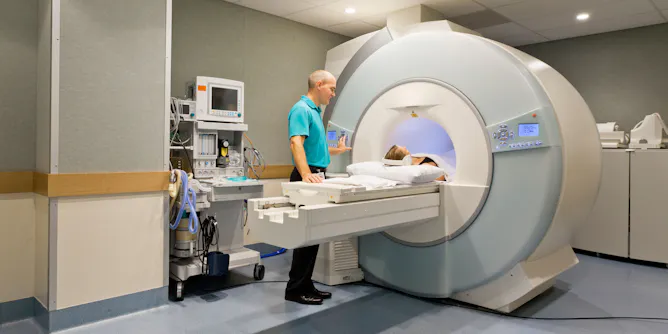
CT scans performed in the US in 2023 alone could eventually lead to over 100,000 extra cancer cases, a new study claims.
Articles on CT scan
Displaying 1 - 20 of 31 articles
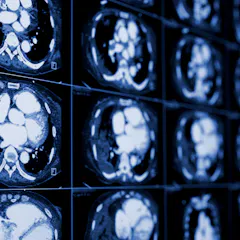
Stigma, fear and cost prevent many patients from getting screened for lung cancer. This can prove deadly for the most vulnerable.
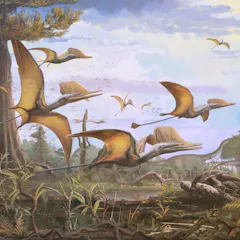
The Isle of Skye has a rich palaeontological heritage, so perhaps it’s no surprise scientists made an important discovery there.

Older smokers and former smokers will be invited to have their lungs scanned under a new screening programme the NHS is rolling out.
Digital scanning offers a new window on Australia’s unique fossil history, from early multicellular lifeforms to gigantic ‘marsupial lions’.
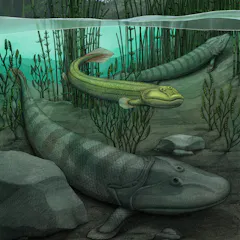
The newly discovered species – Qikiqtania – highlights evolution’s twisty, tangled path.

The growth and decline of the human brain mapped in an ambitious global project.

Studying the lower back allows researchers to understand how the species’ anatomy was adapted for different kinds of movement.
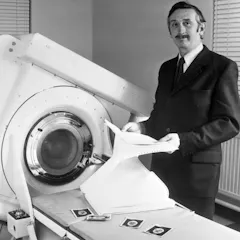
On Oct. 1, 1971, Godfrey Hounsfield’s invention took its first pictures of a human brain, using X-rays and an ingenious algorithm to identify a woman’s tumor from outside of her skull.

While we know that most chameleons have such a prehensile tail, it’s not yet clear how it works and what makes it simultaneously so flexible and strong.

This is a crucial dinosaur for palaeontologists; the variety of fossils available means researchers can study the species’ growth through its whole life span.

CT scans of the mummy revealed new injuries.
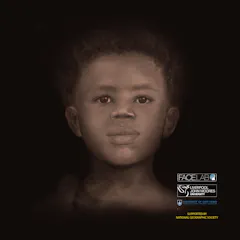
Through science, art and technology, we are able to reconstruct the faces of the dead based on their remains. The researcher who did this work for descendants in Sutherland explains the process.
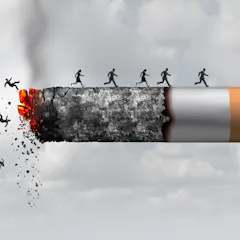
Low-dose CT scans can detect lung cancer in smokers and former smokers at an early and sometimes treatable stage. Why are so few smokers and former smokers getting them?

The more we know about the animals that lived during this time, the more we can start to comprehend how species react and recover after an extinction event.
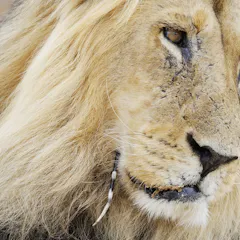
The team found evidence of about 50 lions that had been injured or killed by porcupines since the 17th century.

Museums’ collections are a priceless resource for scientists, but they’re not easy to access. Digitizing specimens – like the 700 bat skulls the author studied – is a way to let everyone in.
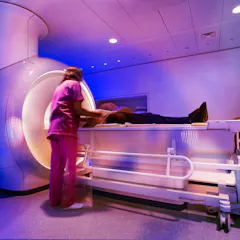
There are many different types of medical imaging and they all pick up different things.

Fourier’s discoveries can still be felt in modern-day radiology, climate science and physics.
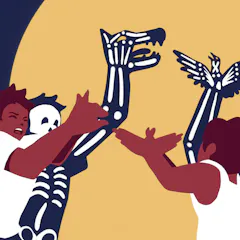
X-rays are like light rays, but they can pass through more stuff. Some of the x-ray’s energy is blocked by bone, which is why you can see bones so clearly on x-ray scans.
Top contributors
-

Research Associate in the College of Science and Engineering, Flinders University
-
Assistant Professor, University of the Witwatersrand
-
Chancellor's Professor of Medicine, Liberal Arts, and Philanthropy, Indiana University
-
Microscopy and Histology Core Facility Manager, University of Aberdeen
-
Professor and Chair of Electrical and Computer Engineering, Adjunct Professor of Computer Science, Adjunct Professor of Biomedical Engineering, Tufts University
-
Lillian Gilbreth Postdoctoral Fellow, Purdue University
-
Postdoctoral research student, KEMRI-Wellcome Trust Research Programme, Kenya Medical Research Institute
-
Director of the Institute of Evolutionary Medicine, University of Zurich
-
Associate professor in Vertebrate Palaeontology, University of the Witwatersrand
-
Chair professor, University of Huddersfield
-
Professor; Head of the School of Anatomical Sciences, University of the Witwatersrand
-
Postdoctoral Researcher, Massachusetts Institute of Technology (MIT)
-
Vice-President (Students & Learning) and Professor of Anthropology
-
PhD Candidate, College of Science and Engineering, Flinders University
-
Emeritus Strategic Professor in Palaeontology, Flinders University