
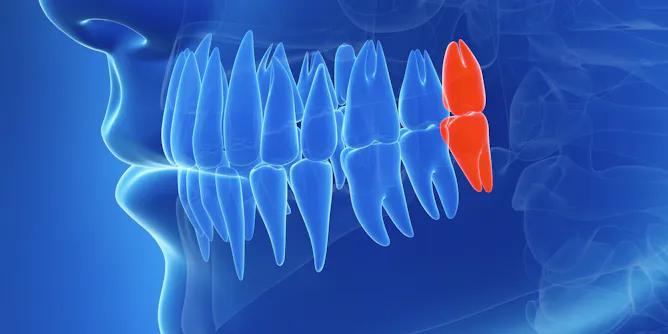
Two dental experts explain that these furthest-back molars may be a not-so-necessary leftover from early human evolution.
Articles on Curious Kids
Displaying 181 - 200 of 823 articles

Kian, age 6, has some interesting questions about farts that we’re probably all wondering about.

Sound needs matter to propagate, so the vast vacuum of space is not just empty − it’s silent.

No matter your age, if you’re being bullied − there’s help out there.
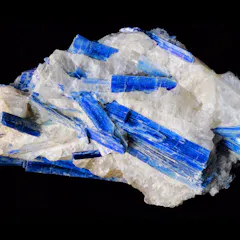
There are a lot of myths about crystals − for example, that they are magical rocks with healing powers. An earth scientist explains some of their amazing true science.

The process of digestion actually starts before you eat anything! Tummy rumbles can too.

Scientists are trying to figure out if time travel is even theoretically possible. If it is, it looks like it would take a whole lot more knowledge and resources than humans have now to do it.

Slimy snot is an important part of how your immune system wards off germs and fights back from infection.
Ghosts can be spooky fun, but there’s no evidence they exist.

Up to 50% of US teens feel they are addicted to their devices. But help is out there.

An astronomer explains why space looks so dark despite containing 200 billion trillion stars.

Balancing well is a whole-body experience that develops over time and takes practice to master.

Measuring the ages of planets and stars is tricky. An observational astrophysicist describes the subtle clues that provide good estimates for how old different space objects are.

An aerospace engineer explains why it’s so hard to tell just how fast an airplane is really moving.
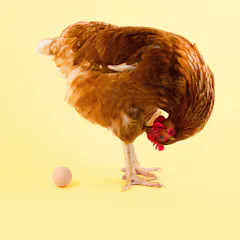
Evolutionary biology and the fossil record reveal a great deal about the origins of chickens and eggs.
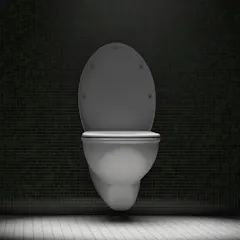
A pediatric urologist explains how the bladder and the brain communicate to wake you up when you need to ‘go’ – and how that communication might break down.
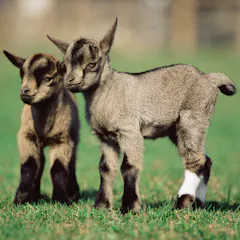
Animals often give birth to litters of more than one offspring at a time. But are those babies twins?
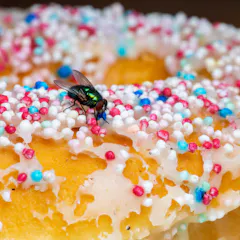
Flies often beat out competitors for food because of their specialized sensing organs called antennae.

Tower cranes come in many different sizes, and many weigh more than 100 tonnes.
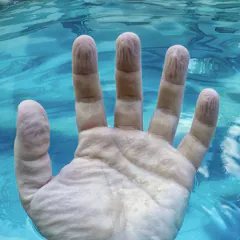
Recent research suggests blood vessels are the key to why fingers and toes turn pruny and pale after being submerged for a while.
Top contributors
-

Reader in Astrophysics, Keele University
-
Associate Professor of Science & Medicine, Bond University
-
Professor (Astrophysics), University of Southern Queensland
-
Associate Dean of Innovation and Engagement, Swinburne University of Technology
-
PhD Candidate, University of Southern Queensland
-
Distinguished Professor Emeritus of Anthropology, Binghamton University, State University of New York
-
Professor, Philosophy of Science, The University of Melbourne
-
Professor, Macquarie University
-
Researcher, The University of Melbourne
-
Assistant Professor of Medicine, Bond University
-
Professor of Science Communication and Chemistry, University of Hull
-
Lecturer, University of Southern Queensland
-
Associate Professor, School of Animal and Veterinary Science, Adelaide University
-
Principal Lecturer in Wildlife Conservation, Nottingham Trent University
-
Whale Scientist and Lecturer, Faculty of Science and Engineering, Macquarie University