
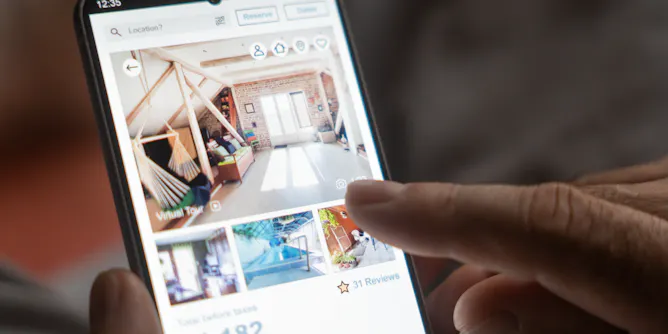
Rent tech is an unavoidable part of modern renting – and renters have little control over what data they have to give up and what happens to it afterwards.
Articles on Data privacy
Displaying 1 - 20 of 359 articles

Businesses are increasingly turning to AI and personalised data to become more efficient. Will that leave workers earning less and customers paying more?
New rules on what companies can do with personal information include tighter consent requirements, a ‘right to be forgotten’, and a simple test for what’s OK.

Large datasets can be useful research tools, but current government efforts to gather medical records depend on policy and technology that falls short of protecting people’s privacy.

Two researchers navigate the mind-boggling and often sinister, parallel universe that is known as the digital afterlife industry and chatbots specifically designed to help people grieve.

A standardized framework for regulating the safety and efficacy of AI in healthcare has yet to be established.

While alarming, incidents involving alleged unauthorised or inappropriate access can actually be a sign that safeguards to protect our data are working.

Data sovereignty is not just a technical issue — it is a collective challenge that all Canadians need to start taking seriously.
Is sharing your data worth what you’re getting out of it? That may be the wrong question to ask when you are thinking about whether to share.

A US-based education tech provider announced a cybersecurity incident affecting its Canvas platform – used by institutions around the world, including Australia.

Canada has no law that directly prohibits retailers from using your personal data to decide what you pay. Manitoba wants to change that. The federal government, for now, does not.

Stop trying to protect health data. Start controlling how it’s used.

What Palantir’s £330 million NHS data contract means for patients, privacy and the future of healthcare data in the UK.
To augment information about you that it collects directly, the US Government is buying less-regulated information harvested by cameras, cellphones and apps and sold on the commercial data market.
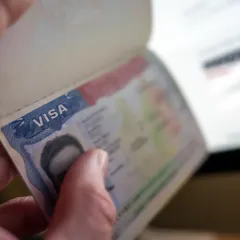
New US requirements for visa-free travel could involve sharing large amounts of biometric and law enforcement data, prompting concerns about privacy.

Your workplace wellbeing app may be doing more than tracking your mood. It could be analysing your voice, your words and your behaviour – and you may never have been told.
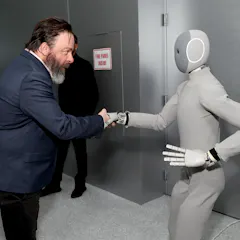
A robot butler sounds like a nice idea, but the technology has its drawbacks.

Automating knowledge production and teaching weakens the ecosystem of students and scholars that sustains universities, raising existential questions about their mission.

Following the app’s sale, the company’s updated privacy policy and terms of service set off alarm bells. The reaction shows Big Tech has lost the public’s trust.
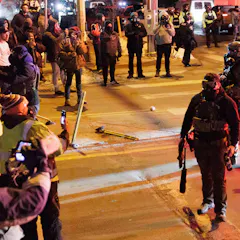
Federal agents have pepper-sprayed, tackled and detained people recording their actions. If you post your recordings of agents, you also risk the feds tracking you and those around you.
Top contributors
-

Associate Professor, Faculty of Law & Justice; Lead, UNSW Public Interest Law & Tech Initiative, UNSW
-
Affiliated Faculty Member, Institute for Computational and Data Sciences, Penn State
-
Professor of Cybersecurity, Head of School of Computer Science and Informatics, De Montfort University
-
Associate Professor, School of Law, University of Canberra
-
Professor in Business Information Systems, University of Sydney
-
Professor of Cyber Security Practice, Edith Cowan University
-
Adjunct Senior Lecturer, Applied Ethics and CyberSecurity, Griffith University
-
Professor of Marketing, University of Sydney
-
Dean of Global Business, The Fletcher School, Tufts University
-
Associate Professor in Cyber Security, Adelaide University
-
Professor of Business Law and Ethics, Indiana University
-
Associate Professor of Political Science, Brock University
-
Professor of Information Systems, Michigan State University
-
Ph.D. Candidate in Geography and Assistant Director at the Center for Refugee Studies, Indiana University
-
Professor of Cyber Security and Policy, Tufts University