

US sewage treatment plants likely don’t get rid of all the disease-causing protozoa, and monitoring discharged wastewater for it is difficult.
Articles on Diseases
Displaying 1 - 20 of 33 articles

Most genetic studies focus on people from European ancestry. But Africa has the richest diversity and must be included in genetic databases.

Droughts, outbreaks and violence: Environmental health expert explains why there is no human well-being without a healthy environment, and the climate changes’ impact on that

There’s a need for more surveys of macroinvertebrates in African countries.
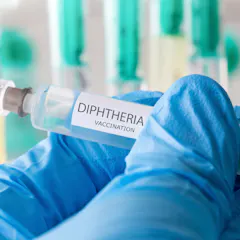
Getting vaccinated is the best way to protect against diphtheria.
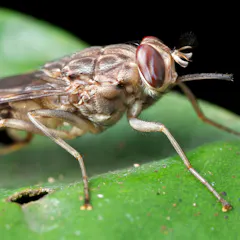
New research on what attracts blood-feasting flies to blue objects could help minimise the impacts of those insects on people and animals.
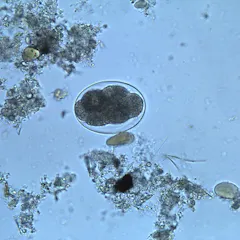
Though many Americans believe that parasitic infections exist in poorer countries, research shows that the problem exists in the US and has a higher impact in communities of color.

The inequitable distribution of the benefits and harms of the food system is a violation of the constitutional right to food.
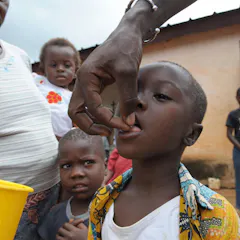
While Nigeria has made progress in controlling some neglected tropical diseases, it should do more as it carries a heavy burden of these diseases.

The lack of a clear formula to distinguish between donors’ adaptation and mitigation funds is hurting Africa’s climate response.

Financial support for science and research in Nigeria remains pathetic. This has led to the deterioration in the quantity and quality of trained virologists at universities.

The chances of surviving Marburg are improved if there’s early supportive care with rehydration and symptomatic treatment.

Two years ago, the Recovery trial transformed COVID treatments around the world with a landmark finding that may have saved a million lives in just nine months

A bat’s body is really good at tolerating diseases.

Lockdowns to curb the spread of COVID-19 had various effects on food as it went from farms to plates.

Nearly half the states have reduced liability for health care providers at a time when nursing home regulation is declining and families can’t visit loved ones for fear of spreading the coronavirus.

When two or more epidemics co-exist and compound one another to worsen health, they are said to be syndemic. COVID-19 is feeding on other crises and diseases.

Human psychology has evolved to avoid situations that could lead to infection. Behavioral choices now could have long-term effects on how people interact with others and the world.

Why is there such a wide difference in projections for how much COVID-19 will spread? An expert in disease modeling explains what models can and cannot do.

A rare disease is one that affects less that five in 10,000 people. There are about 7,000 known rare diseases.
Top contributors
-

Fellow, Nigerian Academy of Science
-
Researcher in Social Epidemiology, University of York
-
Distinguished Professor, Division of Family Medicine and Primary Care, Stellenbosch University
-
Professor and Head of Infectious Diseases Epidemiology Unit, School of Public Health and Preventive Medicine, Monash University
-
Professor and CEO, Cooperative Research Centre for Water Sensitive Cities
-
Professor, University of the Witwatersrand
-
Professor and Director of Monash Sustainable Development Institute, Monash University
-
Public Health Specialist in the Division of Health Systems and Public Health,, Stellenbosch University
-
Associate Professor in Biology, Zoology and Animal Science, Western Sydney University
-
Professeur de maladies infectieuses, Inserm, université de Montpellier, Institut de recherche pour le développement (IRD)
-
Specialist, CGIAR
-
Assistant professor, Département de médecine sociale et préventive, Université Laval
-
Research fellow, University of York
-
Public Health Registrar in the Division of Public Health Medicine, University of Cape Town
-
Associate Professor, Department of Entomology; African-American Studies, University of Illinois Urbana-Champaign