
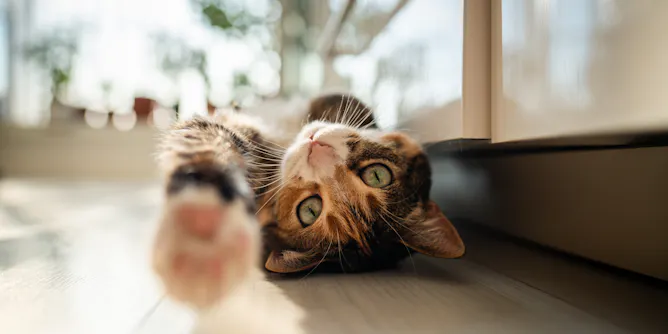
It’s not just you – many people have been getting more intense about their pet cat over the decades.
Articles on Domestication
Displaying 1 - 20 of 43 articles
Natural selection may not be the only force that has contributed to the evolution of channel millet’s unusual genetics.
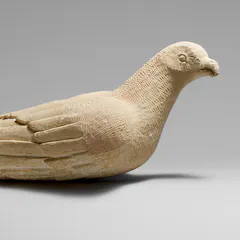
Why pigeons deserve more respect.
Dogs don’t stockpile food due to anxiety about impending disaster – they’re revealing how their evolutionary past still shapes modern behaviours.
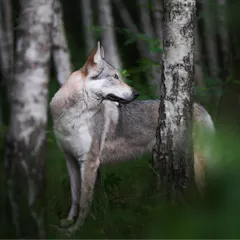
Today’s wolves and dogs share a common ancestor. But a deeper look at their genes reveals that interbreeding since dogs were domesticated 20,000 years ago hasn’t been as rare as scientists assumed.
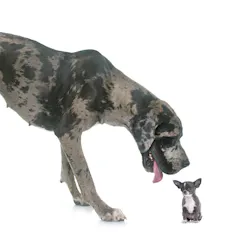
Dogs were already remarkably diverse more than 10,000 years ago, long before kennel clubs and pedigrees.

Users can form emotional attachments to devices. This has implications for design and human-computer interaction.

New research suggests dingoes are distinct enough to have their own scientific name. If this is accepted, it will have far-reaching consequences
Considering how easily bird flu swept through chicken farms, it’s clear that domestication has downsides. Lessons from the past paired with modern genomic technology can help with farming insects.
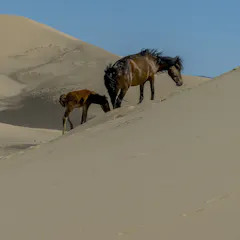
New analyses of bones, teeth, genetics and artifacts suggest it’s time to revise a long-standing hypothesis for how humans domesticated horses.
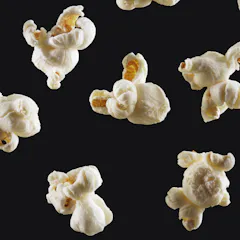
Corn has its roots in Mexico about 9,000 years ago.

Cassava’s many assets would seem to make it the ideal crop, except for one drawback: It’s highly poisonous. Human ingenuity has made cassava edible for millennia.

As we go from fishing to fish farming, we should borrow restorative approaches from permaculture.

Dogs have lived with Indigenous Americans since before they came to the continent together 10,000 years ago. A new analysis reveals the lineage of one 1800s ‘woolly dog’ from the Pacific Northwest.
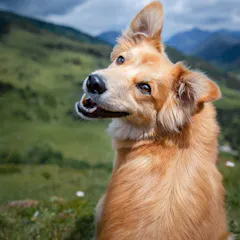
If we weren’t here to shape, feed and care for our dogs – how might they change?

Archaeological data alone can’t always help to answer researchers’ questions: multiple lines of evidence are needed.
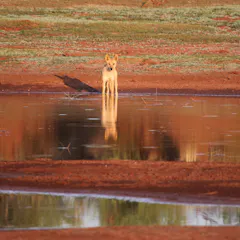
There’s been a long-standing debate over whether dingoes started out wild or domesticated. One thing is clear – they had a close relationship with First Peoples.
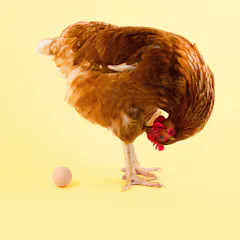
Evolutionary biology and the fossil record reveal a great deal about the origins of chickens and eggs.
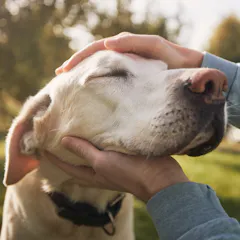
Dogs have rich emotional lives in which they can coexist with different species, and even forge bonds outside of their own species.
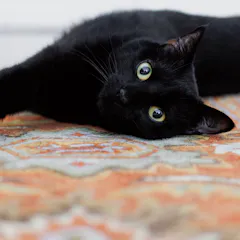
Natural selection changed just 13 genes to separate your Felix and Fluffy from their African wildcat ancestor.
Top contributors
-

Research Associate in Anthropology, Smithsonian Institution
-
Fellow, Keele University
-
Assistant Professor and Curator of Archaeology, University of Colorado Boulder
-
Curator of Archaeobotany and Archaeogenomics, National Museum of Natural History, Smithsonian Institution
-
Professor and Sixth Century Chair of Human Palaeoecology, University of Aberdeen
-
Embryologist, Murdoch Children's Research Institute
-
Research Fellow, Animal Welfare Science Centre, The University of Melbourne
-
Research fellow, Environmental Futures Research Institute, Griffith University; Estación Biológica de Doñana (EBD-CSIC)
-
Senior Lecturer in Psychology, CQUniversity Australia
-
Professor of Archaeology, Washington University in St. Louis
-
Associate professor, Chinese Academy of Sciences
-
Cornelia H. Dudley Professor of Psychology, Knox College
-
Senior Lecturer in Animal Science, Nottingham Trent University
-
Research fellow, University of Sydney
-
Professor of Cultural Palaeoecology, Liverpool John Moores University