

Calls to decolonize economics challenge the discipline’s foundational assumptions about development, markets and inequality.
Articles on Economic theories
Displaying 1 - 20 of 52 articles

From societies without money to profiteering aliens, the world of Star Trek has more to say about economics than you might think.

Was Cinderella’s happy ending with Prince Charming really largely the result of personal ambition? This is the kind of question I address in the course Economics for Everyone.
A heterodox school of economic thought known as modern monetary theory has significant implications for how Canadians understand public debt and deficit spending.
Canada faces interconnected challenges of climate instability and social inequality, and our current economic approach may be part of the problem.
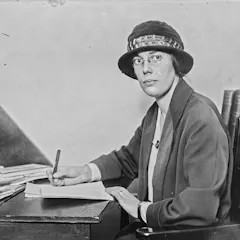
British progressive economists such as Barbara Wootton and William Beveridge locked horns with Friedrich Hayek over their vision of a European federation.

Research suggests that most of us are pretty trustworthy.

A controversial change ended up being widely accepted.

We estimate that unemployment and underemployment in the 13 years between 2004 and 2016 directly resulted in more than 3,000 Australian deaths by suicide.
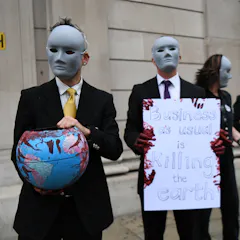
A new book by German political economist Maja Göpel examines how dominant paradigms in economic thinking turn into assumptions –inhibiting action on climate change.
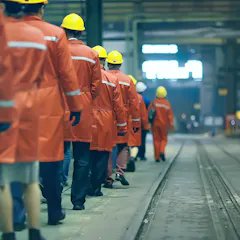
Here’s why economists aren’t sure about humanity’s place in an automated future.

Psychological and social perspectives on economy that were developed by 19th-century philosophers can help us re-imagine economics with a human face.
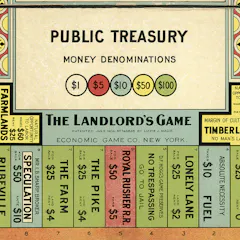
The game’s roots provide insights into capitalism that form part of teaching and research to this day.
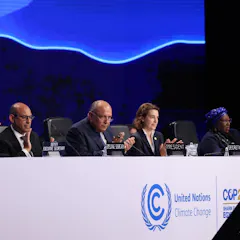
The absence of norms defining the common good and the insufficient place of scientific arguments in the democratic debate weaken the capacity of liberalism to face global threats.

With a square and a circle, the father of ecological economics and a founding architect of sustainable development redrew our understanding of the economy. It was revolutionary.
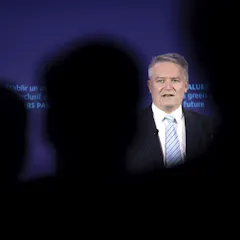
Australian Steve Keen is one of 26 distinguished economists taking issue with the OECD’s Australian head Mathias Cormann. He explains why.

Economic growth of countries needs many ingredients. Getting the recipe just right is important.

While central banks did help mitigate a COVID-induced recession, they don’t have the power to solve our inflation problem.

Hives that travel by truck, bees paid for their pollination service, adulterated honey, economic theories based on an imaginary social organization…
To achieve sustainable growth under the constraint that consumption is independent from the use of natural resources, we must move along the path of qualitative growth.
Top contributors
-

Scientia Professor of Economics, UNSW
-
The University of Queensland
-
Senior Lecturer in Economics, Lancaster University Management School, Lancaster University
-
Professeur d’économie, Mines Paris - PSL
-
Professor of Finance at l’ESILV et à l'EMLV, member of De Vinci Research Center, Pôle Léonard de Vinci
-
Associate Professor, Economics, MacEwan University
-
Professor of Finance, University of York
-
Professor, School of Accounting and Finance, UWA Business School, The University of Western Australia
-
Senior Professor, People, Organizations and Society, GEM
-
Maître de conférences, Conservatoire national des arts et métiers (CNAM)
-
Chair & Professor of International Business, University of Manchester
-
Professor of Political Economy, The University of Queensland
-
Associate Professor, School of Economics, University of Sydney
-
Professor, Université de Lorraine
-
Senior Lecturer in Economics, The Open University