
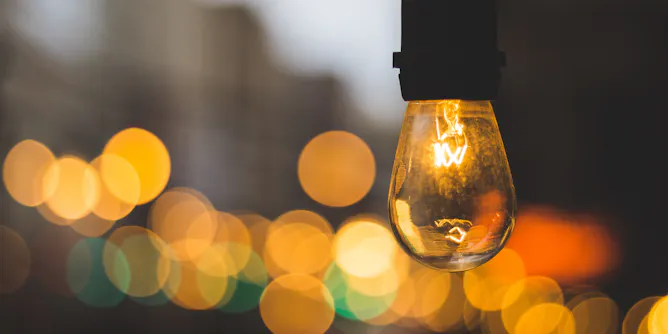
Light bulbs can turn electricity into light (and a bit of heat) – an expert explains how they do it.
Articles on Electricity
Displaying 341 - 360 of 649 articles

Wild things thrive in transmission pathways that crisscross states.

Resettlement plans for large infrastructure projects don’t always go according to plan.
The state of Australia’s energy and climate change policy is reason to despair. But there may be a nuclear solution that keeps both sides happy.
Ghana’s experience is a cautionary tale for countries that find themselves in a situation of having too much electricity at any given point.
South Africa’s policymakers see a greater role for liquefied natural gas in the country’s energy mix, reduce the country’s over-reliance on coal and drive re-industrialisation.

A clandestine system of transfer payment, with roots in apartheid-era boycotts, has developed into routine behaviour on which many family budgets now depend.

In the race to bring electricity to the masses, the crucial role that women played in it being accepted by the masses is left at the sidelines.

Electricity happens when electrons move from one atom to another.
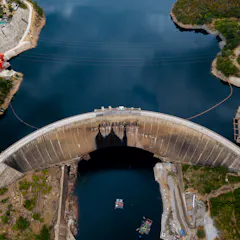
Zimbabwe has a severe energy crisis because its major sources of electricity are struggling to keep up with demand.

A nanotube innovation using waste plastic could help solve one of the world’s energy problems.
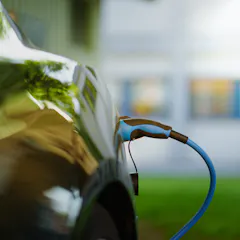
Electricity consumption will grow as more people switch to electric cars – but this could drive up emissions, unless power is sourced from renewables.
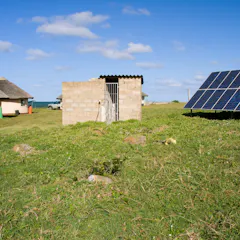
South Africa could become a test bed of technologies that enable households, especially in remote areas, to join electricity trading markets.

Almost 80 million Nigerians do not have access to electricity and its erratic supply is costing the economy an estimated $29 billion annually. Nigeria’s abundant sunlight could be the solution.

Even fridge magnets have magnetic fields approximately 200 times stronger than Earth’s.

The electric utility is seeing rapid changes and threats that affect consumers, from more wind and solar to wildfires. How they react depends in large part on regulators.
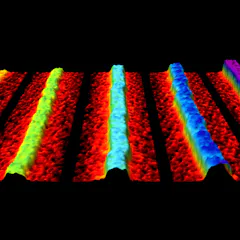
Phosphorene nanoribbons are like tagliatelle, but carry the potential to boost battery capacity by 50%.

The transport sector is the fastest growing contributor of greenhouse gases. Electric vehicles are a cost-effective solution.

There’s mounting evidence that increased lighting has a range of negative effects.
Twelve power projects are in the running for federal government dollars: six pumped hydro, five gas and one coal. It’s clear which one shouldn’t be on the list, for economic and environmental reasons.
Top contributors
-

Senior Industry Fellow, Environment and Planning, RMIT University
-
Senior Research Associate, Renewable Energy & Energy Systems Analyst, UNSW
-
Senior Fellow in Energy and Climate Change, Grattan Institute
-
Honorary Associate Professor, Centre for Climate Economics and Policy, Australian National University
-
Professor of Physics, University of Johannesburg
-
Professor of Energy and Environmental Economics and International Affairs, Penn State
-
Director of Energy Studies, University of Florida
-
Professor and Director, Victoria Energy Policy Centre, Victoria University
-
Associate Professor, Renewable Energy, Monash University
-
Professorial Fellow, University of Canberra
-
Professor, School of Economics, The University of Queensland
-
Senior Research Associate, University of Johannesburg
-
Associate Professor, Griffith University
-
Visiting Fellow, Crawford School of Public Policy, Australian National University
-
Professor, Discipline of Political Economy, University of Sydney