
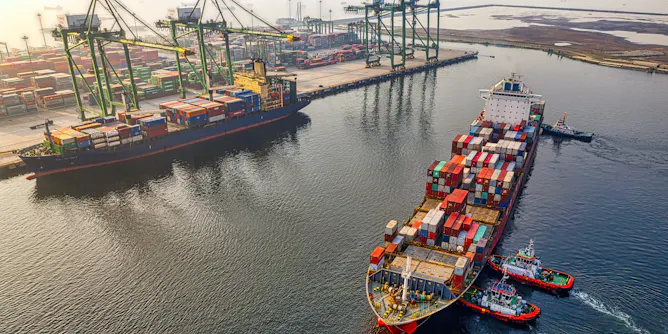
If shipping were a country, it would rank between Japan and Germany as the sixth-largest contributor to global carbon dioxide emissions.
Articles on Electrification
Displaying 61 - 80 of 82 articles

Sweden electrified at the turn of the 20th century, leading to over 8,000 work stoppages – but the strikers were no Luddites.

A significant number of African countries might not make a decisive leap to renewables this decade.

Per capita electricity use was higher in the 1970s than today.

The Climate Change Committee has laid out a road map for net zero emissions that the UK government could follow.

Such a large accumulation of methane in a lake is unique, and has never been reached in any other lakes.

From its roots as an electric version of snake oil, by the 1930s vibrators were just another household electric appliance that could soothe your pains at the end of a long day.

The world runs on energy, so finding low-emission alternatives to fossil fuels is crucial. Wind and solar are cheap and abundant but can’t do everything. But hydrogen fuel could complete the picture.
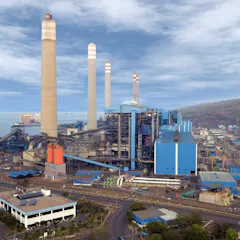
Climate change affects power plants in Indonesia, eventually disrupting energy supply to consumers.

There has been no progress in expanding national electricity grids in most African countries since 2016.

Democratic candidates are keen to burnish their climate credentials by calling for grand electric vehicle plans. But there are both economic and political reasons for going slowly.

Electric cars gets lots of attention, but in the developing world, electric two-wheelers have the potential to spread quickly – if batteries continue to improve on performance and cost.

Electrifying transport needs bigger changes than another high-end electric car.
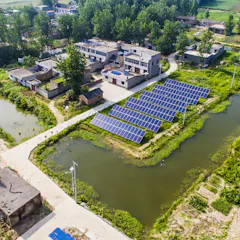
Small-scale renewable energy projects can power rural areas not connected to the main grid. But investors may hesitate if future electrification remains unpredictable.

In sub-Saharan Africa there are more people with mobile phones than access to electricity, and their data could be useful.
The case for pragmatism, not dogma.
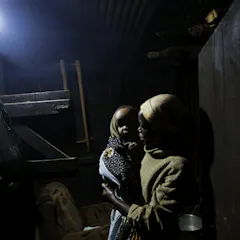
A lighting revolution is underway across Africa that’s occurred largely without government or donor involvement.
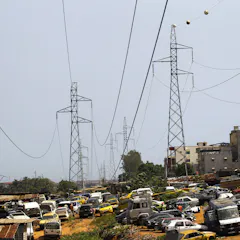
The short term interests of investors could lead to long term problems in sub-Saharan Africa.

Kenya’s inadequate electricity supply is due to an over-reliance on hydropower, high energy and infrastructure costs.

New technologies are developing with exponential velocity, breadth and depth. Their systemic impact is likely to be profound.
Top contributors
-

Professor of Transport Technology and Sustainability, Swinburne University of Technology
-
Professor of Sustainability, Curtin University
-
Adjunct Professor in Sustainability, The University of Western Australia
-
Senior Research Fellow, Collaboration on Energy and Environmental Markets, UNSW
-
Associate Professor in Property, Construction and Project Management, RMIT University
-
Professor of Sustainability, University of Dayton
-
Professor of Energy and Environmental Economics and International Affairs, Penn State
-
Research Associate, Renewable Energy, University of Oxford
-
Director of the Innovative Management Practice Research Centre, Anglia Ruskin University
-
Professor, Leibniz Institute for Economic Research
-
Research Associate (Centre for Energy Economics Research and Policy), Heriot-Watt University
-
Research Associate, Advanced Battery Systems and Safety, Edith Cowan University
-
Director of Energy Lancaster and Professor of Physical Chemistry, Lancaster University
-
Knowledge Broker, Centre for Safe Air (NHMRC CRE), and Adjunct Researcher, Media School, University of Tasmania
-
Professor Markets and Management, Lancaster University