

While educators in Netflix’s ‘Matilda the Musical’ aren’t meant to be blueprints for contemporary teaching, they suggest the powerful ways attentive adults can make a difference in children’s lives.
Articles on Empathy
Displaying 61 - 80 of 197 articles

A clinical psychologist explains what has the potential to trigger our usually well-meaning laughter.

The explosive viral spread of the grainy but dramatic footage shows the limits of mainstream media ethics.

The idea of healing benefits and emotional catharsis through reading is intuitively appealing. But does it work that way? Jane Turner Goldsmith finds answers in neuroscience, philosophy and more.
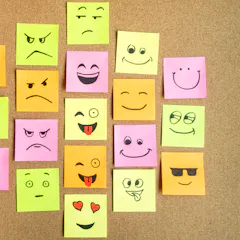
It’s important that employers and employees understand sympathy, empathy and compassion, and consider these emotions’ roles in both job performance and employee relations.

New research suggests Canadians were more likely to support Ottawa’s COVID-19 financial aid if they recognized others were dealing with financial struggles, no matter their own economic situation.

What good is asking someone if they are OK if we are just performing empathy? And what do we do if they are really not OK?

An anthropologist explains how years of conflict have made Ukrainians reassess their priorities and relationships.

The transition to a new school year will be an important time for students to focus on strategies for fostering positive mental health and well-being, and recognizing signs that help may be needed.

The miracles of modern medicine can be life-saving. Yet as Tim Baker writes, cancer patients yearn for a little empathy from their doctors, as well as scripts.
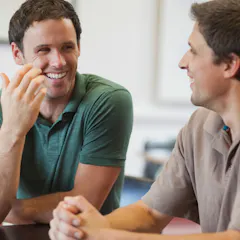
Problems identifying and responding to emotions in others is thought of as a core feature of autism. But our research shows there may be minimal differences in this aspect of social interaction.
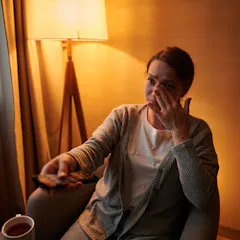
Here are three steps for overcoming the distress caused by a surfeit of empathy.

It’s intriguing how some people experience ASMR while others don’t - our latest research suggests that many ASMR responders are highly sensitive “orchids”.

The presence of pets makes people seem more trustworthy, research has found. People are more likely to help a stranger with a dog or another pet than a person without one.

The threat of COVID may be receding, but the fall-out will continue to affect business in the coming year, requiring strong leadership to navigate uncertain times.

It’s time to make caring doctors the norm, not the exception.

How to manage the stress of polarization and how to function when it surrounds us is now a necessary but underdeveloped skill for many of us.
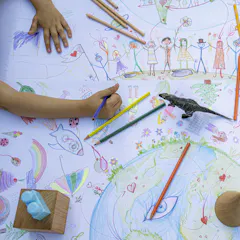
Parents often want their kids to be creative. But while creativity has many benefits, it can also be used for harm. Here’s how to teach kids to harness their imagination for the common good.

As COVID gradually recedes and attention focuses on economic recovery, good leadership is essential to help companies and their employees navigate a post-pandemic future.

New research shows overworked, sleep-deprived health-care professionals are less empathetic to their patient’s needs compared to when they are well-rested.
Top contributors
-

Professor and Director of the Stoneygate Centre for Excellence in Empathic Healthcare, University of Leicester
-
Professor, Canada Research Chair in Determinants of Child Development, Owerko Centre at the Alberta Children’s Hospital Research Institute, University of Calgary
-
Lecturer in Psychology, King's College London
-
Senior Lecturer in Psychology, Leeds Beckett University
-
Associate Professor of Psychology, University of Bath
-
Associate lecturer, University of Sussex
-
Reader in Leadership, School of Business and Creative Industries, University of the West of Scotland
-
Assistant Professor of Psychology, Pomona College
-
Honarary Research Fellow in Psychology, Australian Catholic University
-
Associate Professor of Psychology, University at Albany, State University of New York
-
Atkinson Chair of Early Child Development and Education and Director of the Atkinson Centre, University of Toronto
-
Associate Professor at the Institute for Social Neuroscience in Melbourne, Australia, The University of Melbourne
-
Professor of Developmental Psychopathology, University of Cambridge
-
Associate Professor of Psychology and Senior Research Associate in the Rock Ethics Institute, Penn State
-
Adjuct Faculty University of Guelph, Former Chair, Early Childhood Studies and Founder of The Love Model Inc.