
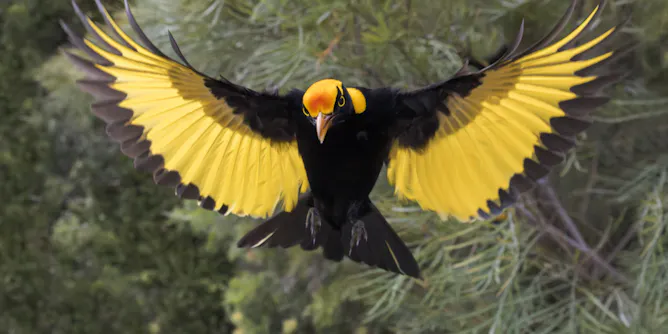
New Zealand’s ancient bowerbird was smaller and more slender than the species living in Australia and New Guinea today.
Articles on Evolutionary history
Displaying all articles

US company Colossal Biosciences claims wide support by Māori for its plans to resurrect the flightless moa, but many iwi are opposed to de-extinction.

Protecting remaining strongholds and minimising human impacts on food sources will be crucial to avoiding further population decline of this remarkable creature.
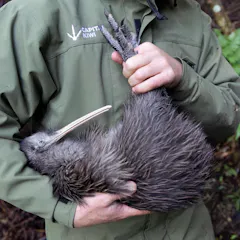
A recent announcement that kiwi and moa are Australian immigrants is not borne out by available evidence. Working out when birds arrived in New Zealand requires both fossil evidence and genetics.
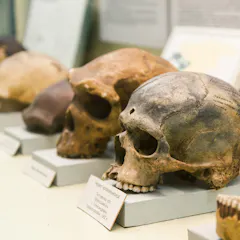
There are areas of biology that may be considered optional at younger year levels, such as botany, entomology and marine ecosystems. Evolution is not one of these.

80,000 years ago, Australia’s landscape was dominated by much larger versions of today’s marsupials – including enigmatic and enormous wombats.
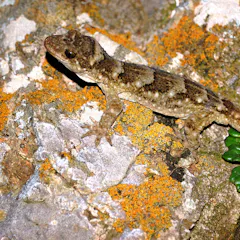
Biologists have used ancient DNA, preserved in fossil bones for millennia, to study the evolution of large species, but now they can employ it to study small animals like lizards and frogs.
Top contributors
-

Associate Professor in Ancient DNA, University of Otago
-
Curator of Vertebrates, Museum of New Zealand Te Papa Tongarewa
-
Postdoctoral Research Fellow in Molecular Ecology, University of Otago
-
Postdoctoral Research Fellow, Genetics, School of Archaeology, University of Oxford
-
Lecturer in Palaeontology, The University of Queensland
-
Senior Lecturer in Philosophy and Education; Curriculum Director, UQ Critical Thinking Project, The University of Queensland
-
Adjunct Senior Researcher at Griffith University and La Trobe University, and Ramón y Cajal (Senior) Research Fellow, Centro Nacional de Investigación sobre la Evolución Humana (CENIEH)
-
Senior Lecturer in Molecular Ecology, Griffith University
-
Research Fellow in Earth Sciences, University of Cambridge
-
Associate Professor in Biological Anthropology, University of Otago
-
Professor, Palaeontology, Griffith University
-
Lecturer in Biology, University of Salford