

US company Colossal Biosciences claims wide support by Māori for its plans to resurrect the flightless moa, but many iwi are opposed to de-extinction.
Articles on Moa
Displaying all articles
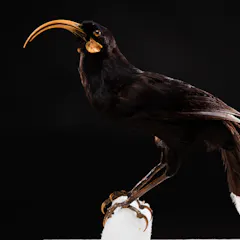
There is nothing to stop de-extinction companies using specimens from museum collections, despite little Māori support for reviving lost native species.
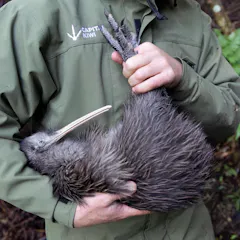
A recent announcement that kiwi and moa are Australian immigrants is not borne out by available evidence. Working out when birds arrived in New Zealand requires both fossil evidence and genetics.
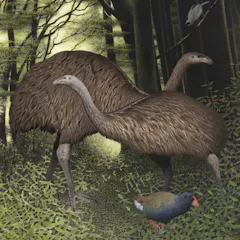
Reconstructing the demise of New Zealand’s extinct moa can help conserve the country’s remaining flightless birds, which are retreating to the same final places - cold, isolated mountaintops.

By including five extinct species in its Bird of the Year competition, Forest & Bird provides a way to mourn what we’ve lost – and also strive to save what remains.
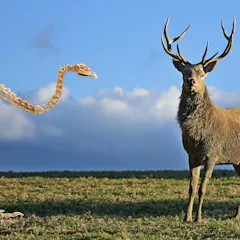
Claims that introduced deer perform the same ecological function as ancient moa are outdated and wrong. Deer destroy forests, and large-scale culling is still the best solution.
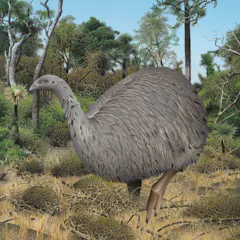
DNA from ancient eastern moa bones is unlocking the secrets of their survival during the last ice age, and providing lessons for today’s threatened species.

Evolution towards flightlessness has been much more common through history than scientists once thought.
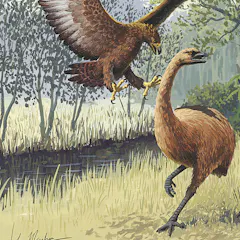
Tracing extinctions that happened centuries ago is difficult. But in New Zealand, the last place to be settled some 750 years ago, ancestral Māori oral traditions retain clues about lost species.
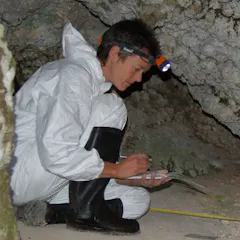
Scientists long assumed that the extinct moa played an important role as a disperser of large seeds. But a new study finds that New Zealand’s largest herbivore only dispersed the tiniest seeds.
Top contributors
-

Associate Professor in Ancient DNA, University of Otago
-
Emeritus Professor of Computational Biology, Te Kunenga ki Pūrehuroa – Massey University
-
Conservation biologist, University of Otago
-
PhD Candidate in Ecology, University of Canterbury
-
Research Associate, Ecology and Evolution, Adelaide University
-
Professor of Global Change Ecology, Adelaide University
-
Professor of Invasion Biology, UCL
-
Postdoctoral Fellow, Department of Zoology, University of Otago
-
Associate Professor, University of Waikato
-
Marie Curie Postdoc Fellow, Centre for Biodiversity and Environment Research, UCL
-
Senior Lecturer in Ecology and Evolution, Adelaide University
-
Associate Professor of Political Science, University of Waikato
-
Professor emeritus, State University of New York College of Environmental Science and Forestry
-
Postdoctoral Research Fellow in Molecular Ecology, University of Otago
-
Curator of Vertebrates, Museum of New Zealand Te Papa Tongarewa