

It’s possible even more young people would like to study maths but can’t find the right course.
Articles on GCSEs
Displaying 21 - 40 of 84 articles
Changes have included a return to exam-focused assessment.

Very compressed study schedules lead to a catastrophic amount of forgetting.
It’s important to remember that you can’t ‘complete’ revision.

Informal learning is linked with increased numbers of students choosing music at GCSE.
There is no evidence that the pandemic approach to assessment was less robust. It simply produced a different profile of results.

Over 80% of secondary schools are academies, which don’t have to teach the national curriculum.

Messages from teachers like ‘if you do not work hard, you will fail your GCSEs and you will not get into college’ are known as fear appeals.

There is a history of languages being graded harshly.
Grades in 2023 will be brought in line with those given in 2019.

The government is reversing pandemic “grade inflation” in England.
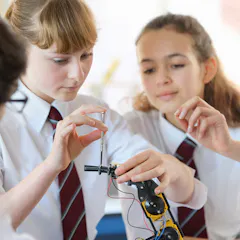
The proposed MBacc needs to avoid perpetuating the academic hierarchy it intends to address.

Positive messages and relaxation techniques can help.

The brain holds on to language knowledge for decades.

Different school subjects can be associated with different genders.

Children often aren’t aware of how much has been lost in recent generations.
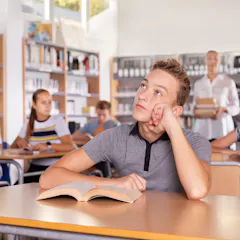
Studying English literature at school is very different to reading for pleasure.

The idea that exams exist to help universities and employers pick candidates is deeply entrenched – and misguided.
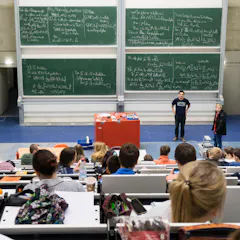
New research shows that secondary pupils who take maths past 16 have higher levels of a chemical that boosts brain plasticity and learning in general. What other teaching can provide this?
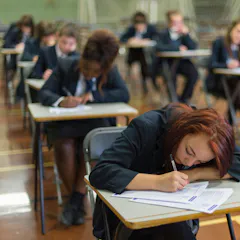
The data shows that attainment gaps in English education at age 16 cannot be attributed to any single factor.
Top contributors
-

Director of the Oxford University Centre for Educational Assessment, University of Oxford
-
Head of Department and Senior Lecturer in Education and Social Justice, Lancaster University
-
Sir Henry Wellcome Postdoctoral Fellow, King's College London
-
Senior Lecturer (Psychology in Education), Liverpool John Moores University
-
Programme Leader, MA in Educational Assessment, UCL
-
Lecturer in Languages Education, University of Sheffield
-
Reader in Psychology, Queen Mary University of London
-
Director, Nottingham Institute of Education, Nottingham Trent University
-
Vice-Chancellor and Prinicipal, Brunel University of London
-
Professor of Educational Assessment, UCL
-
Professor in Education, Liverpool John Moores University
-
PhD student, University of Oxford
-
Reader in Social Statistics at the Centre for Multilevel Modelling, University of Bristol
-
Senior lecturer for PGCE Primary, Cardiff Metropolitan University
-
Phd Student, Institute of Psychiatry, Psychology & Neuroscience, King's College London