

In a case study, parents responded positively to their children being taught science in two languages.
Articles on Science education
Displaying 1 - 20 of 141 articles
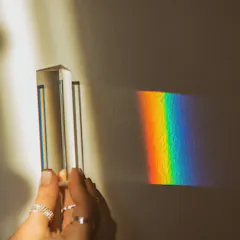
Science equips us with the tools to reason, evaluate evidence, and make informed decisions in a complex, changing world.
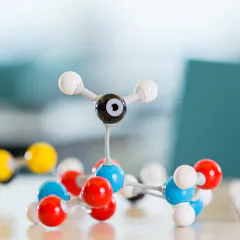
The government wants a knowledge-rich physics curriculum, but packing in too many topics without a clear order could backfire.

If science teachers embrace history as a lens for teaching complex accounts of science, we open possibilities for more socially relevant classrooms.

With college students less likely to read through a full textbook than they once were, video games can help keep them engaged.
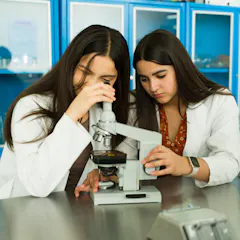
New research suggests GCSE science builds thinking skills that matter far beyond the lab.

Do you dry your hair before going out to avoid catching a cold? That’s even if you know viruses are the real cause? Here’s what’s going on.
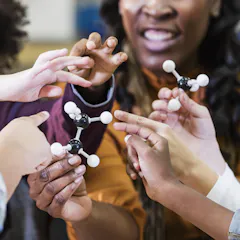
Scientists have traditionally focused on educating the public on science or correcting misinformation. But researchers from marginalized communities often have broader goals in science communication.
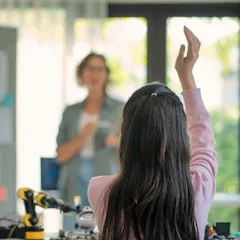
Critical thinking is an essential skill students should be encouraged to develop as part of their science learning. NZ’s draft science curriculum fails the test.
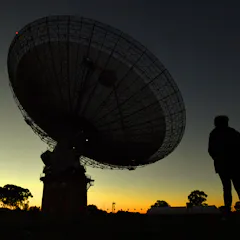
We have gaps – in workforce, infrastructure and coordination – that will cripple our ability to secure a bright future for the next generation, unless we act now.

Learners understood human evolution better after interactive workshops at a museum.

Pop culture about the ‘trial of the century’ reflected broader cultural rifts.
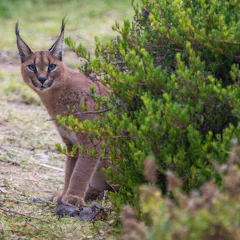
Social media is an effective way to raise conservation awareness about wildlife living on the urban edges.

Less than a month since the government paused New Zealand’s science curriculum refresh, an international study puts our students in the middle of the pack – with worrying results for poorer schools.
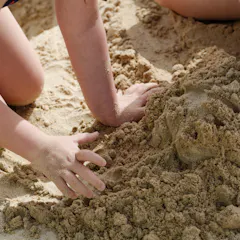
New research shows how the beach provides many ways to teach young children about biology, chemistry and physics.

If you stop to think about it, most of your knowledge can’t be clearly tied to one particular experience.

A course exemplifies one way group collaboration to address the climate crisis can begin: with each person identifying key moments in their engagement, and contributing this to a larger ‘river’ model.

A growing number of states are passing laws that call scientific theories into question.
Australia’s Women in STEM ambassador initiative has been discontinued. Is this a setback for diversity?

One community college created a science pathway program that boasts a 100% employment rate for graduates.
Top contributors
-

PhD; Lawrence Berkeley Laboratory (retired) and Research Fellow, University of California, Davis
-
Laureate Professor of Mathematics, University of Newcastle
-
Distinguished Professor, Australian National University
-
Distinguished Teaching Fellow, Western Sydney University
-
Professor, Australian Catholic University
-
Emeritus reader in science education and communication, University of Sussex
-
Chair, The Conversation Media Group
-
Maseno University
-
Research fellow, University of York
-
Professor of Science Education, The University of Western Australia
-
Assistant Curator of Museum Education, University of Florida
-
Science communicator and communication consultant to Questacon, and alumni, CSIRO
-
Professor of science education, Deakin University
-
Professor, STEM Education, North Carolina State University
-
Vice-Chancellor and Prinicipal, Brunel University of London