
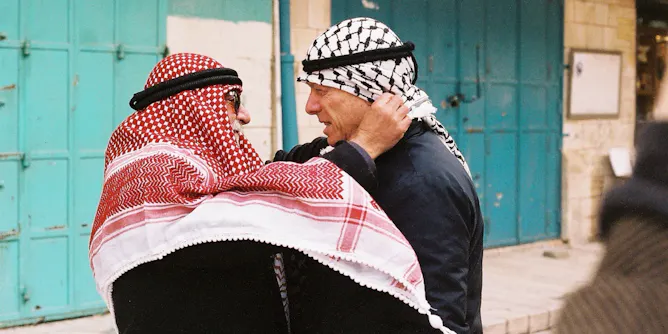
In Light Sleeper, award-winning Jewish journalist David Leser struggles with the limits of tribal loyalty, and pressure to support Israel amid the realities of Gaza.
Articles on Genocide
Displaying 1 - 20 of 345 articles
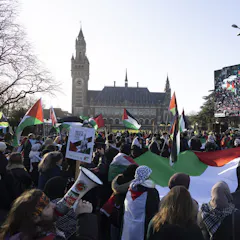
There may be legal parallels between Myanmar’s actions against the Rohingya and what Israel is accused of perpetrating in Gaza.
A world-first ruling from the International Court of Justice could change how courts treat genocide – but how the ruling will be enforced remains an open question.
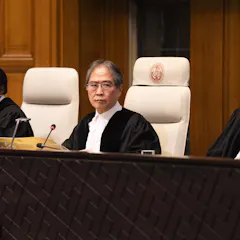
The International Court of Justice’s historic finding against the leaders who directed attacks against the Rohingya may affect other cases, including against Israel.
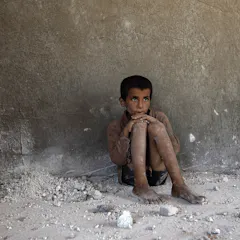
Robert Manne calls for thinkers like Simon Schama, publishers, and leaders of the Israel and Jewish lobbies like Jillian Segal, to speak the truth about Israel’s war.
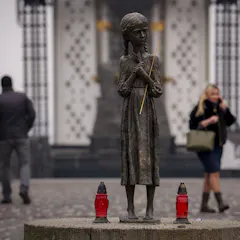
For communities encountering silencing in the wake of forced famine or mass atrocity, the ongoing battles over Holodomor recognition and remembrance offer insight.

No matter what you think of Wab Kinew’s call to end the Indian Act – bold, presumptuous, a distraction, an academic exercise – it’s an opportunity to discuss it.
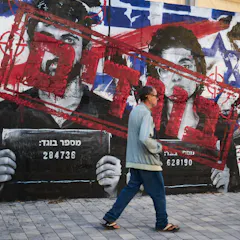
Granting anonymity to the Israeli intelligence and military insiders in the documentary film is ethically defensible, even though they describe taking part in grave crimes.
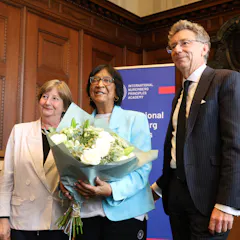
85 year-old Navi Pillay served as a leading national (during apartheid in South Africa) and international jurist. By appointing her, the Nobel Committee is making a stand which has drawn praise and condemnation.

Under the warmth and good humour is a formidable, steely grit.

The Trump administration is bent on destroying the ICC. It will require a strong counter offensive to preserve the court and its functions.
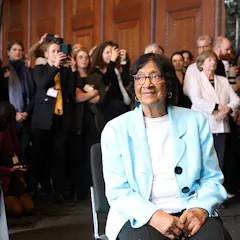
Recognising Pillay is an affirmation of what has been achieved, but also about what must not be lost.

Much of the difference in number of deaths across reports stems from how organisations select and handle sources.

Ottawa has left the outdated 2009 Discover Canada booklet in place, pushing the work of teaching reconciliation to newcomers onto underfunded community educators.
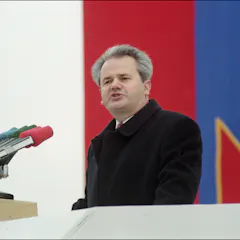
As mass atrocities continue worldwide, finding ways to spot warning signs earlier could help mitigate or prevent future catastrophe.
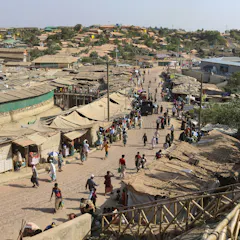
The International Court of Justice is expected to deliver its ruling in the genocide case against Myanmar next month.
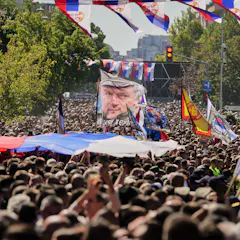
On The Conversation Weekly podcast, an international law expert explains why some Serbs revered convicted war criminal Ratko Mladić.
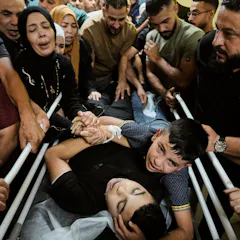
The dehumanizing language used by Israeli officials reflects and enables an underlying disregard for Palestinian life that connects to the findings of the recent June 2026 UN Commission of Inquiry report.

Bosnia remains a country divided by contrasting histories and narratives about the war. Mladić is a symbolic reminder of this.
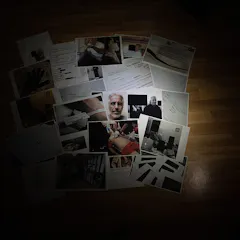
A community – bystanders, law enforcement, colleagues and family – is likely to deny an atrocity when acknowledging it requires action.
Top contributors
-

Extraordinary Professor, Department of Political Sciences, University of Pretoria
-
Co-Director, Institute for Genocide and Mass Atrocity Prevention, and Professor of Public Administration, Binghamton University, State University of New York
-
Distinguished Professor of Anthropology; Director, Center for the Study of Genocide and Human Rights, Rutgers University - Newark
-
Professor in Political Science, Arnold Bergstraesser Institute
-
Professor of Law, University of Waikato
-
Associate Professor International Law, Roskilde University
-
Co-Director, Institute for Genocide and Mass Atrocity Prevention, Binghamton University, State University of New York
-
Postdoctoral Research Associate, King's College London
-
Professor Emeritus, Department of Political Science, Wilfrid Laurier University
-
Professor, Lancaster Law School, Lancaster University
-
Professor of Anthropology, University of the Western Cape
-
Adjunct Professor of Mass Atrocities Prevention, Georgetown University; University of Connecticut
-
Senior Lecturer in Politics and International Relations, University of Dundee
-
Assistant Professor of Law, Osgoode Hall Law School, York University, Canada
-
PhD student of law, Universidade do Estado do Rio de Janeiro (UERJ)