
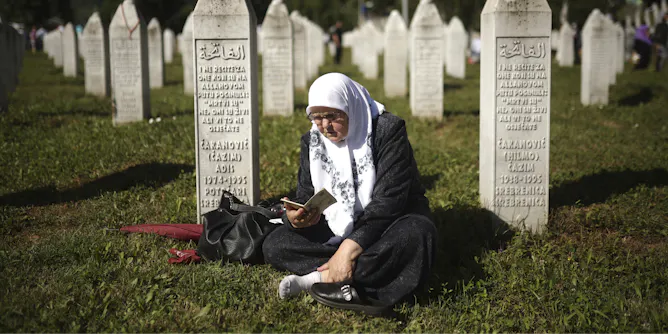
Drawing on her personal experience at the Hague, Gretchen Shirm’s novel Out of the Woods confronts the issues of murder and displacement, cruelty and loss.
Articles on Genocide
Displaying 61 - 80 of 345 articles
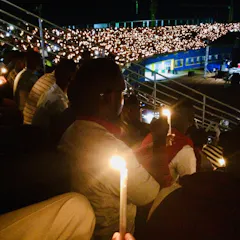
Genocide remembrance practices like Kwibuka remain meaningful to survivors.

Sophal Ear, a Cambodian scholar who fled the Khmer Rouge as a child, reflects on 50 years since the murderous regime took control.

The Bible contains some explicit genocidal narratives, and over time, some religious Zionists have wielded these stories to advocate for the destruction of the Palestinians.

Rwanda’s government has blamed Belgium’s colonial rule for the ethnic divisions that sparked the 1994 genocide.
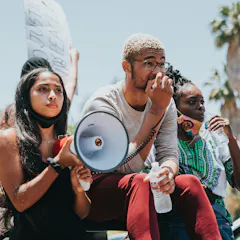
Globally, we’re witnessing a rise in far-right governments increasingly hostile towards universities, historically springboards for progressive change. What should the future look like for universities in Canada?

Children represent the future. In Gaza that future is being snuffed out.
Campaigners in Namibia are demanding that the government and industry halt the expansion plans on Shark Island, and meaningfully engage with reconciliation.
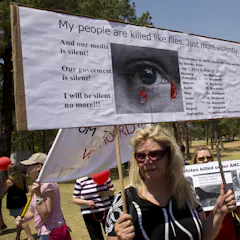
Rural violence is a huge problem in South Africa that deserves a strong response. But white people are not the only casualties.
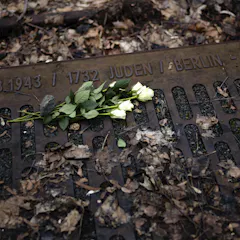
A historian of the Holocaust and curator of the Auschwitz exhibition, now in Toronto, invites all who gather on Jan. 27 to also consider the date’s political origins.
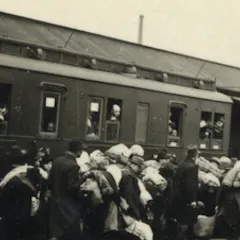
Descendants of survivors helped researchers identify 279 deportees and tell their stories. ‘We give previously faceless victims a voice,’ says project’s co-founder.
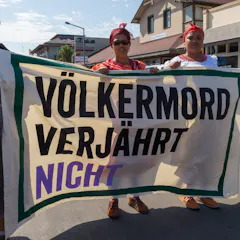
The pact between Germany and Namibia on atrocities, including genocide, committed under colonial rule is deeply flawed.
A round-up of the biggest global stories this week.
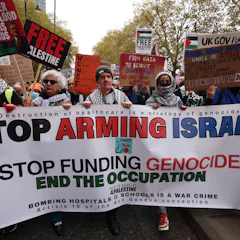
An expert in international law explains what constitutes genocide.

A cultural studies scholar says Netflix’s removal of their ‘Palestinian Stories’ section, along with about 20 films, is more than a simple business decision: it’s instead an act of cultural erasure.
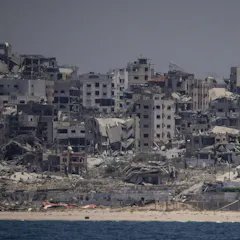
Universities play an indispensable role in supporting the free inquiry needed to do the essential work of analysis, evidence gathering and recording of war crimes.
It’s claimed that more information can solve our crises, from climate change to Gaza. But the world today shows how this vision of reason has tipped over into unreason, anger, and barbarism.
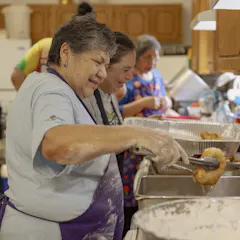
Frybread — a simple, versatile “comfort food” for many Indigenous communities — embodies the contradictions that have dictated Indigenous food and health in North America since colonization.

The destruction of food systems in Gaza and Canada is part of a larger effort of land dispossession and capitalist accumulation. The fight for food sovereignty is about justice and self-determination.
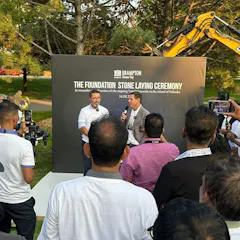
The controversy surrounding this memorial highlights the broader memory wars around the history of Sri Lanka’s civil war: how it is remembered and by whom.
Top contributors
-

Extraordinary Professor, Department of Political Sciences, University of Pretoria
-
Co-Director, Institute for Genocide and Mass Atrocity Prevention, and Professor of Public Administration, Binghamton University, State University of New York
-
Distinguished Professor of Anthropology; Director, Center for the Study of Genocide and Human Rights, Rutgers University - Newark
-
Professor in Political Science, Arnold Bergstraesser Institute
-
Professor of Law, University of Waikato
-
Associate Professor International Law, Roskilde University
-
Co-Director, Institute for Genocide and Mass Atrocity Prevention, Binghamton University, State University of New York
-
Postdoctoral Research Associate, King's College London
-
Professor Emeritus, Department of Political Science, Wilfrid Laurier University
-
Professor, Lancaster Law School, Lancaster University
-
Professor of Anthropology, University of the Western Cape
-
Adjunct Professor of Mass Atrocities Prevention, Georgetown University; University of Connecticut
-
Senior Lecturer in Politics and International Relations, University of Dundee
-
Assistant Professor of Law, Osgoode Hall Law School, York University, Canada
-
PhD student of law, Universidade do Estado do Rio de Janeiro (UERJ)