

Two genocide and mass atrocity prevention scholars argue Trump’s response to the Charlottesville attack is a red flag.
Articles on Genocide
Displaying 301 - 320 of 345 articles
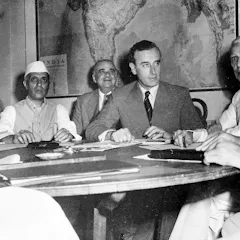
The partition of India led to more than a million deaths. A scholar argues how British royal, Lord Louis Mountbatten, who hurriedly drew the new borders in secret, was largely responsible.
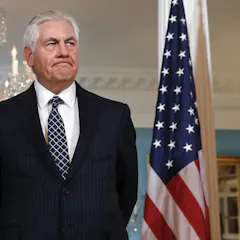
Some worry the US is losing its global moral authority under the Trump administration. But a close look at history reveals US leadership is not as strong as it seems.
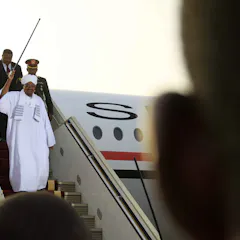
The ICC has been criticised for not acting against South Africa after it failed to arrest Sudan’s president in 2015. But, the court actually acted sensibly given the challenges it faces.
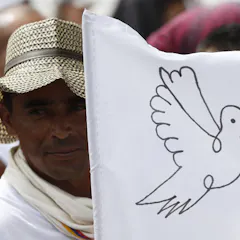
Ending violence is only a first step. Research from Colombian universities sheds light on the role of education in peace-building.

Very little is known about suicide and suicide attempts during modern genocides – but we do know there is an aftermath of suicide among victims.
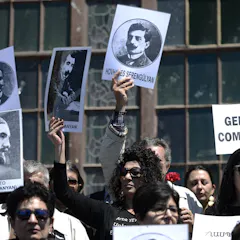
Wherever past atrocities are denied, truth must be spoken to power.
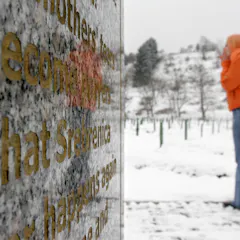
How long does it take to make peace? Decades after the end of the Bosnian war, just one in six residents felt that country had reached reconciliation.

Long regarded as something approaching a saint, Myanmar’s de facto head of state appears to be running out of moral capital.

Abuses on Rohingyas have reached new height but neither Myanmar nor neighbouring Bangladesh are taking responsibilities to grant basic human rights to this population.
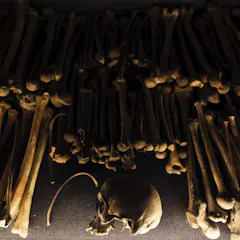
Significant links connect racial science in colonial southern Africa with the holocaust of the European Jews. Colonial racial science also contributed to the 1994 genocide in Rwanda.
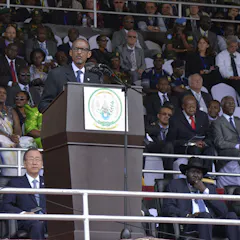
Plenty of African states bristle at the rest of the world’s eagerness to prosecute crimes committed on the continent. Some are finding other ways to do it.
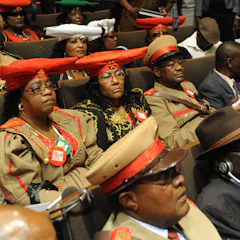
Representatives of Namibian communities affected by the 1904-1908 genocide have filed a class action against Germany in the US seeking reparations for atrocities committed by Imperial Germany

Psychologists drew historically from theories of social Darwinism and eugenics to espouse the hierarchical categorisation of people into race groups.
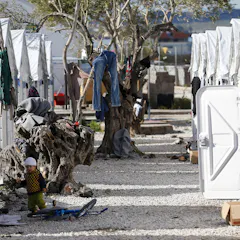
Perceptions of hordes of refugees on the Greek island of Lesbos have damaged tourism. But the refugees are dignified people, not beggars. An initiative is needed to bring tourists back to the island.
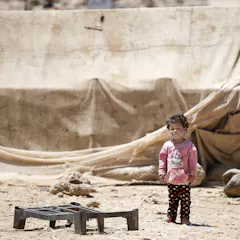
Recognising the symptoms of the dispossessed will prevent crimes against humanity.
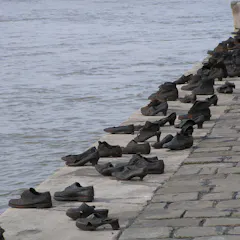
It’s not just a nation’s memory of itself, but what it does to citizens who disagree that reveals its ethical compass.
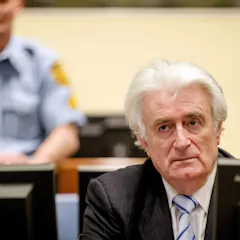
Former Bosnian Serb leader guilty of one count of genocide and numerous war crimes after 18 months of deliberation.
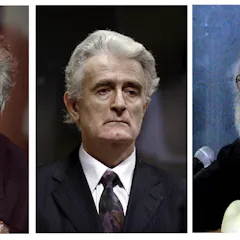
A four year trial and several years of deliberation later, and an international tribunal is to decide on charges of genocide and crimes against humanity.
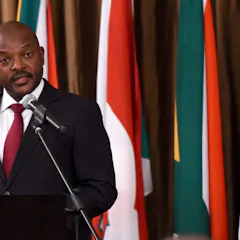
As concerns rise about the risk of genocide in Burundi, the country could still avoid the worst thanks to its social structure. But time is limited.
Top contributors
-

Extraordinary Professor, Department of Political Sciences, University of Pretoria
-
Co-Director, Institute for Genocide and Mass Atrocity Prevention, and Professor of Public Administration, Binghamton University, State University of New York
-
Distinguished Professor of Anthropology; Director, Center for the Study of Genocide and Human Rights, Rutgers University - Newark
-
Professor in Political Science, Arnold Bergstraesser Institute
-
Professor of Law, University of Waikato
-
Associate Professor International Law, Roskilde University
-
Co-Director, Institute for Genocide and Mass Atrocity Prevention, Binghamton University, State University of New York
-
Postdoctoral Research Associate, King's College London
-
Professor Emeritus, Department of Political Science, Wilfrid Laurier University
-
Professor, Lancaster Law School, Lancaster University
-
Professor of Anthropology, University of the Western Cape
-
Adjunct Professor of Mass Atrocities Prevention, Georgetown University; University of Connecticut
-
Senior Lecturer in Politics and International Relations, University of Dundee
-
Assistant Professor of Law, Osgoode Hall Law School, York University, Canada
-
PhD student of law, Universidade do Estado do Rio de Janeiro (UERJ)