
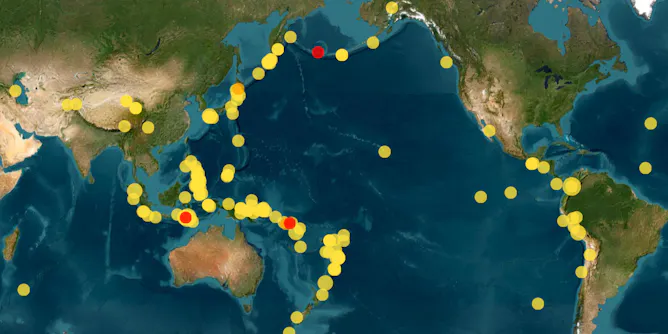
Scientists have been able to catalogue the largest earthquakes for a very long time.
Articles on Geoscience
Displaying 1 - 20 of 63 articles
An Australian politician says pumping groundwater might save Earth from ‘flipping the poles’. What’s she on about?

This year alone, the Philippines’ volcano monitoring agency has recorded 18 eruptive events at Taal Volcano – but they haven’t been the kind you might expect.
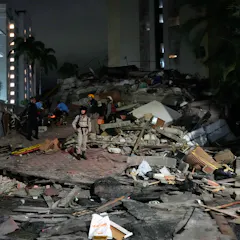
The two deadly earthquakes happened just 39 seconds apart, but were seismologically distinct.
Plants changed the atmosphere, built soil and created ecosystems that allowed animals like us to thrive. But first they had to make their way from the water to the land.
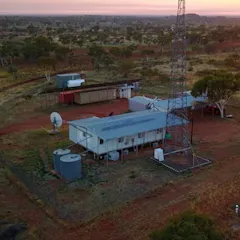
As the United States and Russia signal a return to nuclear testing, Australia’s remote monitoring station plays a crucial role in global verification.
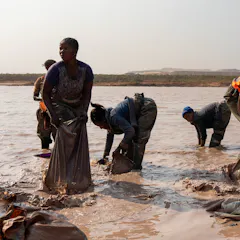
The G20’s new critical minerals framework wants to move Africa beyond raw exports so that mineral wealth creates jobs and growth on the continent.
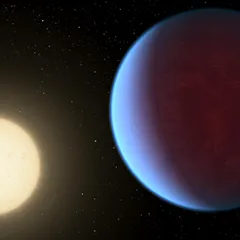
Searching for life on other planets requires more than just measuring their distances from their stars. A future NASA telescope may help search for potentially habitable worlds.
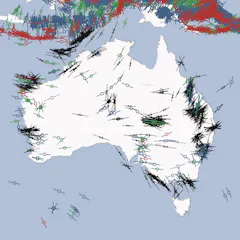
Australia is a long way from the tectonic plate boundaries where most earthquakes happen – but we can’t escape the forces they create.
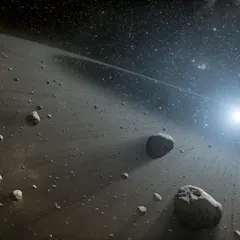
The Earth started as a mixture of gas and dust around the Sun and grew as it collided with asteroids and dust particles.
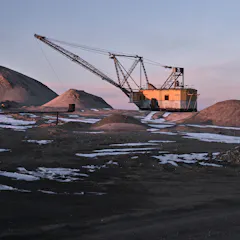
Critical minerals are in demand around the world for military, technology and other uses. A geoscientist shares what’s known about Ukraine’s reserves, which could help the country recover from war.
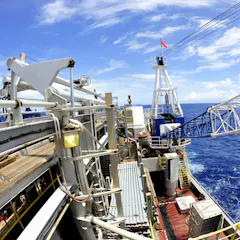
The National Science Foundation says that the JOIDES Resolution has become too costly to fund. But scientists say its $72 million annual budget pales compared with discoveries the ship has enabled.
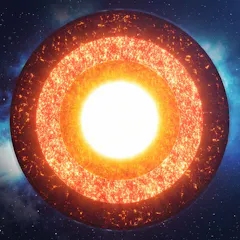
Like a piece of music, every earthquake has a coda – and it contains clues about what’s happening in our planet’s core.
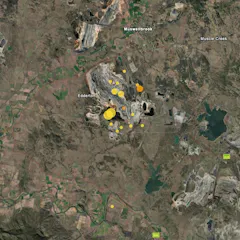
Since last Friday, more than 20 seismic events have rattled the earth near the Mount Arthur coal mine in New South Wales.
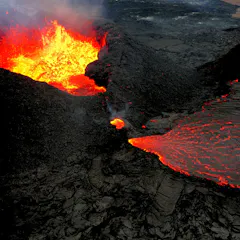
The eruptions that began in 2021 in Iceland could last for centuries, which is bad news for Icelanders but good news for scientists seeking to understand how the inner Earth works.
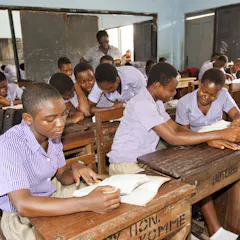
Geoscience literacy and awareness among the Ghanaian public is poor.
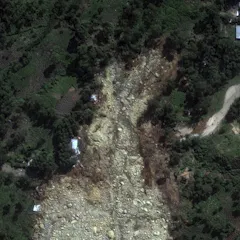
Landslides are usually sudden and cause devastation in their wake. Here’s why they are seemingly impossible to predict.
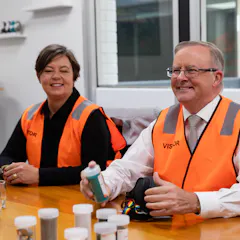
The Albanese government will invest $566 million over a decade on data, maps and other tools to promote exploration and development in Australia’s resource industry.
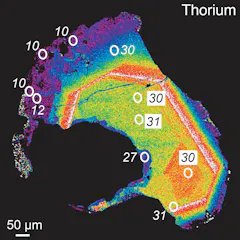
Measuring the concentration of radioactive elements in a single, sand-size crystal reveals the growth of the Himalayan mountain range over time.
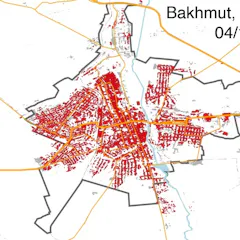
Satellite photography of the Ukrainian city of Bakhmut shows block after block of destroyed buildings. Satellite radar provides a different view – a systematic look at the destruction of the whole city.
Top contributors
-

Professor in Earth Sciences, Nanyang Technological University, Singapore, and Emeritus Professor of Mineral Physics, University of Cambridge
-
Harold T. Stearns Professor of Earth Science, Wesleyan University
-
Earthquake Scientist, Monash University
-
Professor of Planetary Geosciences, The Open University
-
Professor, Head of Geophysics, Director of Warramunga Array, Australian National University
-
Professor of Physics, Royal Holloway, University of London
-
PhD Student in Geosciences, University of Arizona
-
Professor II at CEED, University of Oslo
-
Lecturer in Geosciences, University of Montana
-
Senior lecturer, Nelson Mandela University
-
Postdoctoral Researcher in Physics, Royal Holloway, University of London
-
Max Steineke Professor, Stanford University
-
Professor of Organic Geochemistry & Meteoritics, Imperial College London
-
Associate Professor of Tectonics, University of Sydney
-
Associate Professor in Geospatial Science, RMIT University