
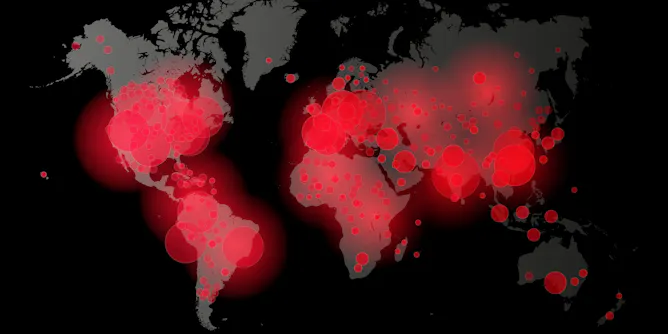
Global health funding cracks do not bode well for pandemic governance as recent disease outbreaks are reminding us. What does this mean for developing countries and how do they cope with health emergencies?
Articles on Global health emergency
Displaying all articles
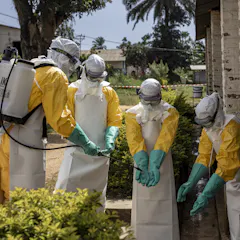
Geography may not provide meaningful protection once an outbreak is already underway.
Disease outbreaks can make women and girls especially vulnerable to violence, but health surveillance systems do a poor job tracking these trends.
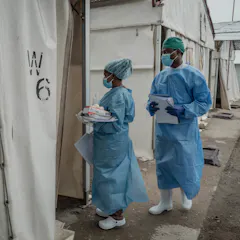
African health workers have over 50 years of experience battling various outbreaks of yellow fever, Ebola, mpox and more recently COVID-19. This experience should be harnessed now.
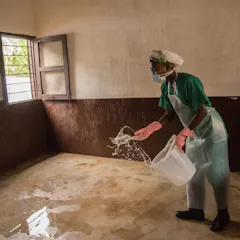
The global health system needs to wake up to the reality that an outbreak in one part of the world is a concern for everyone.
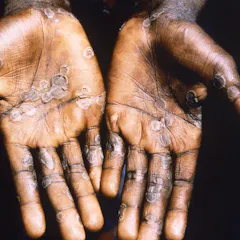
The mpox outbreak in Africa is cause for concern – here’s why.
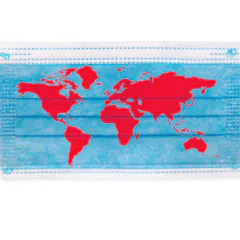
To minimize the effects of future pandemics, it is not enough that we recognize deficiencies in our responses to COVID-19; we must start to build policies for the next pandemic as soon as possible.
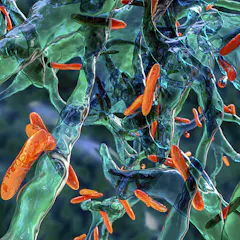
In 2021 10.6 million people developed TB and 1.6 million died from the disease. Now, for the first time in 100 years, there are promising signs of a vaccine breakthrough.
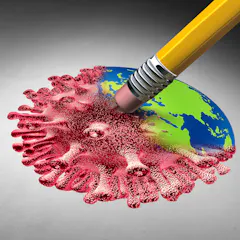
After previous public health emergencies likes SARS and H1N1, there was renewed investment in pandemic preparedness, but it was not sustained. We cannot make the same mistake after COVID-19.
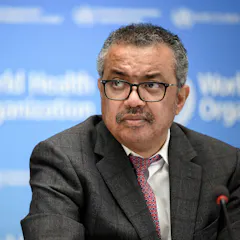
Cases may be stabilising but this could be the dip before a new wave.
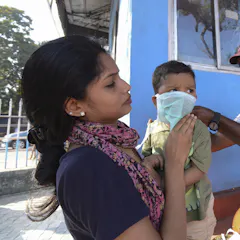
The World Health Organization declared the new coronavirus to be a public health emergency on Jan. 30, 2020. Does the action really change anything? An expert answers four questions.
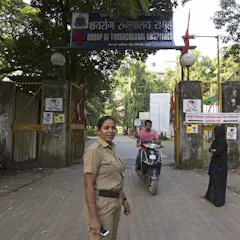
The health care debate in the US has focused on a looming crisis, with millions possibly losing insurance coverage. In India, an immediate crisis looms with tuberculosis.
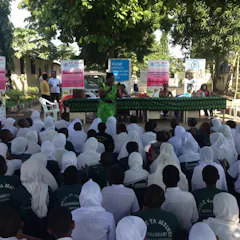
For millions of girls and women, menstruation is a burden. Here’s why helping displaced and poor women and girls with their periods is a way to show true respect for them.

An active outbreak of a type of bird flu in China raises concerns about worldwide pandemics. Ebola and Zika viruses still threaten. Here’s why this is not the time to cut funding.
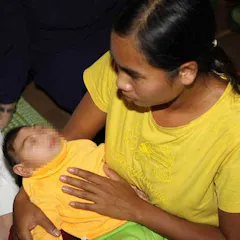
The World Health Organisation no longer sees Zika as a health emergency. But what does this downgrade mean for the health of mothers and babies?
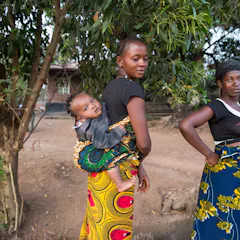
We found that less than 1% of published research papers around the time of both outbreaks, that related to the outbreaks, actually explored their gendered impact.
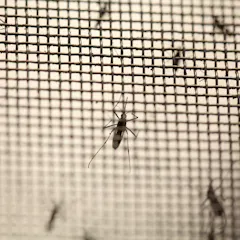
Innovations targeted at mosquito control are good but should not draw focus away from the tried and tested public health measures to control mosquito-borne diseases.
Top contributors
-

Professor of Health Law in the Australian Centre for Health Law Research, Queensland University of Technology
-
University of Southern California
-
Board Certified Internal Medicine Physician and Public Health Scientist, MidMichigan Health, University of Michigan
-
Adjunct Lecturer and PhD student, School of Social Sciences; Public Health Physician, South Eastern Sydney Local Health District, UNSW
-
Deputy Director (Indo-Pacific Research) ARC Centre of Excellence for the Elimination of Violence Against Women, Griffith University
-
Adjunct Associate Professor of Epidemiology, Columbia University
-
Associate Professor of Sociomedical Sciences, Columbia University Mailman School of Public Health
-
Professor and Tier 1 Canada Research Chair in Global Health Governance; Scientific Co-Director, Bridge Research Consortium, Simon Fraser University
-
Research Fellow, Pandemics & Borders Project, Simon Fraser University
-
Professor of Medicine, University of East Anglia
-
Professor of Public Health, University of Michigan
-
Professor Emeritus, Economics, University of Calgary
-
Extraordinary Professor, Global Health, Stellenbosch University; South African Medical Research Council
-
Senior Lecturer in Biomedical Science, University of Hull
-
Professor of epidemiology, Stellenbosch University