

The COVID-19 pandemic has led to calls for the collection of race-based data. But the risks of algorithmic discrimination must be addressed.
Articles on Google
Displaying 281 - 300 of 746 articles
Facebook and Google’s publicity campaigns against Australia’s new media regulations show they’re worried other countries will follow suit.

Facebook is worried publishers may charge as much as they want for their content. But we believe parameters can be set based on the value Australians put on public interest journalism.

The code seems to oversimplify how news content on big digital platforms should be assigned commercial value.

Over the past decade, news media companies have been at the mercy of big tech platforms’ algorithms in delivering them readers. But with no guarantee of sustained revenue, media firms are looking elsewhere.
‘Suck it and see’ or face a digital tax, former ACCC boss Allan Fels warns Google and Facebook
The Conversation, CC BY41.3 MB (download)
Tech giants don't like Australia's plan to force Google and Facebook to pay for news, to fund public interest journalism. But the government may well respond with a digital tax, says Allan Fels.

Fortnite developer Epic Games deployed its own in-app payment system to circumvent a 30% transaction fee taken by Apple and Google. Fortnite got the boot, and multiple lawsuits ensued.

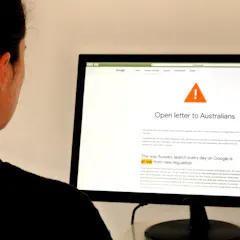
The letter is part of a campaign running across Google’s platforms, designed to gaslight Australian users. Don’t fall for it.

Recent anti-racism protests have spurred dozens of companies to vow to diversify their workforces, yet big tech’s efforts to do so since 2014 show promises aren’t enough to overcome the real problem.

The news media crisis is constant but there are a few practical solutions available to help the news business get out of the hole.

If the ACCC takes one of the tech giants to court for breach of the code, the penalty could be more than $10 million.

Lockdowns also affect socioeconomic groups differently, and should be combined with income support to protect mental health.
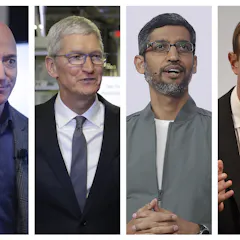
As the government considers antitrust action against big US technology companies, a global business scholar identifies four myths that need busting first.

Following a privacy policy change in 2016, Google has collected users’ data from third-party websites and apps. The ACCC argues users were misled into signing away their privacy.
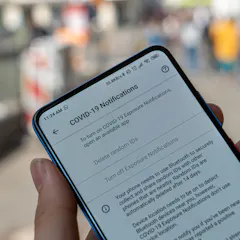
In response to the Covid-19 epidemic, more than 50 countries have developed tracing applications to help alert citizens and authorities when outbreaks occur. But the process is anything but simple.

Kenya’s new internet balloons could help to get more Kenyans online and drive new industry.

The reason the UK contact-tracing apps failed? It fell foul of privacy rules decided in California.

The watchdog has voiced concerns over the proposed US$2.1 billion merger, from which both users and Australian health services could lose out.

Smartphone apps and wearable devices can tell when workers have been within six feet of each other, promising to help curb the coronavirus. But they’re not all the same when it comes to privacy.

By tracing the location of millions of devices, Google has mapped the pandemic response at a scale never seen before.
Top contributors
-

Director of UWA Centre for Software Practice, The University of Western Australia
-
Senior Research Associate in Media and Communications, University of Sydney
-
Associate Professor, Faculty of Law & Justice; Lead, UNSW Public Interest Law & Tech Initiative, UNSW
-
Associate Professor, School of Law, University of Canberra
-
Professor of Cybersecurity, Head of School of Computer Science and Informatics, De Montfort University
-
Adjunct Senior Lecturer, Applied Ethics and CyberSecurity, Griffith University
-
Researcher at Microsoft Research, Cambridge UK. Previously, The University of Queensland
-
Senior Lecturer in Economics, Lancaster University Management School, Lancaster University
-
Associate Professor, Informatics and Operations, Kingston University
-
Professor of AI, Research Group Leader, UNSW
-
Professor of Cyber Security Practice, Edith Cowan University
-
Professor of Digital Communications and Culture, The University of Sydney, University of Sydney
-
Professor of Media Studies, Queensland University of Technology
-
Professor of Management and Innovation, International Institute for Management Development (IMD)
-
Associate Professor, University of Sydney