

One Google response asked for my medical history. Another answered a personal health question without asking who I was. Both replies came across as authoritative advice.
Articles on Google search
Displaying all articles
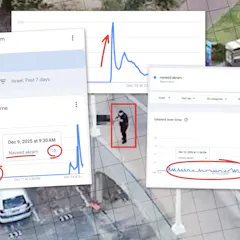
Google Trends results for attackers’ names from before an attack are increasingly (and incorrectly) being used as evidence of conspiracies.

Critics worry AI search features could decrease traffic to their websites if users rely on them too heavily and ignore the website links displayed in the search results.
Google’s use of artificial intelligence to power its searches is an alarming development, especially considering how search engines are driven by financial interests.

It’s hard to remember life before Google, when the closest thing to it was your local librarian. Soon the search engine will be offering AI-based summaries in its search results.

Public interest in climate change and global warming peaks after bushfires and lasts for months, research reveals. But Australians do not respond to storms and floods in the same way.

Google search algorithms often pull up misleading descriptors for controversial people, and results can differ across languages. Understanding how these algorithms function can address misinformation.

The Black Lives Matter movement is having a lasting impact on the racial reckoning in the US that was triggered after the murder of George Floyd by a white police officer in 2020.
There are around 201 known factors on which a website is analysed and ranked by Google’s algorithms.

Overcoming this fear requires personal empowerment and knowledge. But the trick is defining whose power and what knowledge.
If this is just one experiment among of tens of thousands, as Google has admitted, in what other ways might users have been manipulated in the past?

There are other ways to search the web without Google, and some options help protect your privacy while another is good for the planet.

Lockdowns also affect socioeconomic groups differently, and should be combined with income support to protect mental health.

After Google suggested PigeonRank was at the root of its search function, a group of researchers put a small flock of the birds to a different classification test in real life.
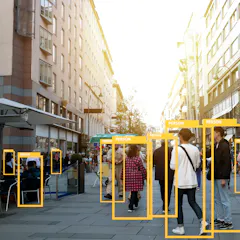
Google controls what billions of people find, see, know or even are aware of. As it gets better at delivering what it thinks people want, how will that affect humans’ perceptions of their own needs?

Google search histories can be used to reveal how much the public knows about climate change in countries all over the world - and how ready they are to take action to guard against its effects.
Top contributors
-

Professor, The University of Queensland
-
Professor of Experimental Psychology, University of Iowa
-
Assistant Professor of Sociology, University of Washington
-
Graduate Student in Psychology, University of Iowa
-
Research Fellow, School of the Environment, The University of Queensland
-
Senior Research Fellow, Biostatistics, University of Sydney
-
Lecturer in Environmental Politics, University of Sydney
-
Distinguished Professor of Media and Communications; Director, ARC Centre of Excellence for Automated Decision-Making and Society, RMIT University
-
Principal Research Scientist, CSIRO
-
Associate Professor of Political Science, Brock University
-
Professor of Pathology and Laboratory Medicine, University of California, Davis
-
Associate Professor of Arts, Media and Engineering; Associate Professor of English; Director, Center for Science and the Imagination, Arizona State University
-
Affiliated Researcher, Bennett Institute for Public Policy, University of Cambridge
-
PhD Student / FNRS Aspirant, Université catholique de Louvain (UCLouvain)
-
Research Fellow, Conservation Science, Deakin University