

Denmark and Britain take the same pills for old age. The gap is in ‘drugs for despair’.
Articles on Health inequality
Displaying 1 - 20 of 97 articles

GLP-1 drugs can produce major weight loss, but their wider impact will depend on affordable treatment and appropriate support.
Both countries offer universal healthcare, but Danes live nearly two years longer than Britons. Here’s why.
The gap between rich and poor areas is narrowing, but inequalities remain in some specialities and regions.

Yoga helps with health and wellbeing and is recommended to NHS patients in the UK, but new research shows people who could benefit most find it hardest to access.

New data shows obesity rising fastest among the young and the poor, while it’s mainly the better off who are seeing the benefit of weight-loss drugs.

To effectively address health disparities, research needs to be grounded in Canada’s realities, not simply adapted from models developed elsewhere.
The UK’s healthy life expectancy crisis hits women hardest, but the government’s renewed women’s health strategy doesn’t come close to matching the scale of the problem.
Wes Streeting wants to dock hospital budgets to fix NHS misogyny. The cure may be worse than the disease.
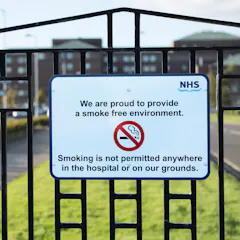
Scotland showed the world how to go smoke-free. Finishing the job is proving harder.
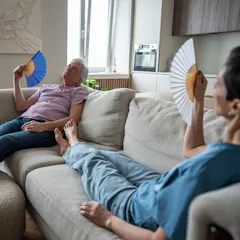
Rising heat is making everyday exercise harder, with modelling studies suggesting long-term impacts on activity levels and population health.

Health inequality is not only about who reaches a health facility. It is also about what happens once patients are inside the consultation room.

Research reveals that the enduring legacy of racism in medicine contributes to suboptimal communication and poor quality care for women.

Stipends paid to residents had unintended consequences.
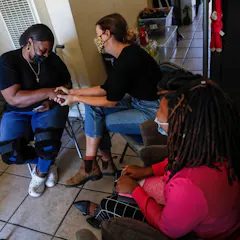
Medical sociology examines how social, cultural, political and economic factors shape health in ways that medicine alone cannot treat.
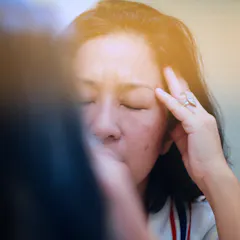
Menopause is universal, but experiences are not. Ethnicity, culture and access to care shape symptoms, silence and support, leaving many women overlooked.

For nearly a third of the world, the most dangerous air is inside their own homes.
Women are more likely to have a stroke – and more likely to be misdiagnosed. Hormones, pregnancy and medical bias are part of the reason.
Two cancer experts go head to head, arguing the case for and against a targeted prostate cancer screening programme.
Older adults in the UK’s wealthiest bracket are nearly twice as likely to eat well, stay active and avoid depression.
Top contributors
-

Wellcome Multimorbidity PhD Fellow & Public Health Registrar, University of Glasgow
-
Professor of Public Health, Newcastle University
-
Adjunct Associate Professor, Menzies Centre for Health Policy and Economics, University of Sydney
-
University of Chester
-
Honorary Enterprise Professor, School of Population and Global Health, and Department of General Practice and Primary Care, The University of Melbourne
-
Associate Professor in Public Health at University of Limerick, University of Limerick
-
Senior Lecturer in Applied Public Health, University of Liverpool
-
Lecturer in Global Health, UCL
-
Honorary Research Fellow, City Political Economy Research Centre, City St George's, University of London
-
Senior Clinical Lecturer in Public Health, University of Liverpool
-
Resident, Neurosurgery, University of Florida
-
Professor Pharmacy Practice & School of Public and Community Health Sciences, University of Montana
-
Assistant professor, Dartmouth College
-
Assistant professor of Neurosurgery, University of Florida
-
Professor of Psychiatry and Medical Ethics, Baylor College of Medicine, Harvard University