
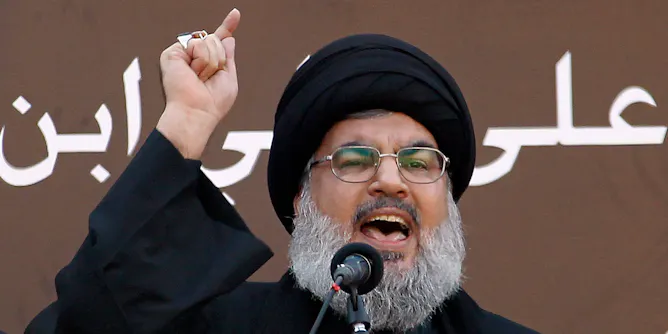
There is now speculation that Israel may invade Lebanon while Hezbollah is in disarray.
Articles on Hezbollah
Displaying 81 - 100 of 179 articles
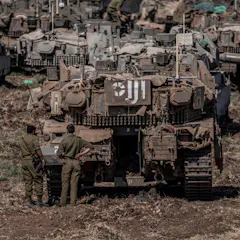
The killing of Hezbollah leader Hassan Nasrallah has left the Lebanon-based militant group leaderless, but history tells us that Israel cannot occupy territory in Lebanon for any sustained period.
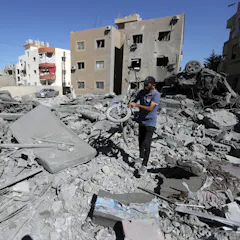
Wars have always required false dichotomies: Christian and Muslim, civilization and barbarism, West and East to justify violence against the other.
Hezbollah’s leadership ranks have been decimated, but it has the capacity to re-establish itself. It also reportedly has an arsenal of 150,000 rockets, missiles and drones it can use to strike back.
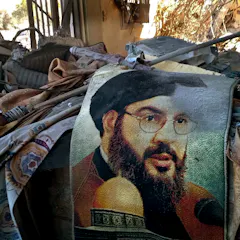
Israeli strikes have wiped out much of the leadership of a group that has huge influence – if not popularity – within Lebanon.
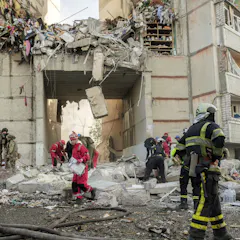
Buffer zones are supposed to be mutual agreements, not imposed by one side of a conflict on its rival.
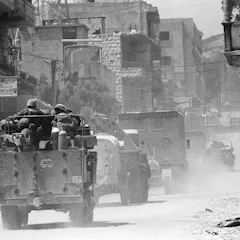
Israel’s attempt to eliminate militant Palestinians in Lebanon led to slaughter of civilians, economic and political chaos and the creation of Hezbollah.
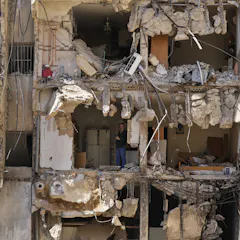
The law of armed conflict is straightforward – combatants must only target military objectives, not civilians.
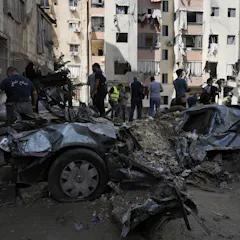
The increasing attacks and fiery rhetoric in the Israel-Hezbollah confrontation are spreading terror among civilian populations already grappling with the uncertainty and stress the war has wrought.
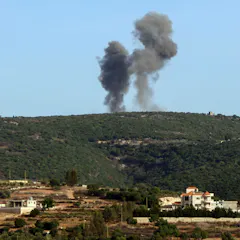
Israelis and Lebanese face similar predicaments: Their well-being is being sacrificed for military priorities.
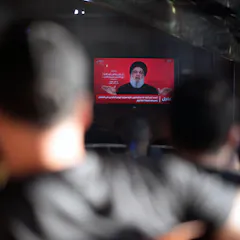
Our expert analysis of the attacks on Hezbollah this week.
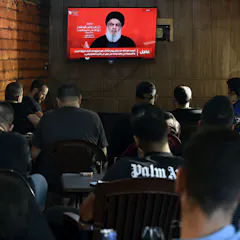
MIddle East expert addressed four key questions about the recent attacks on Hezbollah in Lebanon.
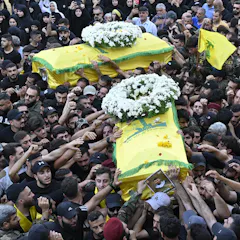
As Hezbollah reels from the communication device blasts, the scene has been set for an all-out war with Israel.
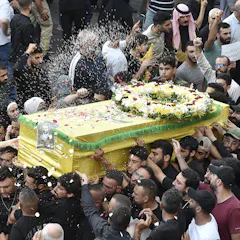
The rules of war are quite clear that these attacks were neither discriminate nor proportionate.

Weaponising communications technology used to be a theme of dystopian fiction. Now it’s reality.

International law clearly states that hiding explosives in objects that could be picked up by civilians is strictly prohbited.
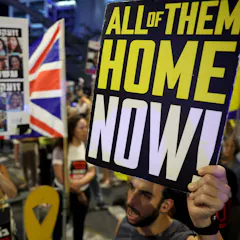
The impression that Israel is at a stalemate or that there is a rift between leader Benjamin Netanyahu and the Israeli public over the fate of the hostages is misleading. His hold on power is solid.

Smartphones may be indispensable to modern life, but they’re also perfect tools for spying on their owners. Anyone looking to avoid being tracked – like, say, militant groups – tends to ditch them.
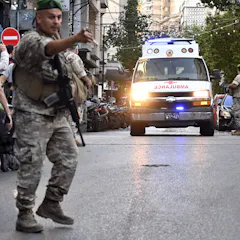
Both sides have been ratcheting up their attacks for months without crossing the line into a full-scale war. This attack, however, will likely lead to a major escalation.
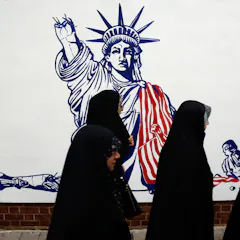
Iran’s leaders are facing a crisis of legitimacy at home, making any response to Israel’s actions a very delicate balance.
Top contributors
-

Director of Dickinson Program in New Zealand, Dickinson College; University of Otago
-
Professor of International Politics, Clinton Institute, University College Dublin
-
Professor of History and Peace Studies, University of Notre Dame
-
Senior Lecturer, Politics & International Relations, Monash University
-
Professor in Sociology, Queen's University Belfast
-
Emeritus Professor of Middle Eastern Studies, Australian National University; The University of Western Australia; Victoria University
-
Professor of International Relations, Lancaster University
-
Professor of Political Science, Sciences Po
-
Associate Professor of Practice of Public Policy, University of Michigan
-
Director, Middle East Studies Forum (MESF), Deakin University
-
Research Scholar, Middle East Studies, Australian National University
-
Assistant Professor of Migration Studies; Director of the Institute for Migration Studies, Lebanese American University
-
Fellow at the Center for Middle East Studies, University of Denver
-
Lecturer in Comparative Politics, Queen's University Belfast
-
Postdoctoral fellow at Queen's University's Centre for International Policy and Defence (CIDP), Queen's University, Ontario