
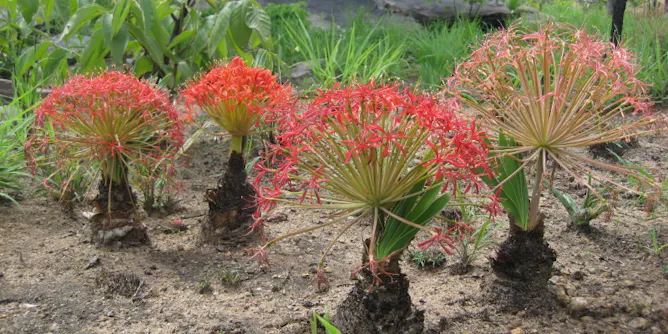
The discovery that small stone arrow tips were treated with plant poison 60,000 years ago means that ancient African hunters were capable of complex thinking.
Articles on Hunter gatherers
Displaying all articles

Even when you use technology to hide a person’s physique, people can still tell how strong they are from their walk.
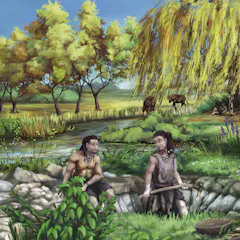
The pits are important for rethinking how we have previously considered life and society during the Mesolithic period.
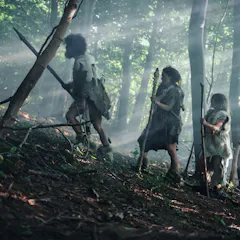
If hunter-gatherers went beyond nose-to-tail eating to include the undigested plant matter in a prey animal’s stomach, assumptions about gendered division of labor start to fall apart.
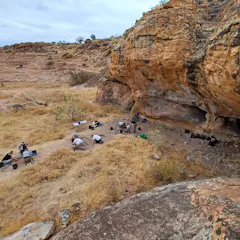
Hunter-gatherers were an important part of the development of the Mapungubwe Kingdom in southern Africa – a fact that history has tended to neglect.
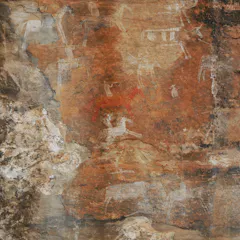
Changes in southern African rock art reflect the mixing of groups of people after they came into contact with each other.
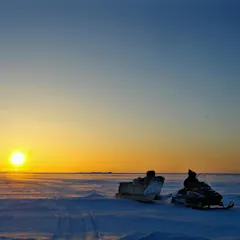
All over the world, the territories of Indigenous peoples map onto regions of the richest and most persistent biodiversity. A book about hunter-gatherer Arctic peoples shows why.
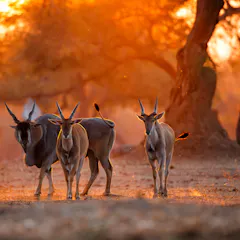
In several other parts of the world, people used the bones of animals that were important within their respective cultures to make tools.

Environmental change can be a slow creep towards disaster for species. We studied how prehistoric humans coped to help make sense of the future using video game technology.

DNA found in chewing gum from 10,000 years ago is helping scientists learn about prehistoric humans.

A new study suggests skilled storytellers may have greater reproductive success than others.

They look like stripey horses – so why don’t we ride them?
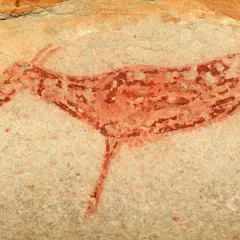
The San are caught between a rock and an art place. While they face an uncertain future, myths and meaning come under the spotlight in a new book.
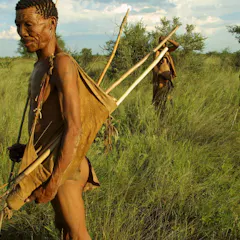
Human life expectancy has increased so much over the last four generations that 72 can be considered “the new 30”, according to a study led by researchers from Germany. The study, published today in US…
Top contributors
-

PhD candidate in Anthropology, UCL
-
Scientia Professor of Evolution, UNSW
-
Associate Professor, Department of Ecology, Environment and Evolution, La Trobe University
-
Emeritus professor, University of the Witwatersrand
-
Reader in Equitation Science, Nottingham Trent University
-
Honorary Principal Fellow, Human Geography, University of Wollongong
-
Fellow, Keele University
-
Archaeological Research Assistant, University of Bradford
-
Associate professor, University of Johannesburg
-
Senior Lecturer, University of Mpumalanga
-
Professor of Evolutionary Palaeoecology, Bournemouth University
-
Professor with Research Focus in Stone Age Archaeology, Palaeo-Research Institute, University of Johannesburg
-
PhD Researcher in Human Evolution, Bournemouth University
-
Senior Researcher, University of the Witwatersrand
-
Support staff, University of the Witwatersrand