

In today’s looksmaxxing culture, young men pursue a supposedly ‘ancient’ ideal that’s actually modern and pharmacologically constructed.
Articles on Incels
Displaying 1 - 20 of 29 articles

Pressure is mounting for teachers now expected to cover incel culture during their classes.
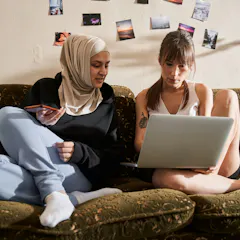
Online sexism is no longer primarily a series of isolated or individual opinions but has evolved into a system-level phenomenon that spreads through digital platforms and produces real-world consequences.
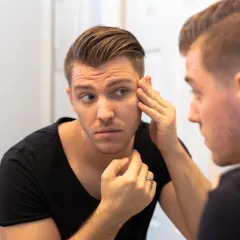
Sociologist Jordan Foster explains the origins of the PSL scale on The Conversation Weekly podcast.

Amid a masculinity crisis driven by status anxiety and socioeconomic shifts, young men and boys are turning to physical transformations to assert dominance and self-mastery.

A new study highlights the experiences of men who left toxic online spaces.
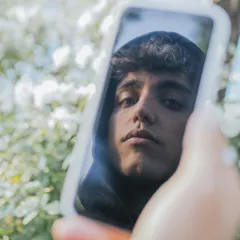
Apps that promise young men ‘ascension’ to greater attractiveness can be a funnel to toxic incel ideology.
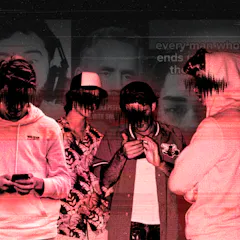
An Australian study of anti-feminist attitudes shows up to 30% of boys surveyed expressed agreement with various forms of violent extremism.

The Male Complaint argues it’s unhelpful to blame toxic masculinity for digital misogyny. We should try to understand the manosophere – even if we disagree with it.

How a once-neutral term for romantic exclusion became a cultural shorthand for male rage, and what we lose when we ignore the quiet pain it fails to describe.

Boys are left out of important conversations about sex, relationships and consent – here’s what we can do to change this.

Research has shown that spending long periods on social media and gaming sites exposes young men and boys to incel content.

Adolescence compellingly showcases the disturbing experiences of youth confronted with bullying, misogyny and gender-based violence, as well as the relationships between fathers and their sons.

At the centre of the new Netflix show is a devastating truth: the most dangerous place in the world for a teenager is alone in their bedroom.

Exposure to extreme content does not guarantee radicalisation. Extremist messaging is most effective when it taps into real and perceived grievances young people may be experiencing.

Mental health support is crucial for incel communities, however, associating incel violence with mental health and neurodivergence risks stigmatizing people with autism.
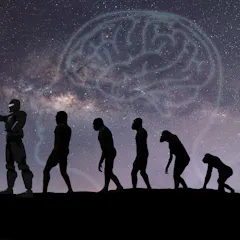
Human culture has changed too fast for evolution to keep up.

A spate of recent high-profile murders has put focus on the role of patriarchy and misogyny in persistent rates of anti-woman violence in Italy.

Efforts to disrupt online misogyny need to focus on stopping online forums from becoming misogynistic echo-chambers.

Giving incel ideology too much time and energy ends up perpetuating it, instead of stopping it.
Top contributors
-

Professeur, Université du Québec à Montréal (UQAM)
-
PHD Candidate, York Law School, University of York
-
Assistant Professor, Sociology, MacEwan University
-
Professeure associée au département des sciences sociales, Université du Québec en Outaouais et à l'Institut de recherches et d'études féministes, UQAM, Université du Québec en Outaouais (UQO)
-
Professor of Communication and Middle East Studies, Georgia State University
-
Senior Lecturer in Humanities, University of Southern Queensland
-
Professor, Institute of Feminist and Gender Studies, L’Université d’Ottawa/University of Ottawa
-
Associate Professor in North American History, University of Birmingham
-
Assistant Professor of Sociology, Dalhousie University
-
Professor of Criminal Justice, Georgia State University
-
Professor of Critical Cultural & International Studies, Colorado State University
-
Assistant Professor, Computer Science / Community Health & Epidemiology, Dalhousie University
-
PhD Candidate in the Department of Political Science, McGill University
-
PhD Candidate, Department of War Studies, King's College London
-
Research Fellow at the International Centre for the Study of Radicalisation, King's College London