
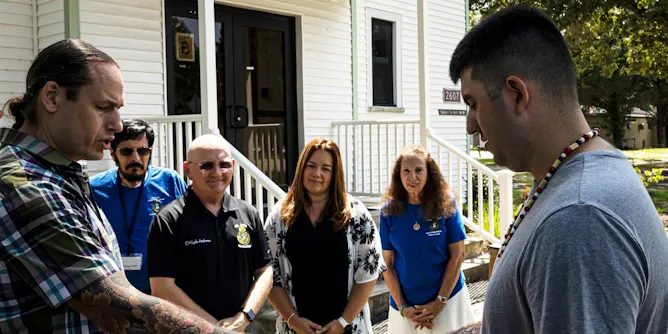
The Pentagon recategorized Native religions as ‘other.’ A scholar of Native American and Indigenous Studies explains the implications of that change.
Articles on Indigenous languages
Displaying 1 - 20 of 83 articles

Federal protections promise a fair trial in a language you understand, but for millions who speak lesser-known languages, courts can’t keep that promise.
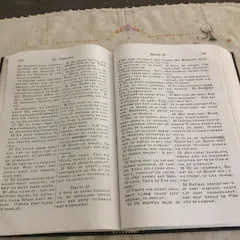
Cherokees across the US are working to revitalize their language.

The number of New Zealanders who speak te reo Māori grew 15% from 2018 to 2023 – and the nation’s artists are reflecting this.

In Canada, emergency communication is issued only in English and French, even in regions where Indigenous languages are widely spoken and recognized — an exclusion that compromises safety.

A new generation of First Nations artists is helping keep Indigenous languages alive through song.

By listening more closely to the interests and goals of young people in schools, we can start to provide the language teaching they want.
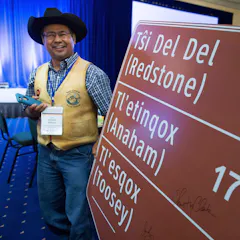
Many of the world’s languages are at risk of extinction. However, researchers are developing AI tools they hope can safeguard languages for future generations.

Beyond how beautifully Elisapie interprets classic rock songs, with creative choices like using throat singing to cover Metallica, her music also brings the Inuktitut language to a wider audience.

A sophisticated machine called the LM-3032 Tape Restorator is helping give new life to decaying, decades-old cassettes.
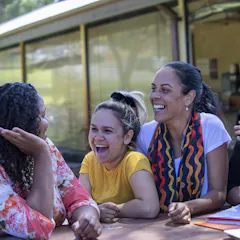
Standard rates of diversification predict there should be many unrelated Indigenous languages on the mainland. But this is not the case.

A recent update to the Unicode Standard means that Haíɫzaqvḷa can finally be fully written and read on all digital platforms.

In a new book, 40 First Nations writers and thinkers share their favourite, or significant words from their own languages: words of belonging and connection.

Schools seeking to retain teachers might consider a proven professional development model: supporting collaborative teacher-led research.

Truly fostering accessible educational opportunities for deaf students can only happen with ongoing political and financial support.

Critics have said the government’s efforts to revitalize Indigenous languages are colonial and do not engage with Indigenous Peoples on an equal footing.

The indigenous languages of Taiwan are struggling in the face of Chinese dominance. The answer to language revitalisation could lie in grassroots efforts rather than government legislation.

Researchers worked with Wakka Wakka Elders and local community members to co-design curriculum resources for local schools.

Social media is giving a new lifeline to Bhutan’s native languages, which do not have written script and lack proper documentation.
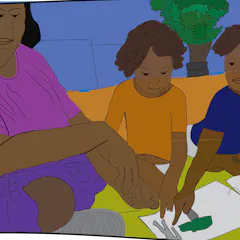
Previous studies of baby talk have focussed on European languages, Mandarin and Japanese. For the first time, research looks at an Australian Indigenous language.
Top contributors
-

Professor of Linguistics, The University of Queensland
-
Professor emerita, Australian National University
-
Professor of Linguistics, Yale University
-
Professor of Education, Charles Darwin University
-
PhD Candidate, Faculty of Law, L’Université d’Ottawa/University of Ottawa
-
Professor of Elementary Literacy, Ontario Institute for Studies in Education, Department of Curriculum, Teaching and Learning, University of Toronto
-
Professor and Canada Research Chair in Language Interactions, University of Manitoba
-
Associate Professor and Reader, ARC Centre of Excellence for the Dynamics of Language, Research Unit for Indigenous Language, School of Languages and Linguistics, The University of Melbourne
-
Professor, Charles Darwin University
-
ARC DECRA Fellow, Australian National University
-
Professor of Economics and Public Policy, ANU College of Arts and Social Sciences, Australian National University
-
Associate professor, University of the Western Cape
-
Honorary Senior Lecturer, Australian National University
-
Senior Fellow, National Centre for Indigenous Studies, Australian National University
-
Project manager - Living Archive of Aboriginal Languages, Charles Darwin University