

Alexander Graham Bell was not the only person trying to invent the telephone. But 150 years ago, he won the race – just – and the rest is history.
Articles on Invention
Displaying 1 - 20 of 56 articles

Leigh argues three forces underpin most innovation: tinkering, teamwork and trade. New ideas alone aren’t enough.

Thomas Edison is just part of the answer, and the light bulb is just part of what he achieved.

The problem is that costs – especially the costs to faculty – often go ignored.

US patent law says inventors must be human, but they can use AI. This changes the nature of invention and raises the question: Is this what the founders had in mind when they set up the patent system?

In the mid-19th century, photographs with ghostlike figures became collectible amusements thanks to the invention of the stereoscope – a device that created three-dimensional optical illusions.

Science fiction and technological innovation feed off each other in an ongoing back-and-forth that can play out over decades.
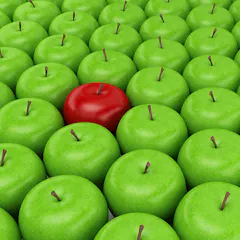
Researchers had college students and AI take a standardized test in creative thinking, and all of them were scored by trained evaluators who didn’t know in advance that some had been completed by AI.

Can one invention revolutionise propellers, whose basic design has been around for over 100 years? Not so fast.
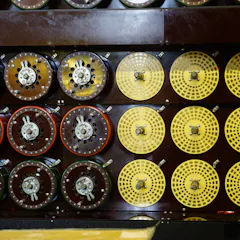
Ada Lovelace said computers could not invent. But a century later, Alan Turing pointed out inventiveness in machines could be found in their capacity to produce surprising and innovative results.

See a package of Cup Noodles and you might think of dorm rooms and cheap calories. But there was a time when eating out of Cup Noodle’s iconic packaging exuded cosmopolitanism.
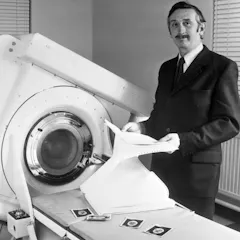
On Oct. 1, 1971, Godfrey Hounsfield’s invention took its first pictures of a human brain, using X-rays and an ingenious algorithm to identify a woman’s tumor from outside of her skull.
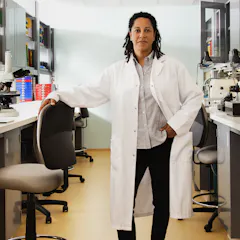
Boosting the number of female inventors isn’t just a matter of fairness. Inventions by men are more likely to ignore women’s needs.
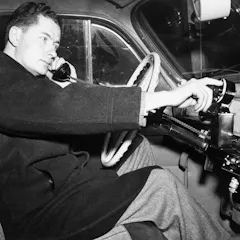
The ubiquity of mobile phones is a defining feature of the 21st century, but it’s been possible to place a phone call on the go since shortly after World War II.
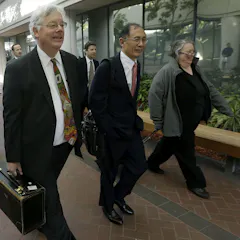
Too many patents and too little information about them makes it hard for the system to weed out patents that unfairly block inventors.

The story of invention in America typically features larger-than-life caricatures of white men like Thomas Edison while largely ignoring the contributions of women and people of color.
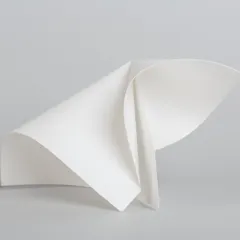
Curved origami isn’t just elegant art. It’s also a versatile way to vary the amount of force applied by robots and other machines.

What if roads and bridges could signal structural problems that need repair?

Drawing thoughtfully on the Powerhouse Museum’s collection, this exhibition lovingly exposes the humanity behind biomedical technology.
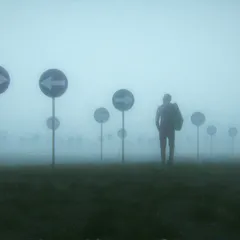
Many great innovators have personality traits in common. Comfort with uncertainty is critical, but passion, curiosity and a number of other learnable skills can prime you for an innovate idea.
Top contributors
-

Professor of History, Department of History & Welsh History, Aberystwyth University
-
Associate Professor of Communication and African and African Diaspora Studies and Associate Professor of Law (By Courtesy), Boston College
-
Associate Professor of Art History, Penn State
-
Eduardo B. Sandoval is a Friend of The Conversation.
Scientia Researcher, Social Robotics, UNSW
-
Lecturer, Faculty of Law, Monash University
-
Visiting Professor, University of Technology Sydney
-
Laureate Professor in Chemical Engineering, University of Newcastle
-
Professor of Physical Chemistry and Director of the Grantham Centre for Sustainable Futures, University of Sheffield
-
Affiliate, School of Mathematics, Monash University
-
James Watt Chair, Professor of Engineering Science, University of Glasgow
-
Associate Professor of Public Policy and Women's Studies, University of Michigan
-
Senior Lecturer and Researcher in Innovation and Digital Leadership, University of Brighton
-
Professor, Faculty of Information Technology, Monash University
-
Professor of Science Communication and Chemistry, University of Hull
-
Senior Visiting Fellow, UNSW