
DIY labs have disrupted industries from alcohol to pharmaceuticals. During the coronavirus pandemic, curious people have more opportunities to innovate from home.
Articles on Invention
Displaying 21 - 40 of 56 articles

Inventors in states with more socially liberal laws on the books end up with more diverse collaborators – and more higher-impact patents.

During a pandemic, what would MacGyver do? He’d cobble together masks and ventilators from the things around him. Now health-care workers are doing the same. But there are risks.
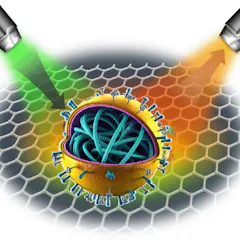
A team of physicists, virologists and computer scientists are seeking to develop a coronavirus diagnostic tool that could deliver rapid results.

A simple chemical reaction turns the red pigment of beets into a new, nontoxic blue dye.
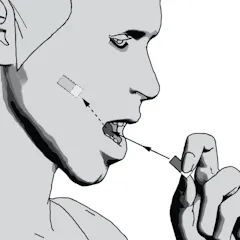
Inspired by amber and hard candy, researchers figured out a new, needle-free, shelf-stable way to preserve vaccines, making them easier to ship and administer around the world.

When it comes to innovation, Santa Clara County is way ahead of the rest of the US. Between 2000 and 2015, more than 140,000 patents were granted there – triple the number of the next-ranked county.
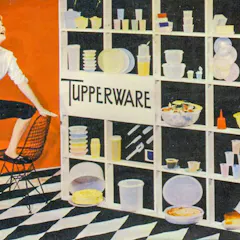
You know you’ve hit it big when your designs find their way into millions of kitchens – and the Museum of Modern Art.
One of America’s favourite sons is slowly losing his reputation, and he might just deserve it.

Limitations improve creativity: we think up solutions we would never have thought of in a lab.
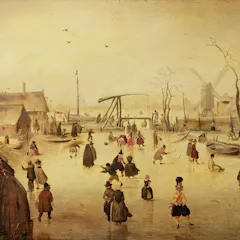
While today we sweat, early modern Europeans froze. Furs to the rescue.
We don’t know much about the origins of most human achievements – scientific and otherwise. Like evolution, does progress occur as random insights are selected for or against?
A lack of “breakthrough” moments in innovation may be caused by the increase of specialised workforces.
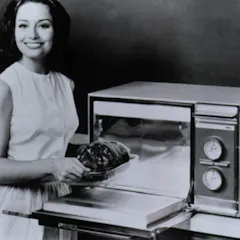
It’s been five decades of microwave popcorn and piping hot leftovers in home kitchens. A serendipitous discovery helped engineers harness radar to create this now ubiquitous timesaving appliance.
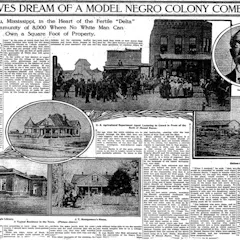
American slaves couldn’t hold property – including patents on their own inventions. But that didn’t stop black Americans from innovating since the beginning of the country’s history.
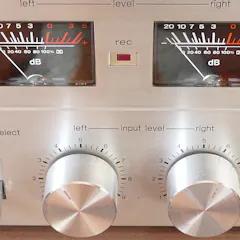
Without Alan Blumlein’s genius, most things would sound altogether different today.

The race to bring the jetpack to market exemplifies some of the highs and lows of sci-fi inspired innovation.
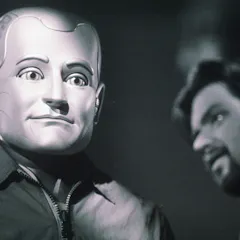
Science fiction can be good at predictiong soem of the technologies of tomorrow. But designers take note: not all those ideas are welcome.
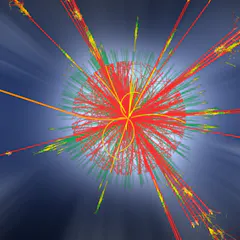
Big data is about processing large amounts of data. It is often associated with multiplicities of data. But the ability to generate data outpaces the ability to store it.

The bubbles generated by Laureate Professor Graeme Jameson have been worth over $36 billion to the Australian economy. He has just received the 2015 Prime Minister’s Prize for Innovation.
Top contributors
-

Professor of History, Department of History & Welsh History, Aberystwyth University
-
Associate Professor of Communication and African and African Diaspora Studies and Associate Professor of Law (By Courtesy), Boston College
-
Associate Professor of Art History, Penn State
-
Eduardo B. Sandoval is a Friend of The Conversation.
Scientia Researcher, Social Robotics, UNSW
-
Lecturer, Faculty of Law, Monash University
-
Visiting Professor, University of Technology Sydney
-
Laureate Professor in Chemical Engineering, University of Newcastle
-
Professor of Physical Chemistry and Director of the Grantham Centre for Sustainable Futures, University of Sheffield
-
Affiliate, School of Mathematics, Monash University
-
James Watt Chair, Professor of Engineering Science, University of Glasgow
-
Associate Professor of Public Policy and Women's Studies, University of Michigan
-
Senior Lecturer and Researcher in Innovation and Digital Leadership, University of Brighton
-
Professor, Faculty of Information Technology, Monash University
-
Professor of Science Communication and Chemistry, University of Hull
-
Senior Visiting Fellow, UNSW