

People restoring Africa’s ecosystems need climate services that combine forecasts with Indigenous knowledge and information about land, water and livelihoods.
Articles on Kenya
Displaying 1 - 20 of 1150 articles

Group interpersonal psychotherapy is an effective way to manage depression among perinatal adolescents.

Why are some pre-primary education programmes more successful than others?
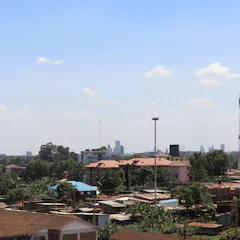
Urbanisation is experienced through growing tensions within families over precious yet meagre plots of land.
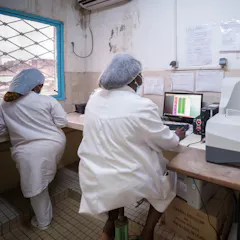
Kenya’s health financing law change suggests conditions for reform can be strategically built.
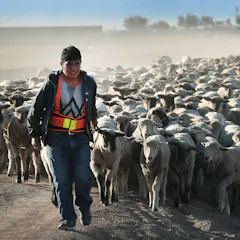
Whether in Kenya or California, herders face dangerous temperatures and difficult conditions that put a strain on their health.

Rivalry has not disappeared from east Africa. It has simply been repackaged as competing ‘regional’ projects.
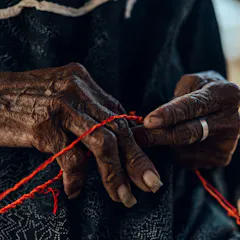
The challenge now is not simply helping people live longer, but ensuring they age well.
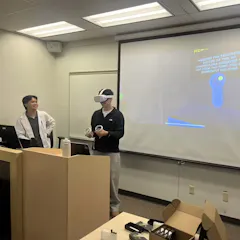
The advantage of virtual reality training is scalability. The same experience can be delivered in many countries simultaneously, without need for travel.

Africa still needs millions of better-paying jobs and higher productivity to reduce poverty. What has changed is the route to achieving those goals.

In South Africa and Kenya, some green energy projects have deprived local communities of land and livelihoods instead of sharing the benefits.
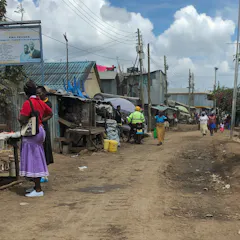
A study of 701 households in Nairobi found that rising food and fuel prices after Russia’s invasion of Ukraine forced many families to eat and cook less.

This decrease of snowfall is driven by changing sea surface temperature patterns in the Indian Ocean, which is a signal of global warming.

Fact-checking only helps if it reaches people before they have made up their minds.

The real ‘secret’ of their success lies in a complex network of social mobility and connection with local communities.

Adolescent girls carry the blame for early pregnancy, yet the boys and men who got them pregnant remain invisible.

The success of Kibera’s transformation will not be measured by the number of apartment blocks completed.
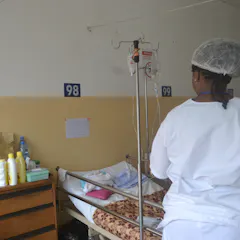
Questions persist over ethical recruitment from countries already facing healthcare workforce shortages.
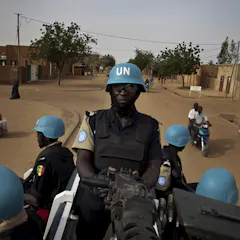
A child born into a community with a history of political unrest is at higher risk of abuse as they grow into a young adult.
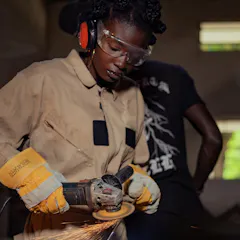
Youth employment programmes need to be built around real jobs, capable institutions and the young people they are meant to serve.
Top contributors
-

Professor of Democracy, University of Birmingham
-
Research Fellow, Tegemeo Institute, Egerton University
-
Professor, Faculty of Business and Management Sciences, University of Nairobi
-
Professor of Research, Foundations & Higher Education, Northern Arizona University
-
Professor, Weber State University
-
Professor and Chair of Allied Health Studies, Stephen F. Austin State University
-
Senior Research Scientist, African Population and Health Research Center
-
Professor of Comparative Politics, University of Warwick
-
Professor of Media Industries, University of Nottingham
-
Medical Entomologist at the School of Biological Sciences, University of Nairobi
-
Senior Research Scientist, African Population and Health Research Center
-
Research Scientist, African Population and Health Research Center
-
Adjunct Associate Professor, Departnent of Social Sciences, Pwani University
-
Associate Professor, Department of Entomology; African-American Studies, University of Illinois Urbana-Champaign
-
Associate professor, University of California, San Francisco