
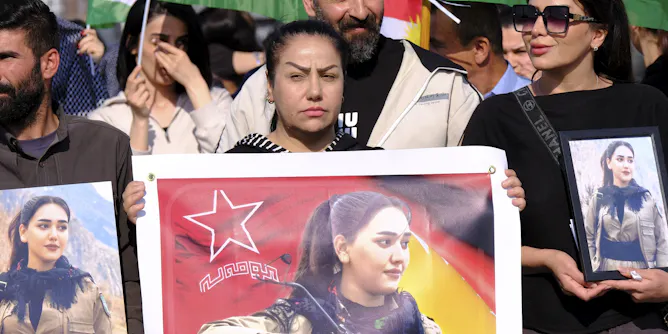
The US president is trying to shift the blame for his failures in Iran – and the Kurds are an easy scapegoat.
Articles on Kurds
Displaying 1 - 20 of 124 articles
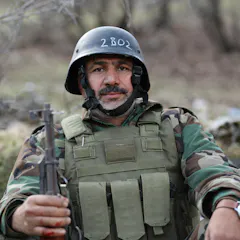
Washington may see the Kurds as a useful tool for confronting the Iranian regime, but such a strategy could create new tensions elsewhere in the region.
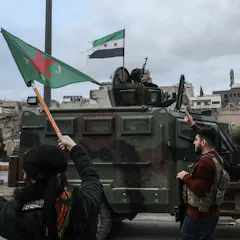
Despite risks, Kurds in Syria have the best chance in a generation to protect their national rights. Their success may hinge on the international community.
The Iran war is affecting the whole Middle East. An expert on the region looks at four key issues that shed light on the war’s likely end and political consequences.
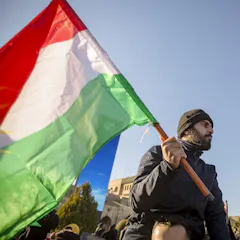
Washington has long worked with Kurdish groups in the Middle East. But without sufficient support, encouraging Iranian Kurds into an uprising now could be dangerous.

Kurds are the casualties of a US Syria strategy that aims to keep America afar, Iran out and Israel and Turkey apart.
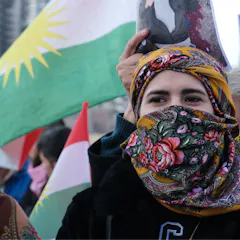
After the fall of Bashar al-Assad, minority groups in Syria have been targeted with violence. The US and other regional powers have largely stayed silent.

The demands of Iran’s ethnic minorities differ from many of those in Tehran, and they have reason to fear the return of the Pahlavi monarchy.
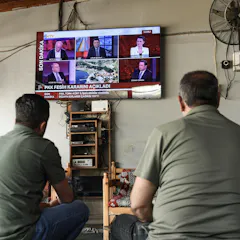
The PKK has been fighting the Turkish state for more than 40 years. Whether peace can take root will depend on each side’s commitment to a credible peace process.
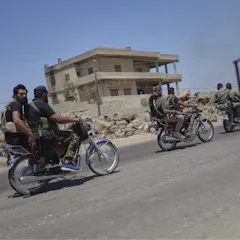
A scholar of religious minorities and the Middle East explains the historical persecution and marginalization of the Alawite and Druze communities.
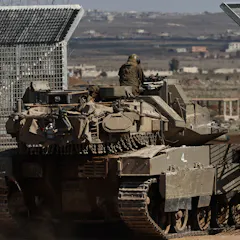
Syria’s foreign ministry says a number of soldiers and civilians have been killed by coordinated Israeli drone attacks and airstrikes near the two countries’ border.
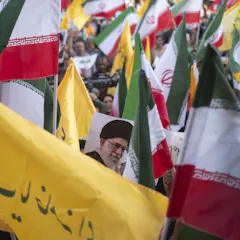
The Islamic Republic has a history of targeting minority ethnic groups, especially the Kurds, when it feels threatened.
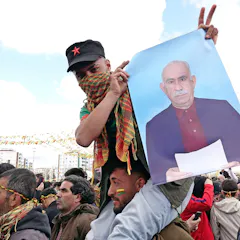
PKK’s decision to disarm and disband can provide lessons for other countries facing insurgencies.
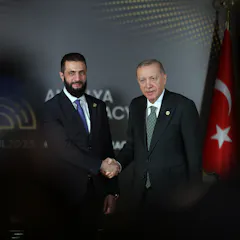
Ankara sees the fall of the Assad regime and the rise of new Syrian leader Ahmad al-Sharaa as a generational opportunity for domestic and regional goals.
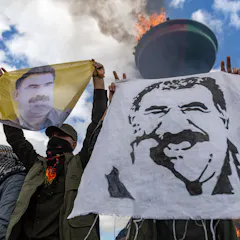
There are clear reasons for both the Turkish state and the PKK to come to the negotiating table now.
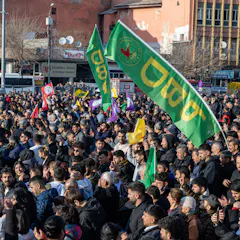
Listen to political scientist Pinar Dinc explain what’s led to the PKK’s ceasefire with Turkey on The Conversation Weekly podcast.
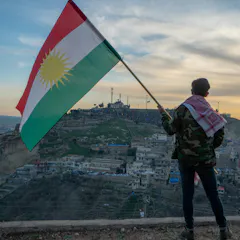
Iraq’s semi-autonomous north is grappling with a severe economic crisis, with many residents forced into massive personal debt.

The violence in Syria in recent days has shown how difficult it will be to unite a fractured country with deeply held grievances.
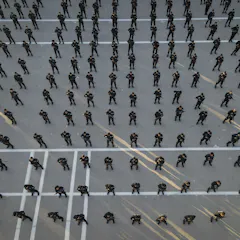
The fall of the Assad regime opens the door for a new, inclusive, democratic, Syrian-led and Syrian-owned path, but it remains a path full of pitfalls and challenges.

While Ahmed al-Shara consolidates his authority in Damascus, armed conflict is escalating in northern Syria.
Top contributors
-

Associate Lecturer, Faculty of Social Science, The Open University
-
Dean of Jimmy and Rosalynn Carter School for Peace and Conflict Resolution, George Mason University
-
Research Fellow, Middle East Studies, Deakin University
-
Professor in Political Science and International Relations, Durham University
-
Assistant Professor of Modern Languages, University of Central Florida
-
Professor of International Politics, Clinton Institute, University College Dublin
-
Associate Professor of Political Science, Department of Political Science and Researcher, Centre for Advanced Middle Eastern Studies, Lund University
-
Professor of International Relations and Middle East Politics, Loughborough University
-
Teaching Associate in Politics & International Relations at the School of Social Sciences, Monash University
-
Sessional Academic, School of Social Sciences, Macquarie University
-
Associate Professor of International Relations, University of Sussex
-
Lecturer in Languages, Culture and Society, UCL
-
Associate professor, London Metropolitan University
-
Lecturer in International Relations, University of Kent
-
Research Associate, School of History, Politics and International Relations, University of Leicester