
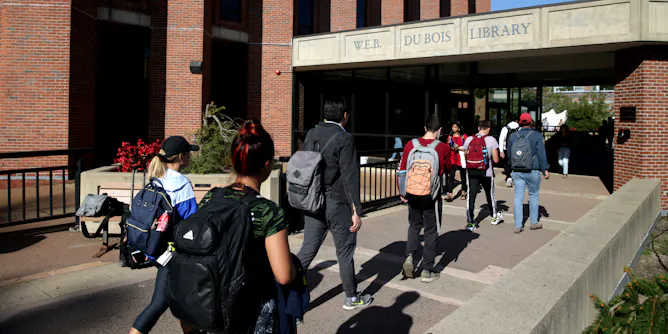
Headed off to college? A librarian shares four tips for college students ready to hit the books.
Articles on Libraries
Displaying 81 - 100 of 172 articles
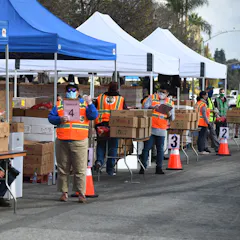
These efforts are growing due to the coronavirus pandemic. They involve partnerships with school districts, food banks and other institutions.
Unlike scholars, Google’s search engine can’t automatically decide which sources are the most important, most accurate or most significant.
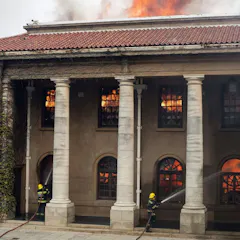
Losing archives has significant implications in a country like South Africa with a fraught and contested history because voices from the past, which may carry alternative histories, are lost.
During economic downturns, local governments tend to cut spending on libraries, even as the need for their services grows.

The mass production of religious items such as rosaries and holy cards poses a problem for the curators of religious artifacts at libraries and museums. How do you dispose of unwanted donations?
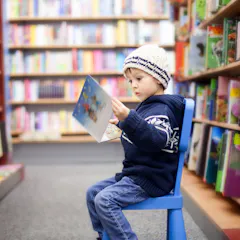
Lockdown life accelerated the role of digital technology in the virtual classroom, but there is still no substitute for physical books in children’s lives and learning.

Internet access should be a basic human right.
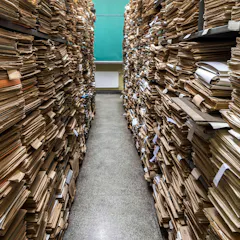
During the coronavirus pandemic, digitizing archives can help increase access. But in addition to the labour and financial costs, issues of privacy, copyright and resources need to be considered.
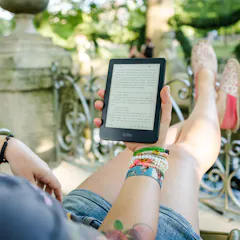
Many important Australian books have found themselves out-of-print and hard-to-find. The Untapped project aims to change that, bringing classics to a library near you.

Literature funding has been cut brutally in recent years and writers’ incomes are disastrously low. Yet books shape our national identity, forming an often invisible bedrock for the wider economy.

We know teacher librarians support children’s literacy. But school libraries play a more diverse role, including supporting students’ well-being.
Policymakers should mandate Canada’s national library to archive the entire Canadian web domain so future reserachers can make sense of 2020 and ongoing responses to the pandemic.
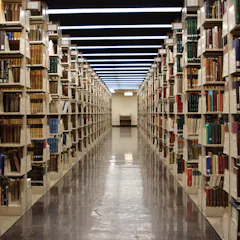
What stories will we tell about library collections in the future? As digitization takes over libraries, margin notes and scribbles are still part of the research process.

There’s a long history of books being banned from public and school libraries.
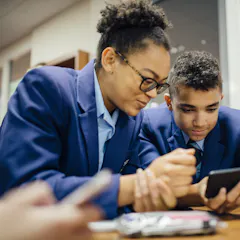
Privileged children get to use phones in school while others face bans for ‘messing around’‘.
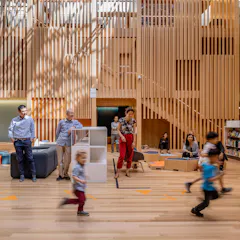
In our digital age, libraries are spaces for community and connection. The new State Library Victoria proves libaries have an exciting future.
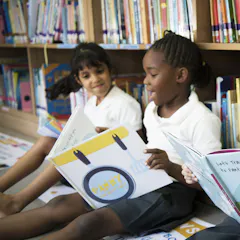
Literacy researchers analyze cross-Canada favourite books for kindergarten to Grade 2 readers, and suggest great “gritty” reads that can help normalize conversations surrounding failure and growth.
Libraries, archives, museums and galleries have finally been included in South Africa’s contested new proposed copyright bill.
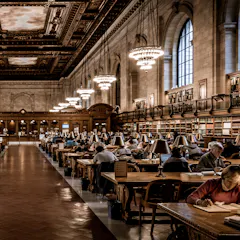
Today’s libraries build communities and provide space for learning new technologies but it is critical that they continue to be about books and reading too.
Top contributors
-

Professor of Information Sciences & Director, Social Change Enabling Impact Platform, RMIT University
-
Deputy University Librarian, University of California, Merced
-
Research Associate - Creative Industries, Flinders University
-
Adjunct Professor, College of Arts, Social Sciences and Commerce, La Trobe University
-
Associate Professor of Information Science, Drexel University
-
Adjunct Senior Industry Fellow, School of Global, Urban and Social Studies, RMIT University
-
Slavic Resources Coordinator, and Head, Petro Jacyk Resource Centre, University of Toronto Libraries, University of Toronto
-
Assistant Professor, Harvard University
-
Scholarly Communications Librarian, University of the Witwatersrand
-
Baker Endowed Chair and Professor of Library and Information Science, University of South Carolina
-
Canada 150 Research Chair in Gender and Cultural Informatics, University of Alberta
-
Professor of Print and Digital Cultures, Cardiff University
-
Director of the Centre for Organisational and Social Informatics, Monash University
-
University Librarian and Vice Provost for Digital Scholarship, University of California, Davis
-
Professor in Politics and Journalism, University of Notre Dame Australia