
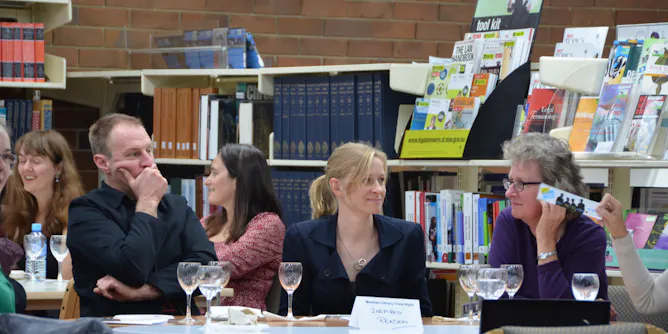
We commonly think of libraries as repositories of knowledge accumulated over centuries. But the public library also connects people in ways that can enable communities to plan for their future.
Articles on Libraries
Displaying 101 - 120 of 172 articles
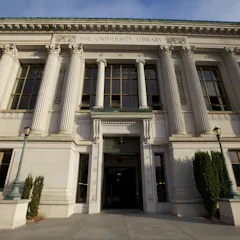
The UC libraries let their Elsevier journal subscriptions lapse and now the publisher has cut their online access. It’s a painful milestone in the fight UC hopes may transform how journals get paid.

ParentsNext requires places like libraries and public pools to monitor parents’ attendance at activities. This undermines their role as spaces of inclusion and support.
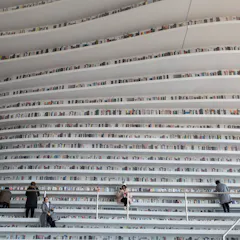
In our world of pervasive consumerism, libraries continue to be founded on humanism. Their core purpose as accessible places is vital – yet they are also now popular tourist destinations.
The Ford government’s cuts to library services are unwarranted and must be rescinded.
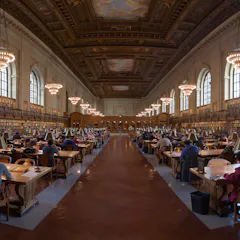
With advancements in technology, libraries are offering much more than something to read. A library researcher offers a sampling of some unexpected items that library patrons can check out these days.

The way books are sorted at the library can be highly political, touching upon issues of race and identity.
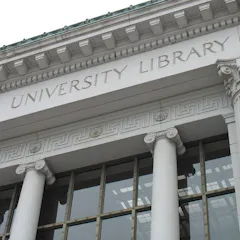
Digital publishing hasn’t resulted in the free and open access to information many envisioned. Universities are increasingly fed up with a system they see as charging them for their own scholars’ labor.
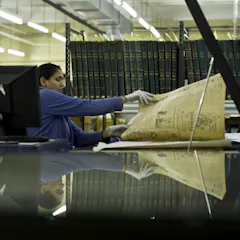
The media trope negates the work done by archivists, who are often well-aware of the existence of ‘long-lost’ letters, journals and stories.
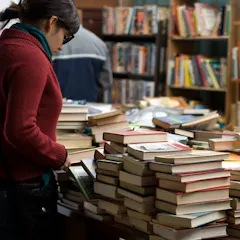
Are the stacks of books in your library still alive? Why keep them if they are not? Why does our attachment to the printed word not waver in the face of its digital counterpart?
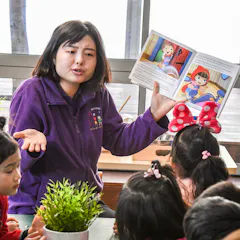
If schools and policy-makers want to boost children’s literacy, they should invest in teacher librarians.

Buildings built for writing and reading the news altered the urban fabric.
South Africa’s copyright law must not continue ignoring the principles of fair use.
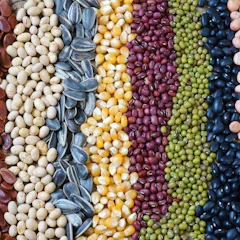
Sharing seeds was common practice among farmers throughout history until the rise of agribusiness. Now seeds are trademarked and regulated, but there’s a new place to get them for free: the library.

While many jobs are being replaced by technology, those that participate in the making of (good) social experiences for people are bucking the trend.

South Africa has a history of burning books. The ashes of burnt books tell of the barbarism to which a society can descend.
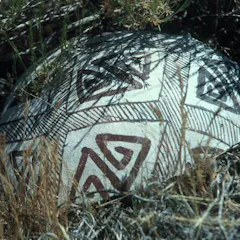
Only a small fraction of the data from archaeological fieldwork is made accessible to the public or preserved for future research.
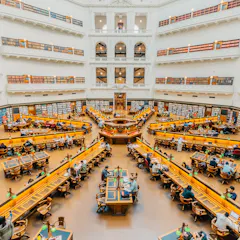
In the digital age, libraries got creative about how to translate services they’ve always offered into new formats. And they’ve transformed their spaces to have a variety of community uses.

Interdisciplinary research led to the discovery that three historic books were covered in a layer of arsenic.
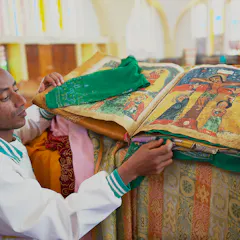
For Ethiopia, there is no connection between the Maqdala war in 1868 and the stolen treasures at Maqdala
Top contributors
-

Professor of Information Sciences & Director, Social Change Enabling Impact Platform, RMIT University
-
Deputy University Librarian, University of California, Merced
-
Research Associate - Creative Industries, Flinders University
-
Adjunct Professor, College of Arts, Social Sciences and Commerce, La Trobe University
-
Associate Professor of Information Science, Drexel University
-
Adjunct Senior Industry Fellow, School of Global, Urban and Social Studies, RMIT University
-
Slavic Resources Coordinator, and Head, Petro Jacyk Resource Centre, University of Toronto Libraries, University of Toronto
-
Assistant Professor, Harvard University
-
Scholarly Communications Librarian, University of the Witwatersrand
-
Baker Endowed Chair and Professor of Library and Information Science, University of South Carolina
-
Canada 150 Research Chair in Gender and Cultural Informatics, University of Alberta
-
Professor of Print and Digital Cultures, Cardiff University
-
Director of the Centre for Organisational and Social Informatics, Monash University
-
University Librarian and Vice Provost for Digital Scholarship, University of California, Davis
-
Professor in Politics and Journalism, University of Notre Dame Australia