
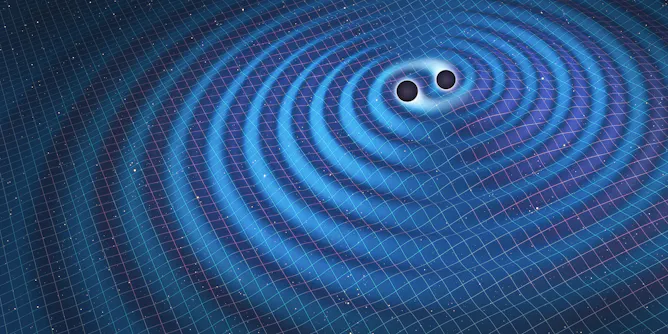
A decade after the first discovery, scientists have used these waves to find a unique merger, a massive binary system and a crystal-clear gravitational wave signal.
Articles on LIGO
Displaying 1 - 20 of 33 articles
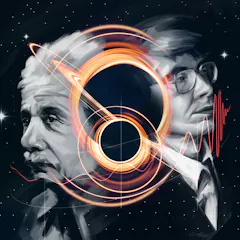
First, gravitational waves proved Einstein correct. Now, they’ve confirmed Stephen Hawking was right about black holes.
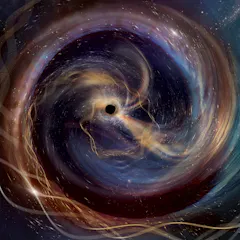
Stephen Hawking’s prediction about what happens when two black holes merge has finally been verified.
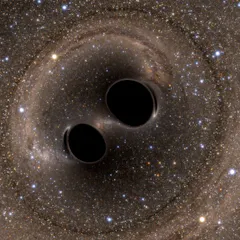
Too big to come from a dying star and too small to inhabit the center of a galaxy, these black holes are a puzzle that scientists are using LIGO to investigate.
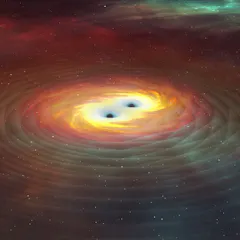
Gravitational waves carry information about massive cosmic events and help scientists to ‘listen’ to space.
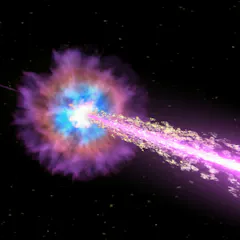
Analysis of two major cosmic blasts deepens the mystery of where the universe’s ‘heavy’ elements come from.
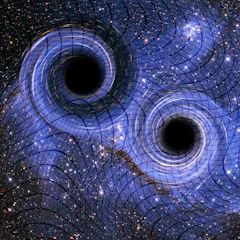
Astronomers have for the first time detected the background hum of gravitational waves likely caused by merging black holes.
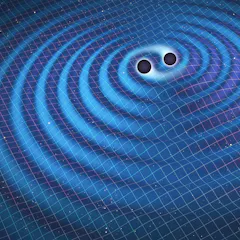
Upgrades to the hardware and software of the advanced observatory should allow astrophysicists to detect much fainter gravitational waves than before.
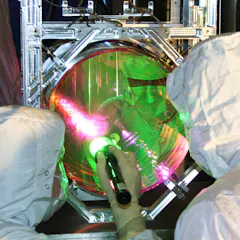
The world’s biggest gravitational wave observatory is now probing the limits of quantum mechanics.
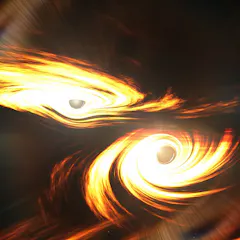
New discovery settles a wager between astrophysicists: black holes can merge repeatedly.
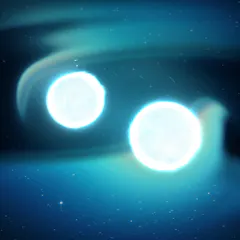
The signal came in on ANZAC Day, ripples in space-time from the merger of two neutron stars an estimated 500-million light years away. But where it happened is still a mystery.
More ripples in space-time have been detected from merging pairs of black holes, one of which was the most massive and distant gravitational-wave source ever observed.
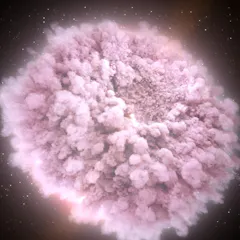
Until the recent observation of merging neutron stars, how the heaviest elements come to be was a mystery. But their fingerprints are all over this cosmic collision.
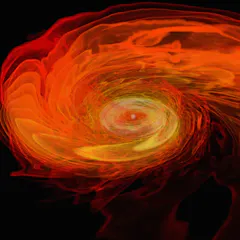
A LIGO team member describes how the detection of a gravitational wave from a new source – merging neutron stars – vaults astronomy into a new era of ‘multi-messenger’ observations.
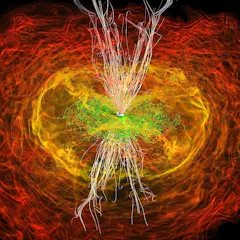
The gravitational wave itself is the least exciting part of the announcement from LIGO and Virgo. Observing this new source answers many longstanding questions.
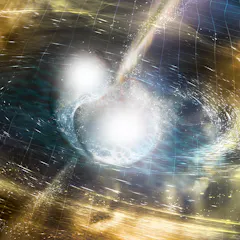
The discovery of tiny ripples in space from the violent collision of dense stars could help solve many mysteries – including where the gold in our jewellery comes from.
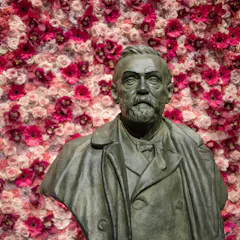
Today’s scientific research is characterized by interdisciplinary, international collaboration. Awards like the Nobel Prizes haven’t caught up.
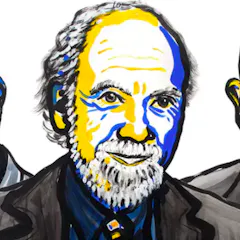
Razor-sharp, unconventional and fun on the dance floor. A colleague paints a colourful portrait of one of this year’s Nobel Laureates in physics.
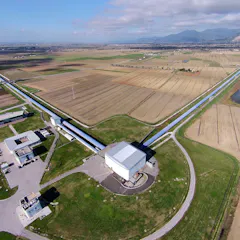
New results from Italy and the US help us better estimate the position of the merging black holes that produced the gravitational waves.
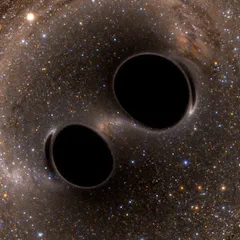
New research shows that as few as ten further detections of gravitational waves will help scientists know for sure how pairs of black holes form.
Top contributors
-

Professor of Physics, Penn State
-
Senior Lecturer and ARC Future Fellow, Monash University
-
Reader in Physics, University of Sheffield
-
Professor of Mathematical Physics, University of Cape Town
-
Professor, Monash University
-
Postdoctoral research fellow in Gravitational Wave Astrophysics, Monash University
-
Research fellow, The University of Western Australia
-
South African Research Chair in Physical Cosmology, Department of Mathematics and Applied Mathematics, University of Cape Town
-
Professor of Gravitational Astrophysics and Cosmology, University of Glasgow
-
Professor of Theoretical Astrophysics, Monash University
-
ARC Laureate Fellow, Swinburne University of Technology
-
PhD student in Astrophysics, The University of Melbourne
-
Professor of Physics, Syracuse University
-
Professor of Astronomy, Harvard University
-
Professor of Astrophysics, University of Sydney