

Instead of assessing parties along familiar ideological lines, many Canadian voters approached the 2025 election based on who could best protect the country from the U.S. That’s seemingly still the case.
Articles on Mark Carney
Displaying 41 - 60 of 131 articles

As the Liberal government inches closer to a majority thanks to the latest Conservative floor crossing, its legitimacy is being called into question.

Australia’s best defence isn’t to retreat from open trade, but to strengthen and diversify the rules-based system that supports it.
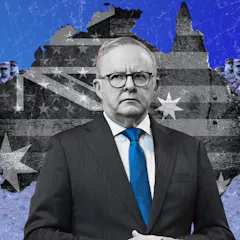
Finding alternatives to the US would be expensive and time-consuming. But Australia can be a more confident, self-reliant leader in the region.
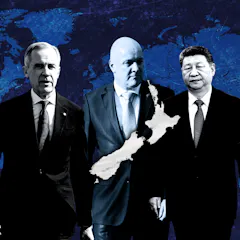
Canada’s Mark Carney is proposing a new alliance of ‘middle powers’ to offset over-reliance on the US and China. New Zealand would have good reason to be involved.

Mark Carney’s support for the U.S.-Israel war against Iran seems hypocritical, but it’s consistent with Canada’s longstanding support for a rules-based order that only applies when convenient.
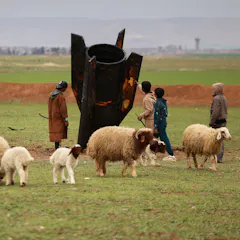
In 2003, Labor was strongly against the Iraq war. But more than 20 years later and in power, Albanese has had to do a different sort of political calculus.
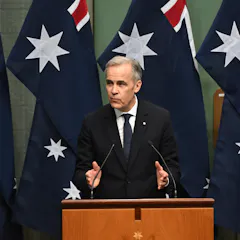
Addressing the federal parliament, Carney once again pressed his now familiar argument for middle power activism as the old world order disintegrated.
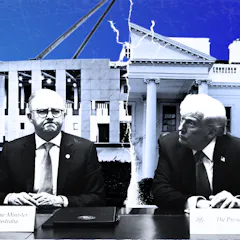
This begins with an honest recognition of the changing direction of US policy, stated plainly and directly to the Australian people.

Repositioning Canada in the global hierarchy does not mean leaving 50 per cent of the population behind. Now, more than ever before, it’s critical to double down on the commitment to equity.
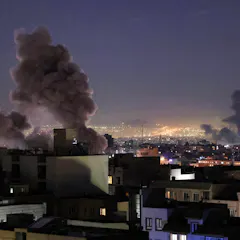
By appealing to international law and a ‘rules-based’ order, but not opposing the US-Israeli action, the government appears caught in the diplomatic crossfire.
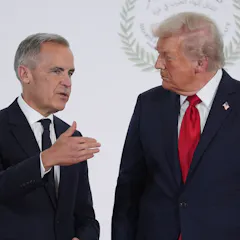
Canada’s Mark Carney has a vision of an alternate global order that grabbed global headlines - asking middle powers like Australia to challenge the current system.

Mark Carney’s visit to India suggests both Canada and India are willing to compartmentalize disputes and focus on areas of shared economic and strategic interest.
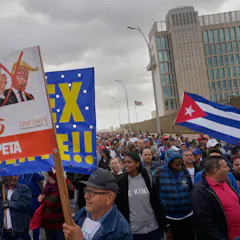
Canada’s longstanding approach to ties with Cuba is geared towards preserving diplomatic engagement while safeguarding economic and strategic interests.
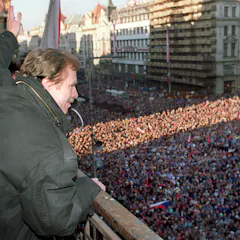
In his recent speech at Davos, Canadian prime minister Mark Carney drew on Havel’s book challenging compliance in an age of untruthfulness. What does it say?
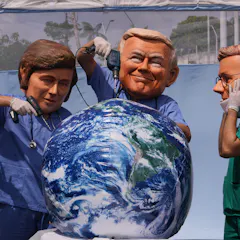
Everyone who cares about climate action must now grapple with how climate politics can function in a new world of uncertainty.

Pierre Poilievre’s leadership review was less about absolution than affirmation: a collective judgment that the party is closer to power with him than without him.
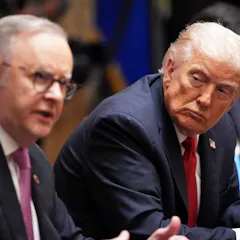
The protection the US offers is less absolute — and far less reassuring — than Australian government rhetoric often implies. It’s time to stop pretending otherwise.

The Pierre Poilievre leadership review will likely retain the status quo: an opposition leader only liked by his party’s base but deeply distrusted by non-conservative Canadians.

As global tensions rise, Canada and Sweden are shifting from defence procurement to long-term strategic alignment across security, industry and Arctic governance.
Top contributors
-

Lecturer, Political Science, University of British Columbia
-
PhD Candidate, Political Science, Western University
-
Election Analyst (Psephologist) at The Conversation; and Honorary Associate, School of Mathematics and Statistics, The University of Melbourne
-
Visiting Senior Research Fellow, Women's Leadership, King's College London
-
Associate Professor, Political Science, University of Northern British Columbia
-
Research Associate, Public Policy Institute, University of Auckland, Waipapa Taumata Rau
-
Associate Professor Emeritus, Economics, University of Toronto
-
Research Fellow in Faculty of Arts, Business and Social Sciences at the University of Surrey, Visiting lecturer at University of Roehampton and OELS, University of Surrey
-
Adjunct Professor. History of the Royal Family, Redeemer University
-
Professorial Fellow, University of Canberra
-
Professor of Finance, University of Liverpool
-
Senior Fellow, Centre for Free Expression, Toronto Metropolitan University; York University, Canada
-
Professor, Canadian and Cultural Studies, Stockholm University
-
Associate Professor (Teaching Stream) in the School of Canadian Studies, Carleton University
-
Professor of Political Science, Université du Québec à Montréal (UQAM)