
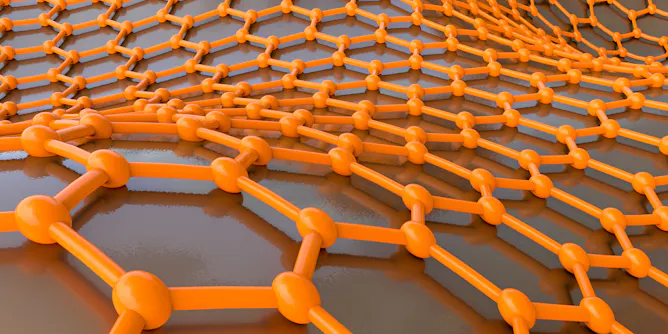
The development could allow research teams with limited resources to manufacture graphene.
Articles on Materials science
Displaying 1 - 20 of 99 articles

Storing hydrogen in metallic materials is a promising avenue for extracting value from Africa’s minerals.

The damage is sometimes only centimeters deep. Three engineers explain the colors of burned masonry and other signs preservationists look for amid another destructive fire year.

If Spider-Man were real, he could help scientists revolutionize healthcare. Since he’s not, researchers develop creative ways to produce spider silk to study.
Nanobubbles are invisible, mysteriously stable, a thousand times thinner than a human hair, and surprisingly versatile.
Ben Franklin led an effort to print paper bills in the American colonies, after a coin shortage constrained the economy.

Chemists have been working on new approaches to reducing waste and finding new functions for existing materials.

Some engineers are prioritizing ‘design for demise’ and planning satellites that are more likely to completely burn up in Earth’s atmosphere at the end of their lifespan.

Fiber optics allow you to search the internet, text your friends and check your social media feeds. They also have geological, security and manufacturing applications.

From beetles to sustainable packaging – one failure in the lab led to a new line of promising research.

AI models are designing new metal alloys that have been 3D-printed and tested in the lab. The results are then fed back into the AI to accelerate alloy discovery.

A research team has paved plastic-infused roads in Texas and Bangladesh, with promising results.

While physical exertion helps athletes stay warm, sweating can lead to dehydration.
3D printing makes it easier for engineers to design cheap, lightweight materials that reflect patterns found in nature.

A new study investigated the source of a leak in a ‘miracle measurement’ from 2010 – and engineers found a potential solution.
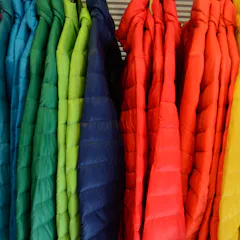
Winter jackets may seem simple, but sophisticated engineering allows them to keep body heat locked in, while staying breathable enough to let out sweat.

Mycelium, the hidden network behind mushrooms, can be grown into durable, low-carbon materials.

It’s very metal.
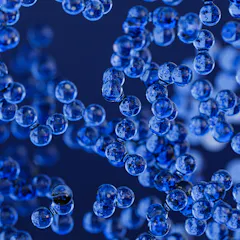
Moving tiny particles through materials quickly can improve the efficiency of a variety of technologies.

A new breakthrough that enhances cutting-tool performance won’t just benefit manufacturers — it’s a significant leap forward in materials science.
Top contributors
-

Director & Associate Professor of Sports Product Design, University of Oregon
-
Ph.D. Candidate in Chemical Engineering, University of California, Riverside
-
Professor of Advanced Technology Transitions, Arizona State University
-
Assistant Professor of Chemical and Biological Engineering, University of Colorado Boulder
-
Senior Industry Research Fellow, Future Industries Institute, Adelaide University
-
Professor of Geosciences, Franklin & Marshall College
-
Royal Academy of Engineering Chair in Emerging Technologies - Intelligent & Resilient Ocean Engineering, University of Southampton
-
ARC Laureate Professor in Chemistry, The University of Melbourne
-
Professor of Mechanical Engineering and Biology, Adjunct Professor of Physics, Georgia Institute of Technology
-
Associate Professor of Mathematics and Statistics, University of South Florida
-
Professor and Canada Research Chair in Quantum Materials Discovery, University of Winnipeg
-
Assistant Professor of Materials Science and Engineering, North Carolina State University
-
Associate Professor of Mechanical Engineering- Materials and Solid Mechanics, University of Maryland, Baltimore County
-
James R. Rice Distinguished University Professor of Engineering, University of Michigan
-
PhD Student in Solid Mechanics, Brown University