
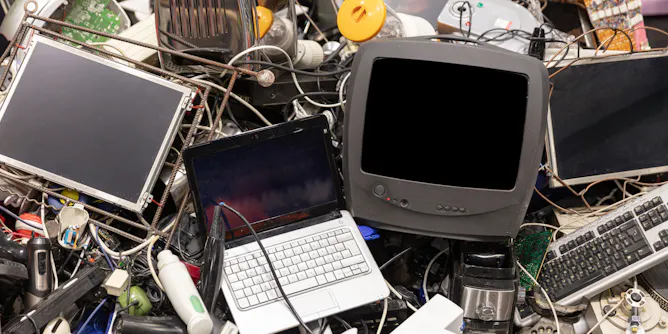
Europe is not facing a scarcity problem but a recovery challenge, and one that can be solved.
Articles on Electronics
Displaying 1 - 20 of 91 articles

Business is booming for fakes, worth at least US$467 billion a year worldwide. But some fake products can pose serious health risks to unsuspecting buyers.

Fiber optics allow you to search the internet, text your friends and check your social media feeds. They also have geological, security and manufacturing applications.
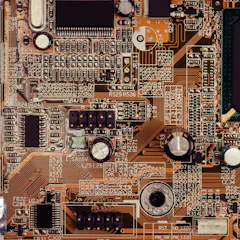
A new study investigated the source of a leak in a ‘miracle measurement’ from 2010 – and engineers found a potential solution.
Seeing more refurbished electronic devices on the market? Thank tech innovation – and the government regulation that sparked it.

‘Vampire power’ is real.

Quantum computers that work at slightly higher temperatures could be cheaper and more accessible.

Compared to its 1980 predecessor, the new FX series presents a more authentic portrayal of early modern Japan.

Electric vehicles are catching on across the US, but they’re also catching on fire in colder regions like the Northeast and Midwest.
Mining precious metals is expensive and environmentally destructive. As an alternative, researchers are increasingly eyeing recycling old smartphones, computers and other electronics.
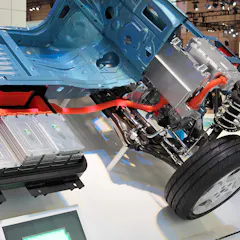
Lithium-ion battery fires are becoming increasingly common as electric vehicles spread, and are hard to extinguish. A new approach uses an electrolyte based on a commercial fire extinguisher.

Lithium-ion batteries power many electric cars, bikes and scooters. When they are damaged or overheated, they can ignite or explode. Four engineers explain how to handle these devices safely.

Welcome to the new age of resource nationalism.

A researcher explains developments in using light rather than electrons to transmit information securely and quickly, even over long distances.

Superconductors are materials that can transmit electricity without any resistance. Researchers are getting closer to creating superconducting materials that can function in everyday life.

The impact of using electronic devices is critical during the first years of life, both visually and on the cognitive and social development of the child.

Is it true our phones are dangerous for aircraft navigation? An expert explains.
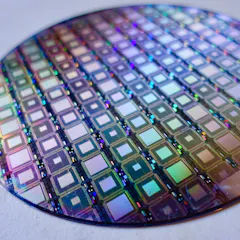
Semiconductor chips are electronic devices that store and process information. Today they can contain billions of microscopic switches on a chip smaller than a fingernail.

The ability to store information is central to learning and the field of artificial intelligence. Researchers have shown how a unique material shows basic learning properties similar to that of slugs.

It could be the first steps towards a Star Trek-style holodeck.
Top contributors
-

Reader in Theoretical and Computational Condensed Matter Physics, University of Edinburgh
-
Associate Professor of Physics and Electronics, Hunan University
-
Professor of Physics, Clemson University
-
PhD Candidate, Queen's University Belfast
-
Assistant Professor in Nanoscience, University of British Columbia
-
Professor, Department of Computer Science, University of Surrey
-
John M. Thompson Chair in Information Technology and Innovation and Professor, Western University
-
Professor in Nanoelectronics, University of York
-
PhD candidate in Atomic Imaging, University of British Columbia
-
Research Scientist in Computer Science and Engineering, Nanyang Technological University
-
Associate Professor of Electrical and Computer Engineering, Binghamton University, State University of New York
-
Associate Professor of Electrical and Computer Engineering, Tufts University
-
Assistant Professor of Electrical and Computer Engineering, The Ohio State University
-
PhD candidate in Materials Engineering, Monash University
-
Professor/Head of Aviation, CQUniversity Australia