
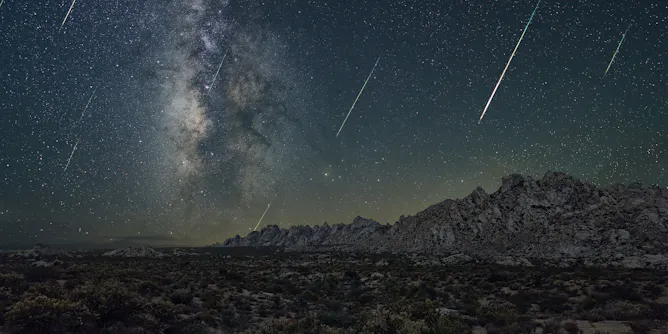
An observatory director describes the differences between the types of rocks that fly through space.
Articles on Meteor
Displaying 1 - 20 of 59 articles
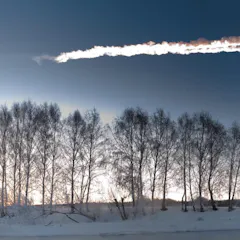
2026 has already been a banner year for meteor spottings and sonic booms across the world.
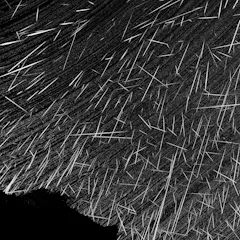
A newly identified meteor shower reveals that intense heat is fragmenting a previously unknown asteroid as it passes too close to the Sun.
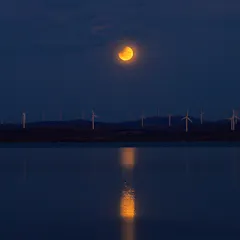
In 2026 we will see a total eclipse of the Moon, a blue Moon, a supermoon and the two brightest planets close together in the sky.
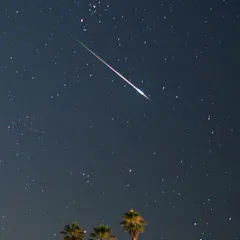
There are telltale clues to help you work out what just blazed overhead.

In mid-February, asteroid 2024 YR4 was spotted and originally believed to have a 3.1 per cent of hitting Earth in 2032. Further calculations revealed this was not the case.
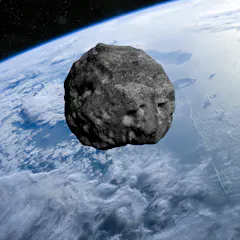
Asteroid 2024 YR4 has around a 1-in-77 chance of hitting Earth in 2032 – but there’s no need to panic.
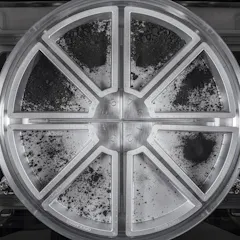
Two new studies show a briny, carbon-rich environment on the parent body of the Bennu asteroid was suitable for assembling the building blocks of life.
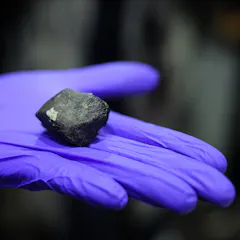
Meteorites contain a wealth of information about the origins of our solar system, helping us to understand their, and even Earth’s, origin and evolution.
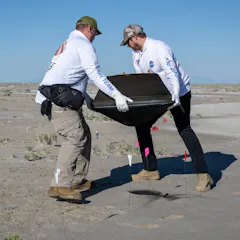
Scientists don’t often have the time to get all their equipment set up to study incoming meteors from space. Instead, they can study capsules from space missions as ‘artificial meteors.’
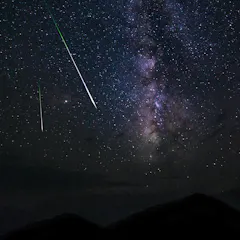
When rocks from space fall towards Earth, they usually don’t do any damage – here’s why.

The meteor shower happens when Earth passes through debris from Halley’s comet.

A mysterious hunk of space junk buzzed through Australian skies last night. It may have been the third stage of a Soyuz 2 rocket just launched by Russia.

There is a very large scientific leap from observing a fireball to claiming it as an alien spaceship.
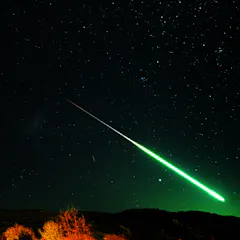
The green glow of an aurora is caused by oxygen ions in the upper atmosphere. Some meteors can glow in this way, too, but only if they are extremely fast.
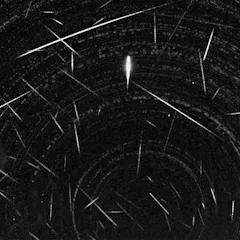
When the meteor exploded into pieces above New Zealand, it produced a shock wave strong enough to be picked up by earthquake seismometers. But any fragments have likely dropped into the ocean.
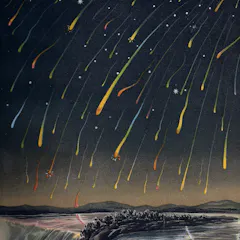
Could the Tau Herculid meteor shower put on a spectacular show next week? Only time will tell.
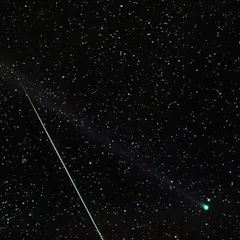
Each year, the Earth runs through a broad river of dust surrounding Comet Halley – giving birth to the spectacular Eta Aquariid meteor shower.
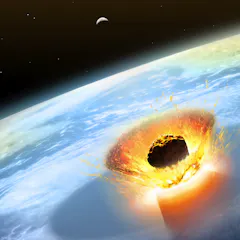
NASA has only mapped 40% of the potentially dangerous asteroids that could crash into Earth. New projects will boost that number, and upcoming missions will test tech that could prevent collisions.
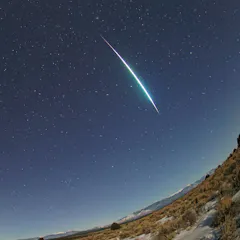
A poor start for meteor showers in 2021 but things get better with a possible spectacular surprise later in the year. Here’s your guide on when and where to look to catch nature’s fireworks.
Top contributors
-

Professor (Astrophysics), University of Southern Queensland
-
Senior Curator (Astronomy), Museums Victoria Research Institute; The University of Melbourne
-
Professor of Planetary and Space Sciences, The Open University
-
PhD Candidate in Astronomy, University of Southern Queensland
-
Director, Binar Space Program, Curtin University
-
Professor in Earth Sciences, Nanyang Technological University, Singapore, and Emeritus Professor of Mineral Physics, University of Cambridge
-
Pro Vice-Chancellor Flagship Initiatives, Swinburne University of Technology
-
Head of Research Data & Software, Macquarie University
-
Lecturer in Planetary Geoscience, School of Geographical and Earth Sciences, University of Glasgow
-
Reader in Planetary Science, Imperial College London
-
Professor of Geology and Geoscience Atom Probe Science Leader, Curtin University
-
Professor of Astronomy, University of St Andrews
-
Assistant Professor of Space and International Relations, Johns Hopkins University
-
Casual academic, UNSW
-
Associate Professor of Physics and Astronomy, Western University