

Moving can change the conditions that shape health, so health and social policy must plan for a mobile population.
Articles on Migrants
Displaying 1 - 20 of 489 articles

South Africa’s history shows that anti-immigrant violence is neither an aberration nor the country’s only possible path.
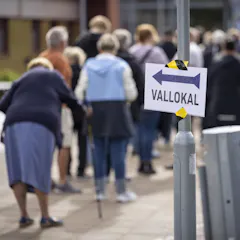
Despite being enfranchised, electoral turnout among non-citizens in Sweden remains low.

Immigrant entrepreneurs report frustration and disappointment over the lack of business support setting up in New Zealand. Any new visa scheme must account for this.
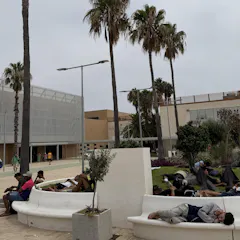
Migrant workers are vital to Spain’s vast agriculture sector, but they are often hidden from view.

Pressure to hold the family together, visa worries and fear of social exclusion can make it harder to leave abusive relationships.
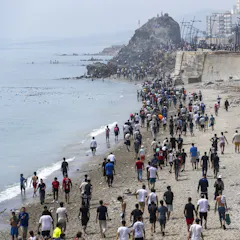
The Ceuta crossing is just one part of the wider migration story in the Mediterranean.
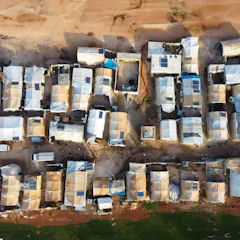
International law doesn’t require refugee camps, making them a policy choice rather than a legal obligation.

As Canada continues to welcome newcomers, we should remember that behind every immigration policy are people whose knowledge, experiences and contributions deserve to be recognized.
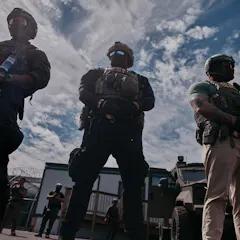
Grassroots activists and marginalized communities are ‘flipping the script’ on surveillance by watching, documenting and gathering information about powerful institutions such as ICE from below.

Questions persist over ethical recruitment from countries already facing healthcare workforce shortages.

Birthright citizenship has become a point of debate as some governments adopt more restrictive policies aimed at limiting access to citizenship for some migrants.

The ‘Canadian Dream’ works for some immigrants and not others because of the hidden role of socioeconomic class.

Changes to Canada’s immigration system have dramatically reduced legal pathways towards permanent residency based on myths about the impact of immigrants on Canadian society.

The economic and social conditions in which anti-migrant sentiment has exploded in South Africa include high joblessness and a collapse of government services.

The World Cup is selling football as inclusive and diverse. It’s not so for the African players migrating to play overseas.

Chinese food heritage is diverse and vast, and embodies the distinct geographical and historical traces of various cultural identities.
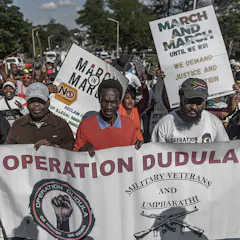
Organisations behind the wave of xenophobia use the language of participation, community and people’s power to justify marginalisation.
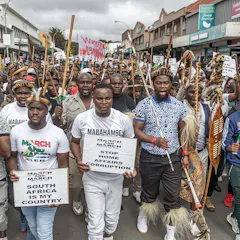
Data show that South Africans have become more hostile towards immigrants.
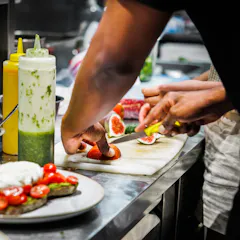
Researchers found pervasive worker underpayment in Australia, with two-thirds of temporary visa holders paid less than they were legally owed.
Top contributors
-

Visiting professor, Harvard University
-
Associate Director, Refugee Law Lab, York University, Canada
-
Associate Professor, Faculty of Arts, Design and Architecture, UNSW
-
Research associate, Centre for Refugee Studies, York University, Canada
-
Professor of Anthropology, The Ohio State University
-
Program Director, Housing and Economic Security, Grattan Institute
-
Professor, Sociology, University of Windsor
-
Associate Professor of History, Carleton University
-
Professor of International Migration and Forced Displacement and Director of the Institute for Research into International Migration and Superdiversity, University of Birmingham
-
Associate Professor, Department of Law and Legal Studies, Carleton University
-
Professor of International Politics, University of Warwick
-
Postdoctoral research fellow University of Barcelona, Universitat de Barcelona
-
Senior Research Fellow, Centre for Trust, Peace and Social Relations, Coventry University
-
Deputy Program Director, Migration and Labour Markets, Grattan Institute
-
Associate Professor, sociology department, University of Toronto