
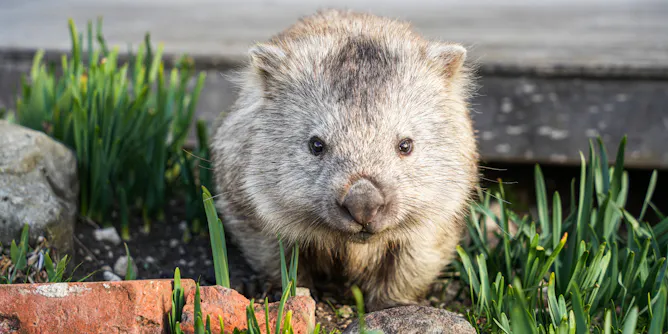
A new study reveals thousands of native animals are taking up residence in Australian homes.
Articles on Native animals
Displaying 1 - 20 of 35 articles
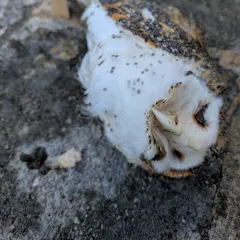
Rat and mouse baits are an everyday product. But these chemicals can persist in the tissues of rodents that eat them for months and poison native animals.
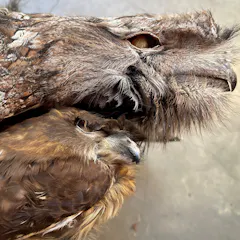
Native predators like owls and goannas are dying from eating poisoned rats and mice. Wildlife experts are shocked the government won’t ban these toxic compounds.
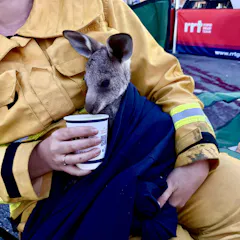
The Victorian fires burned though diverse environments across the state. Native animals suffered through heat and smoke, including thousands of dead flying foxes.
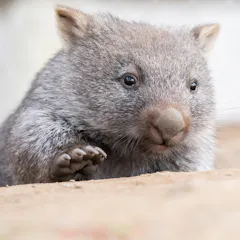
Wombats’ whiskery noses help them snuffle for food, navigate burrows and sense friend or foe.
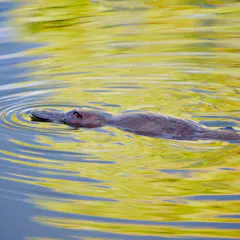
A controversial idea suggests the ancestors of echidnas were more like the platypus. For the first time, fossil evidence might support it.

Musky rat-kangaroos look a bit like a potoroo – but they have a unique trait not shared with any other roos.

Knowing what an animal eats can help biologists find it – especially when a species is as elusive as this one.
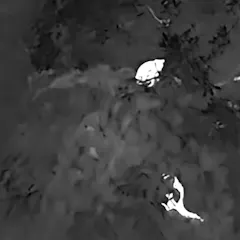
Thermal drones are helping researchers find Bennett’s tree kangaroos in the rainforest canopy, revealing new insights to guide conservation efforts.
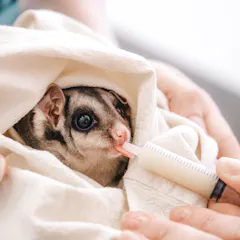
Why can’t you keep a wombat or koala as a pet rather than a cat or dog? There are good reasons why keeping native animals as pets isn’t as easy as it seems
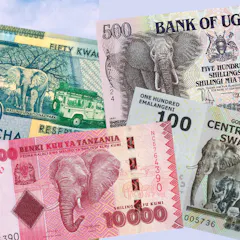
What do you know about your national currency? How about the cash used overseas? We studied wildlife imagery on banknotes around the world. Here’s what we found.
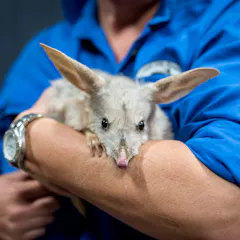
We’ve just published the largest ever marsupial genome – all 3.6 billion pieces of it. Together with Indigenous rangers, we’re applying two-way science to better protect bilbies.
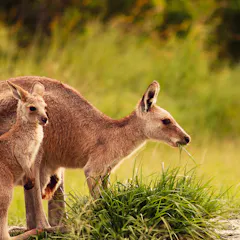
Yearly growth lines and a conveyor belt of molars show how marsupial teeth carry a surprising amount of information.

The delicate mouse – widespread across Australia – has turned out to be three different species. This will help to save them from habitat loss.
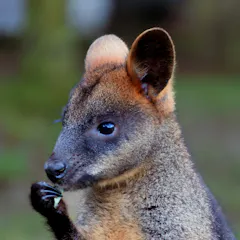
Each year, hungry plant-eating animals do billions of dollars of damage to valuable plants. We need prevention methods that don’t involve killing them.
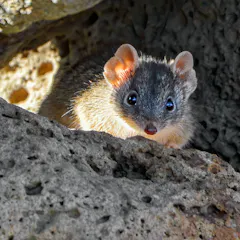
Antechinuses are tiny marsupials famous for their intense sex lives. Now, researchers have documented another unusual behaviour – the cannibalism of their own species.
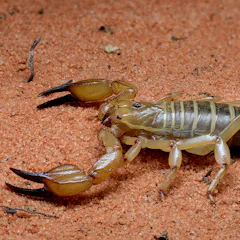
Most Australians think of scorpions as exotic desert animals, but they are fairly widespread across the continent. Still, next to nothing is known about most local scorpion species.
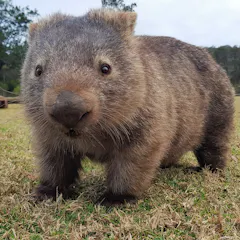
Contributors to the WomSAT website have already reported more than 23,000 wombat sightings. We can use the data to cut the risks to wombats – and anyone with a smartphone can help.
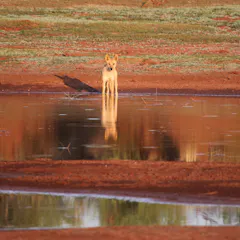
There’s been a long-standing debate over whether dingoes started out wild or domesticated. One thing is clear – they had a close relationship with First Peoples.

After combing through museum collections, our team of researchers found a whopping 125 fluorescent mammal species – from polar bears and dolphins, to leopards, zebras and wombats.
Top contributors
-

Professor Emeritus in Terrestrial Ecology, University of Sydney
-
Professor, University of Sydney
-
Professor in Wildlife Ecology and Conservation, School of Life & Environmental Sciences, Deakin University
-
Associate Professor in Biology, Zoology and Animal Science, Western Sydney University
-
Matthew Flinders Professor of Global Ecology and Node Leader in the ARC Centre of Excellence for Indigenous and Environmental Histories and Futures, Flinders University
-
Lecturer in Biological Sciences, University of Wollongong
-
Professor, School of Biological, Earth and Environmental Sciences, UNSW
-
Senior Lecturer in Psychology, CQUniversity Australia
-
National Research Coordinator, University of Sydney
-
Research Group Leader & ARC DECRA Fellow, Monash University
-
Professor of Comparative Genomics, University of Sydney
-
Lecturer in Ecology, Griffith University
-
Distinguished Professor, School of Culture, History & Language, Australian National University
-
Associate Professor of Applied Entomology, The University of Western Australia
-
Postdoctoral Research Fellow, School of Biological Sciences, Adelaide University