

The condition is more than merely being bad with directions.
Articles on Navigation
Displaying 1 - 20 of 54 articles
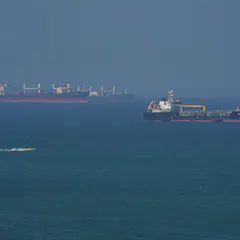
From airliners to supertankers, GPS has long been invaluable for safe navigation, but its signals can easily be jammed and almost as easily faked. Researchers are racing to develop backups.

Habit helps take the mental load off figuring out how to get somewhere. But relying on the familiar can make it harder to adapt to changes to your route and to find better ones.

There are actually two North Poles. One has been wandering over northern Canada and north of there for years. An earth scientist explains why and what it means for holiday travel.
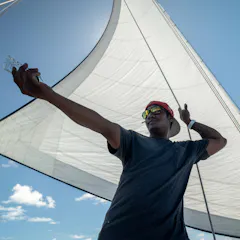
Scientists have been exploring the role that neuroscience plays in ocean navigation.
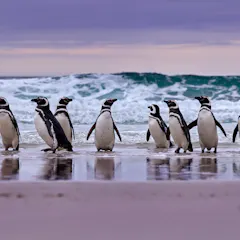
New research shows Magellanic penguins use ocean currents to navigate efficiently and forage on the way.

Australia’s iconic bogong moths are the first creatures other than humans and some birds known to navigate by the night sky.

Robots in challenging places like disaster zones need energy-efficient systems to find their way.
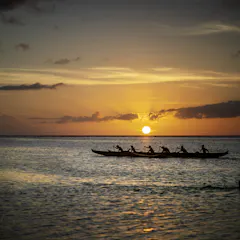
Looking to the stars is an important part of how Pacific voyagers navigate. But deep knowledge of ocean currents, winds and waves, along with mental mapping strategies, are critical too.

Disney’s ‘Moana’ movies have brought a new level of excitement for astronomy and wayfinding, says an astronomer who regularly hosts planetarium shows.
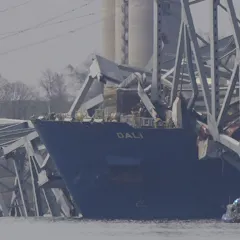
Two ship pilots were on board the large cargo vessel that hit Baltimore’s Francis Scott Key Bridge. A veteran ship captain describes the role these pilots play in close-quarter maneuvering.
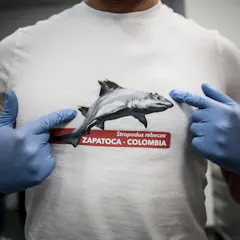
‘Jaws,’ published in 1974, terrified the public of sharks, but it also brought shark research into the scientific mainstream.
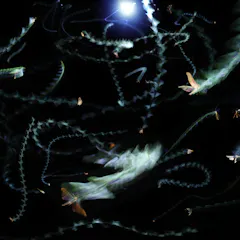
A new study shows how artificial light at night scrambles insects’ normal flight patterns, pulling them off course into orbit around the light.
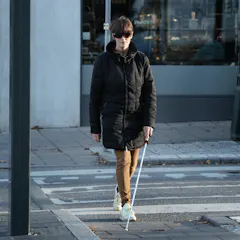
Detecting and tracking motion is key to survival. The ability to extract auditory information from a noisy environment changes when your brain isn’t wired to rely on vision.
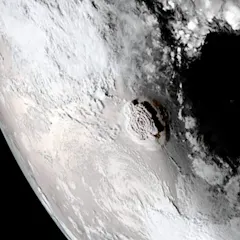
The eruption was so large, it created its own space weather and satellite technology disruptions – here’s how.
By learning what parts of the brain are crucial for imagination to work, neuroscientists can look back over hundreds of millions of years of evolution to figure out when it first emerged.

Ghanaians aren’t using the new ‘smart’ street address system which was intended to improve service delivery.
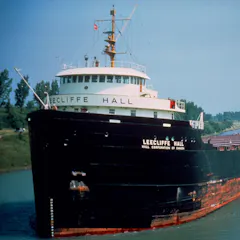
The St. Lawrence is one of the most difficult rivers in the world to navigate. It has been the site of collisions, groundings and shipwrecks. Several thousand wrecks lie beneath its surface.
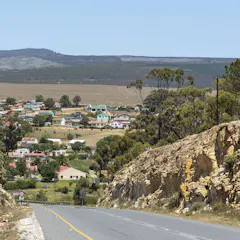
While many people rely on written signage to find their way around, oral language plays a significant role in giving directions in rural areas.

A mathematician explains how language can keep your online accounts safe and pinpoint your location on the planet.
Top contributors
-

Associate Professor, RMIT University
-
Research Fellow, Julius Maximilian University of Würzburg
-
Professor of Animal Behaviour, Bangor University
-
Associate Professor in Geospatial Science, RMIT University
-
Professor of Historical Geography and Intellectual History, University of Bristol
-
Postdoctoral Research Associate, Florida International University
-
Honorary Senior Lecturer, University of Aberdeen
-
Training Course Materials Designer, Cardiff Metropolitan University
-
Professor of Electrical Engineering, Ohio University
-
Professor of Linguistics, Bangor University
-
Director of the University of California Center of Excellence on Unmanned Aircraft System Safety, University of California, Merced
-
NASA
-
Cultural Astronomy & Cultural Competence Researcher, UNSW
-
Professor, School of Civil & Environmental Engineering, UNSW
-
Professor of History and Philosophy of Science, University of Cambridge