

Despite advances in neuroscience, the underlying biology of mental illness has remained elusive. The DSM-6 will attempt to integrate neurobiology into how clinicians diagnose and treat psychiatric conditions.
Articles on Neurobiology
Displaying 1 - 20 of 44 articles

Buddhist meditation and Pentecostal speaking in tongues could hardly look more different. But not to the brain.

You can’t spot an aggressive dog just from its looks or breed. Genetic testing could better predict which dogs will bite.

Old-school parenting strategies like ‘go to your room!’ can often amplify the very behavior that parents want to correct.

Current treatments for alcohol abuse are limited in their effectiveness and come with side effects. Precisely targeting the neurons involved in binge drinking could lead to better options.

Your brain processes the pleasure of everyday behaviors like eating and drinking similarly to the pleasure of using drugs. Disentangling them requires understanding how memories are formed.

War, abuse, neglect and famine leave deep scars, but our psyches can heal.

Singer Amy Winehouse died from alcohol toxicity in 2011, the same year that the American Society of Addiction Medicine publicly recognized addiction as a brain disorder.

Improved understanding of the molecular mechanisms of addiction can change how researchers and clinicians approach treatments.

Sapolsky summarises the latest scientific research relevant to determinism: the idea that we’re causally ‘determined’ to act as we do and couldn’t possibly act any other way.

Rapidly changing temperatures and sensory environments are challenging the nervous systems of many species. Animals will be forced to evolve to survive.

Brain samples of a thylacine that died in 1880 in Berlin were kept safe by researchers for decades. Now, they have finally been analysed.

At the most basic level, the brain releases a cocktail of chemicals. But there’s more to it than that.

Why is it so difficult to swat a fly? A team of insect experts explains how a fly’s sophisticated vision allows it to quickly react to visual cues.

From figuring out where memories are stored to how sensory information translates to behavior, new technologies are helping neuroscientists better understand how the brain works.

Some might argue ‘moral enhancement’ medicine already exists — such as when we take medicine that alters our brain chemistry. Where do we draw a line?

Different painkillers provide relief in different ways. The most effective medication is the one that best targets the type of pain you’re experiencing with minimal side effects.
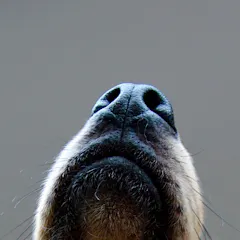
Understanding how the brain translates smells into behavior change can help advance search and rescue technology and treatments for neurological conditions.

The death of 57-year-old Paul Millachip at Fremantle’s Port Beach is a reminder that shark bites, though rare, can be tragic. New research aims to reduce the risk by understanding sharks’ vision.

Early reports suggested an apparent increase in OCD relapse rates and symptom severity during the pandemic. But a year on, we’re learning this may not be the case.
Top contributors
-

Assistant Professor of Neuroscience, California Institute of Technology
-
Professeur agrégé de neurosciences computationnelles et neurophysiologie, L’Université d’Ottawa/University of Ottawa
-
Professor of Civil, Environmental and Architectural Engineering, University of Colorado Boulder
-
Trustees of ASU Professor, Arizona State University
-
Provost and Senior Vice President, Lehigh University
-
Senior lecturer, The Open University
-
Senior Lecturer in Psychology, University of St Andrews
-
PhD student in Biology, University of Rochester
-
Laureate Professor Emeritus, The Peter Doherty Institute for Infection and Immunity
-
Neuro-economist, University of Sydney
-
Senior Lecturer in Physiology, Swinburne University of Technology
-
Professor of Chemistry, Connecticut College
-
Professor of Biodiversity, Earth and Environmental Science and Biology, Drexel University
-
Professor of Psychology, Université Grenoble Alpes (UGA)
-
Emeritus Professor of Zoology, University of Cambridge