

People with poorly controlled asthma may be able to breathe easier by making a change in the kitchen.
Articles on Nitrogen dioxide
Displaying all articles

The natural gas industry has spent years trying to undermine scientific findings about gas stoves and health. If this sounds familiar, that’s no accident.
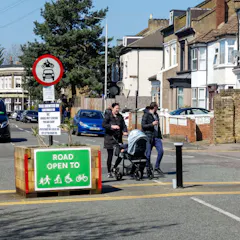
LTNs were introduced to UK cities to create a more pleasant environment for pedestrians and cyclists - but they’ve become controversial.

Women’s rights activists used maps to highlight which regions hadn’t given women the vote: we can use the same tactics to push climate action.

The World Health Organization has halved its recommended limit for particulate pollution.
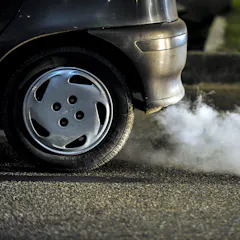
Fine particles in air pollution contribute to the deaths of 36,000 people each year in the UK.

Exaggerating how much lockdown improved air quality could allow us to underestimate the scale of the air pollution problem.

Staff and customers with underlying health conditions are likely to be most at risk at drive-through windows.

The new data shows this drop in air pollution may have prevented up to 10,822 deaths in China as a whole.

From Nairobi to Los Angeles, pandemic lockdowns have cleared pollution from the skies. But those blue vistas may be temporary, and shutdowns aren’t slowing climate change.

The data shows a big improvement of pollution levels over some cities – but in others, pollution has, perhaps surprisingly, increased.
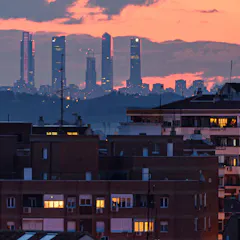
As lockdowns have came into effect around the world, air pollution has plummeted.

Pollutants like nitrogen dioxide are a silent killer, but everyone isn’t equally at risk.
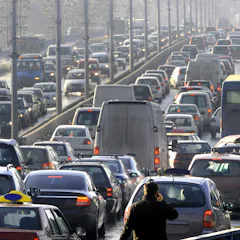
Childhood asthma cases caused by traffic pollution are on the decline. But children in some parts of the country are faring better than others.

Earth is fast approaching the red lines that scientists have urged temperatures cannot cross if we have any hope of avoiding catastrophic climate change. Here are the emergency measures we need.
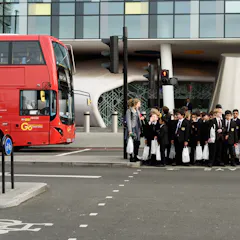
London’s low emission zone has started to reduce air pollution – but not enough to protect children’s lungs.

Free public transport could be one way to get more people to ditch the car.

The estimated economic value of minimising the damage to public health has been reduced by 80 percent.
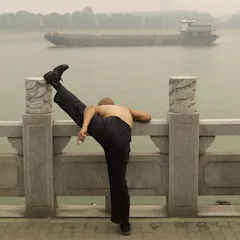
The merchant navy – some 20,000 ships – carries the vast majority of trade goods around the world. Unfortunately, they also spew toxic pollutants that harm people and the environment.
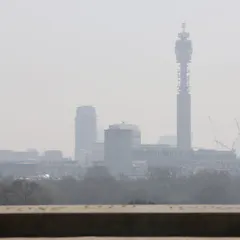
Total emissions are coming down. But many people still live in cities with poor air quality.
Top contributors
-

Professor of Atmospheric Science, University of Birmingham
-
Honorary Professor of Transport Studies
-
Senior Research Fellow at the Stockholm Environment Institute, University of York
-
Professor, Climate Change Cluster, University of Technology Sydney
-
Senior Lecturer, School of Public Health, Imperial College London
-
Professor of Primary Care, Queen Mary University of London
-
Professor of Atmospheric Chemistry at the National Centre for Atmospheric Science, University of York
-
Professor and Chair, Department of Environmental Health, Boston University
-
Professor of Atmospheric Biogeochemistry, University of Birmingham
-
Professor of Sustainable Development, University of Staffordshire
-
Doctoral researcher of Environmental Economics, University of Birmingham
-
Professor of Economics, University of Birmingham
-
Research Fellow in the Active Travel Academy, University of Westminster
-
Program Director, MSc Cyber Security Management, Aston University
-
Professor of Atmospheric Chemistry and Earth Observation Science, University of Leicester