
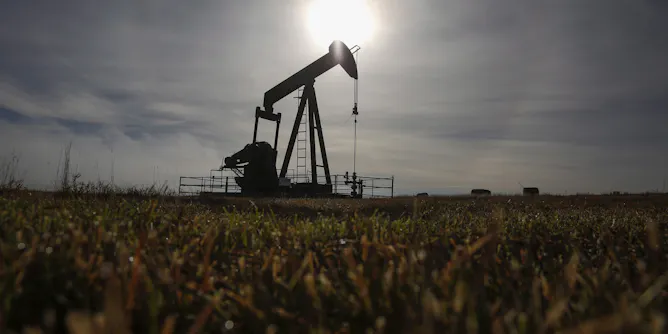
Four companies contribute about 20 per cent of Alberta’s total revenue, giving them an enormous amount of control over the province’s finances and, by extension, politics.
Articles on Oil
Displaying 161 - 180 of 450 articles
Most claiming to be compatible with the climate agreement show a strong continuing reliance on natural gas and coal.
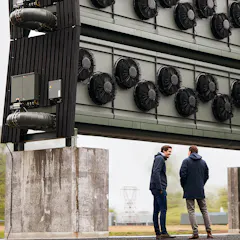
One estimate suggests at least a sixth of all emissions cuts expected from the Inflation Reduction Act would come from carbon capture.

Peat is partially decomposed plant matter that has accumulated over thousands of years.
Considering South Africa’s climatic advantage, the fraction of electricity generated from renewable energy technologies is low.
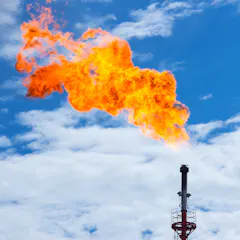
Australia needs an honest reckoning with the fossil fuel industry’s decades-long hold over Australian politics. Without that, we cannot shift to a principled stand against ceaseless expansion.
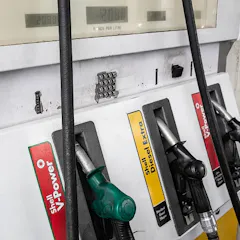
The underlying reason for the price increases is the acceleration in the international price of crude oil, linked to the Russian war in the Ukraine.

Plastic is made from oil and natural gas, which started out as fossilized plant and animal material. But buried deep underground for millions of years, those materials changed in important ways.

A study found $1.4 trillion in oil and gas industry assets would be at risk if governments follow through on their pledges to deal with climate change.

Former Soviet bloc nations have reason to worry about an embargo on Russian oil, but Europeans are finally recognizing the true costs of their longstanding energy dependence on Russia.
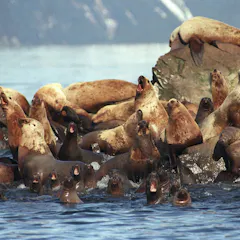
ToxChips study the changes in the DNA of animals exposed to contaminants, like those found in oil spills.
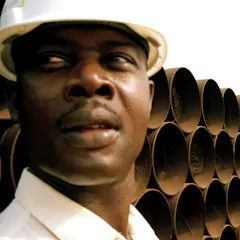
A new study adds up the potential legal and financial risk countries could face from hundreds of agreements, like those under the Energy Charter Treaty.
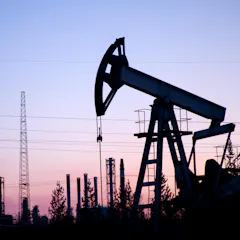
An EU ban on Russian oil imports should encourage countries to burn less of it.

Has Putin hurt Russia by jolting Europe’s shift away from fossil fuels into high gear?
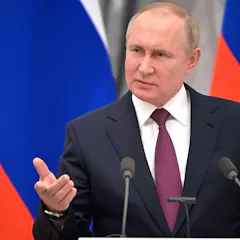
In recent years, Western governments have, in effect, aided the rise of personalist dictators in Russia, Iraq, Libya, North Korea and Venezuela.
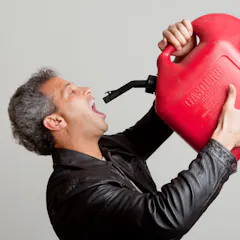
Oil is used throughout the US economy. It goes into packaging, toys, clothing and especially the food we eat.

The UK’s bumpy relationship with Saudi Arabia will not turn on new oil supplies.
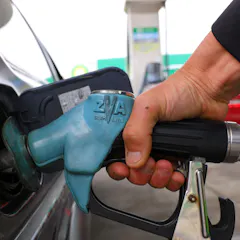
Petrol prices have spiked, forcing governments to step in to reduce costs. But will the rising prices actually force drivers out of their cars, reducing consumption and carbon emissions?

Buyers are avoiding Russian oil in response to the war in Ukraine. Can smaller producers leverage this moment to strike favorable deals with big oil companies?
Europe’s options of alternative sources of oil are limited,
Top contributors
-

Lecturer in International Studies, University of Washington
-
Director, Energy, Climate Justice, and Sustainability Lab, and Research Professor, New York University; Tufts University
-
Lecturer in Energy Systems, University of Oxford
-
Honorary Fellow, The University of Queensland
-
Industry Fellow, Institute for Sustainable Futures, University of Technology Sydney
-
Departmental Visitor, Centre for Arab and Islamic Studies, Australian National University
-
Associate Professor of Environmental and Occupation Health, University of California, Irvine; University of Southern California
-
Fellow for the Middle East at the Baker Institute, Rice University
-
Professor of Law, Deakin University
-
Professor, Environmental Studies Program at UC Santa Barbara
-
Director and Lecturer, Extractives Baraza, Strathmore University
-
Professor and Head, School of Business, Monash University Malaysia
-
Professor of Geoenergy, Carbon Capture and Storage, Durham University
-
Professorial Fellow, University of Canberra
-
Senior Lecturer in Economics, The Open University