
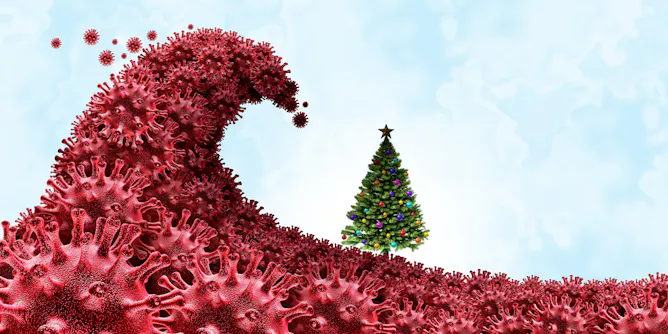
For some, the current peak of the wave has passed. For others, it’s more a slow rise in cases. Here’s what we can expect as the festive season approaches.
Articles on Omicron wave
Displaying 1 - 20 of 21 articles

On the fourth anniversary of New Zealand’s first COVID case it’s clear this is not a normal pandemic. Despite fatigue and indifference, New Zealand must heed the evidence and improve its response.

This is expected to be the smallest Omicron wave so far. But eligible older and vulnerable people are still recommended to have a booster.
Australia is in the middle of its fifth Omicron wave, which has been brewing since February. But it’s been slow and drawn out and the health impacts are very different to earlier waves.

People can get infections sooner and we now have a mix of variants in the population. Reinfections will likely become more common and the infection rate will rise.

XBB.1.5 and other subvariants do signal a change in how the virus is mutating. Here’s what this means for Australia and globally.

Your COVID infection may not seem any more severe the second or third time around. But it looks like your risks of other health problems increase with each infection.

The evidence so far suggests this wave could be a shorter and smaller version of the Omicron BA.5 wave.
This wave is different from previous COVID waves, in that it’s not driven by a new variant.
As New Zealand emerges from its Omicron wave, increasing hybrid immunity and access to antivirals mean it’s time to shift the focus of COVID management.

Case numbers are falling in all age groups, including over-70s. This is good news as case rates in older people have been a key driver of the steep rise in hospitalisations and deaths in this wave.

Stay connected but switch off too. Working from home requires a delicate balance to protect your wellbeing and get the job done. Here are some tips.
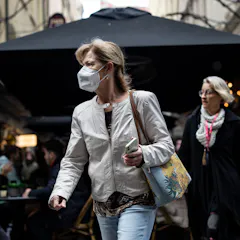
They’ve stopped short of mandates, but authorities and experts are strongly suggesting it’s time to cover our mouths and noses again to prevent COVID infection. This time, reach for a respirator.

A combination of seasonal factors, under-diagnosis and under-reporting could explain why rates of COVID hospitalisation and death are rising faster than cases.
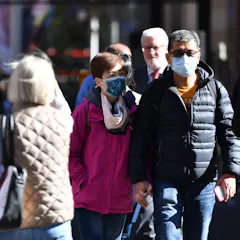
If our immunity from COVID vaccines is waning, then wearing a mask to prevent infection is even more valuable. But not many people seem to be thinking that way when they’re out and about.

The risk of a household contact becoming infected is low. So it’s time to lift isolation requirements, now so many of us are immune to the virus.

Instead of minimizing current or future waves of COVID-19, we need strategies to deal with new variants efficiently. Only then can we live with the virus in a healthy way.
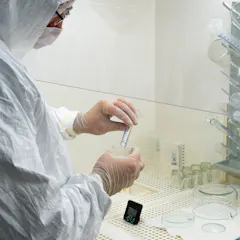
Based on the little data we have so far, Omicron XE appears slightly more contagious than other COVID variants.

Vaccine passes have outlived their usefulness, at least for now. But as New Zealand’s Omicron wave begins to subside, other public health measures remain vitally important.
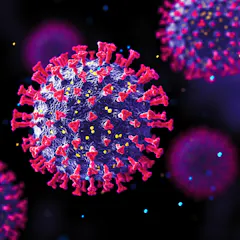
The latest addition to the omicron lineage has been making waves in Europe. Whether it will do the same in the U.S. depends on rates of vaccination and prior infection.
Top contributors
-

Head of School of Population Health and Professor, Infectious Diseases Dynamics and Interventions, UNSW
-
Senior Lecturer, University of Auckland, Waipapa Taumata Rau
-
Professor of Biostatistics and Epidemiology, Adelaide University
-
Professor in Applied Mathematics, University of Canterbury
-
Project Lead - COVID Modelling Aotearoa; Senior Researcher - ME Research; Principal Investigator - Te Pūnaha Matatini, University of Auckland, Waipapa Taumata Rau
-
Associate Professor of Health Science, University of Auckland, Waipapa Taumata Rau
-
Research Fellow, Epidemic Decision Support, The University of Melbourne
-
Professor in Women's and Children's Health, University of Otago
-
Chair in Epidemiology, Deakin University
-
Professor of Medicine, University of East Anglia
-
Professor, Biology, York University, Canada
-
Senior Lecturer at the Australian National University Medical School, Australian National University
-
Associate Professor of Organisational Behaviour, Bond Business School, Bond University
-
Associate Professor Immunology and Microbiology and Clinical Microbiologist, University of Otago
-
Associate Professor Primary Health, University of Auckland, Waipapa Taumata Rau