

The Albanese government’s proposed FOI reforms attempt to update decades-old laws. Some of it is needed, but other parts severely threaten government transparency.
Articles on Open government
Displaying 1 - 20 of 31 articles

People love to hate bureaucracy, but regulatory agencies play key roles in modern society. Conservatives want to cut back their power, but a political scientist proposes a different option.

After years of anecdotes, data provides a fuller picture of government agencies hiding their work from the public they ostensibly serve.

It’s a long-standing principle that people should be able to read the laws that govern them. But many technical rules and standards are hard to find and access, even for lawyers or court officials.
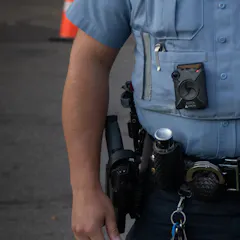
Police body cameras have the potential to make private details about people’s lives, including some of the most stressful experiences of their lives, public and easily accessible online
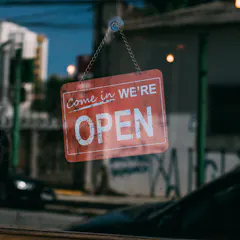
By looking at the evolving history of the open government data movement, scientists can see both limitations to current approaches and identify ways to move forward from them.

One more casualty of the coronavirus pandemic: open government. Since the crisis began, local, state and federal officials throughout the United States have locked down information from the public.

A new act requires that all nonsensitive government data be made available publicly by January 2020. But the plan could open up new privacy issues.

As a Canadian federal election year dawns, an alternative approach to freedom-of-information legislation is an urgent need.

A Twitter account used for official purposes is a public forum protected by the First Amendment, a federal appeals court has ruled.
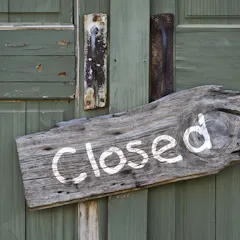
During Sunshine Week, three scholars of government transparency look at a potential collision between the old freedom of information movement and the new open government movement. Is there room for both?

Complaint systems, such as the government initiative LAPOR!, will fail to build trust if bureaucracies are unresponsive.

The disruptive impact of intelligent machines and new social movements will force us to remake citizenship into a more personal pursuit over the next 150 years.

It’s a new constitutional question for the internet age: Should the president be allowed to block someone on Twitter?
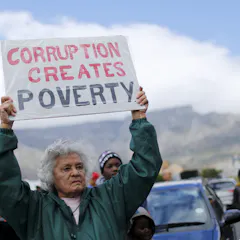
South Africa’s end of term report at the helm of the Open Government Partnership shows that it failed to meet key targets it set for itself. But it also shows improvements in some areas.
The actions of the Coalition government speak louder than words in its commitment to open government.

A new report from Sense About Science reveals the scale of politics before evidence.
Open government and public data could contribute up to A$16 billion per annum to the Australian economy.

In the wake of the Arab Spring the international community lauded Tunisia’s political transition to democracy. But a plethora of challenges may threaten democratic consolidation in the country.

Australian society has become dangerously accustomed to our politicians using “national security” as an excuse for the obfuscation of sticky truths.
Top contributors
-

Brechner Eminent Scholar in Mass Communication, University of Florida
-
Director of the Brechner Freedom of Information Project, College of Journalism and Communications, University of Florida
-
Professor of Public Affairs and Administration, Rutgers University - Newark
-
Vice President for Public Affairs & Communications, Tidewater Community College
-
Adjunct professor, UNSW ; University of Technology Sydney
-
Associate Professor of Internet Science, University of Southampton
-
Senior Lecturer, University of Lincoln
-
Researcher - African Security - One Earth Future Foundation, University of the Witwatersrand
-
Barrister at Queensland Bar and member, Creative Commons Australia
-
Associate Professor of Business Law and Ethics, Indiana University
-
Professor in Intellectual Property and Innovation Law, Queensland University of Technology
-
Professor Emeritus, Geography and Environmental Studies, and President, Information Research Board, L’Université d’Ottawa/University of Ottawa
-
Adjunct Legal Researcher, Queensland University of Technology
-
Clinical Associate Professor of Public and Environmental Affairs, Indiana University
-
Associate Professor, School of Media, Film and Journalism, Monash University