
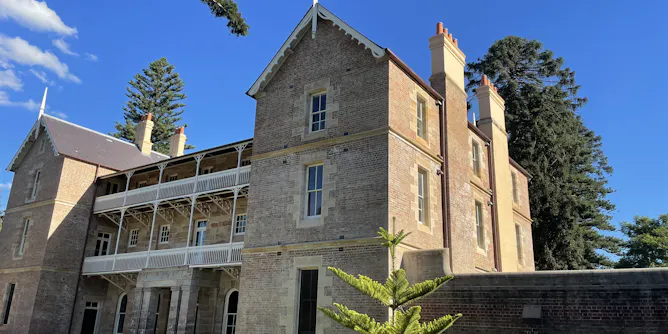
Built in 1821 to house and provide productive employment for the New South Wales colony’s growing population of female convicts, the Parramatta Female Factory was also the site of countless horrors.
Articles on Out-of-home care
Displaying all articles
Rather than policing or separating families, a new collaborative movement born in the US seeks to find better ways to support children, families and communities.
We surveyed 232 foster and kinship carers who had provided care to a baby in out-of-home care sometime in the last five years. Many were not well supported to care for babies.
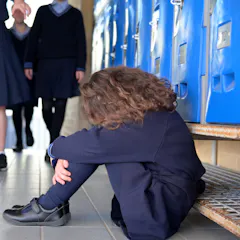
Attendance at school is crucial to improving educational outcomes for students. Unfortunately, children in out-of-home care face myriad challenges when it comes to attending school every day.
Aboriginal and Torres Strait Islander children are increasingly being removed from their families and placed into out-of-home care, raising concerns of another Stolen Generation.
Our study of Indigenous young people leaving out-of-home care has identified major deficits in programs designed to help them transition to adulthood.

Indigenous children are admitted to out-of-home care at 11 times the rate for non-Indigenous children. The lack of safe housing for mothers fleeing family violence is a key factor.
One of the state’s most significant powers is the ability to remove children from their families. Potential reforms in NSW could expand this already racialised power in frightening ways.
Young people leaving out-of-home care aren’t receiving the support they need to further their educations and transition successfully to adulthood.
New research shows that, too often, grandparents who are primary carers are being locked out of decisions about their grandchildren’s welfare.
Top contributors
-

Adjunct Associate Professor, College of Arts, Society & Education, James Cook University
-
Senior Lecturer, Adelaide University
-
Research Fellow, University of Technology Sydney
-
Senior Lecturer in History, Australian Catholic University
-
Associate professor, James Cook University
-
Sharon Bessell is a Friend of The Conversation.
Professor of Public Policy, Crawford School of Public Policy, Australian National University
-
Deputy Director Translational Research and Social Innovation Group at the Ingham Institute, Associate Professor, School of Nursing and Midwifery, Western Sydney University
-
Honorary Associate Professor, The University of Queensland
-
Indigenous Knowledge
-
Lecturer in Indigenous Studies, The University of Melbourne
-
Research Fellow, Peter Underwood Centre for Educational Attainment, University of Tasmania
-
Associate Professor, Monash University
-
Senior Lecturer in Criminology | School of Social Sciences, University of Tasmania
-
Professor, Director Social Inclusion and Social Policy Research Unit, Monash University
-
Associate Professor, Faculty of Law, University of Technology Sydney