

The Tanzanian case shows that foreign policy can also be a way of managing domestic coalitions.
Articles on Pan-Africanism
Displaying 1 - 20 of 66 articles

Sithole was just one of tens of thousands of individuals who died during Zimbabwe’s independence struggle.

African leaders’ authoritarian practices, domestic power struggles and governance failures have undermined efforts to create a ‘United States of Africa’.
Ghanaian leaders have grappled with ideological challenges while navigating decolonisation and socio-economic development.
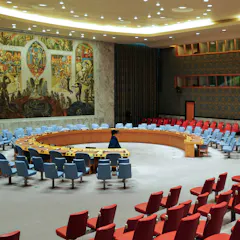
South Africa is arguably best placed to meet the demands on permanent security council members and can play a constructive role in pushing the African agenda.

Studies reveal a chequered history when it comes to the benefits of hosting the event.
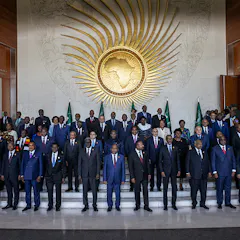
African leaders have a worrying track record of prioritising narrow domestic gains over transferring supranational, binding powers to the AU.
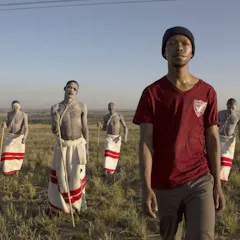
Despite harsh laws, a growing number of African countries are representing queer life in their cinema.
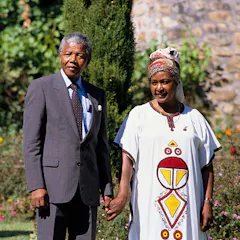
The early Nelson comes across as a man consumed by insecurity and ambition, plagued by inner strife and anger.

The emergence of a pan-African voice in the fight against global warming, a global issue, could enable the African Union to regain ground on the international stage.

By the 1950s a standard version of the language emerged, today spoken by an estimated 200 million people.

Novelist Petina Gappah’s call for translators on Facebook has resulted in the publication of Chimurenga Chemhuka.
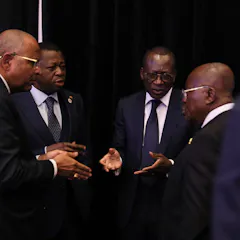
Africa has been relatively peaceful in terms of inter-state violent conflicts.
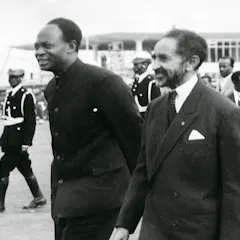
The African Union compares well to other continental unions. It accomplishes more than the Commonwealth or the Francophonie.

Finding the right balance between media freedom and limits remains one of the greatest challenges modern democracies face.

Kittrell’s legacy shows that home economics was always about more than cooking and sewing. It’s also a reminder that issues that affect families are simultaneously local and global.

Pour progresser, les États membres doivent établir des priorités contraignantes, transparentes et applicables.
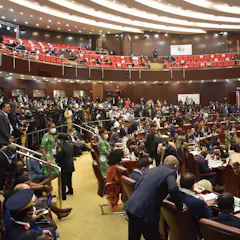
Member states need to arrive at binding, transparent and enforceable priorities to see progress.

As the 20th century’s preeminent scholar-activist on race, W.E.B. Du Bois would not be surprised by modern-day attempts at whitewashing American history. He saw them in 1930s and 1940s.
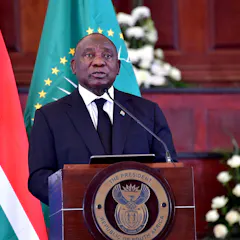
South Africa’s foreign policy under Ramaphosa emphasises economic diplomacy and ‘progressive internationalism’, which promotes global equity and ending the dominance of the global north.
Top contributors
-

Professor of Urban Governance, University of the Witwatersrand
-
Professor, Institute of African Studies, University of Leipzig
-
Professor of International Law, University of Pretoria
-
Research fellow, Institute on Comparative Regional Integration Studies (UNU-CRIS), United Nations University
-
Political Scientist, University of the Western Cape
-
Distinguished Reserach Professor, Southern Centre for Inequality Studies, University of the Witwatersrand
-
Senior Research Fellow, Institute for Humanities in Africa, University of Cape Town
-
Distinguished Professor of Sustainable Development, Stellenbosch University
-
Professor of Public Affairs, Tshwane University of Technology
-
Department of Philosophy, Rhodes University
-
Reader in Law, University of Sussex
-
Reader in the School of Law and Politics, University of Hull
-
Research Fellow at the Centre for the Study of Governance Innovation, University of Pretoria
-
Senior Research Fellow, Institute of Commonwealth Studies, School of Advanced Study, University of London
-
Executive director, Africa Institute of South Africa, Human Sciences Research Council